Five Wild Birds in Suffolk County Test Preliminary Positive for HPAI
Five wild birds in Suffolk County preliminarily tested positive for highly pathogenic avian influenza, raising concern for poultry, backyard flocks, and outdoor workers.
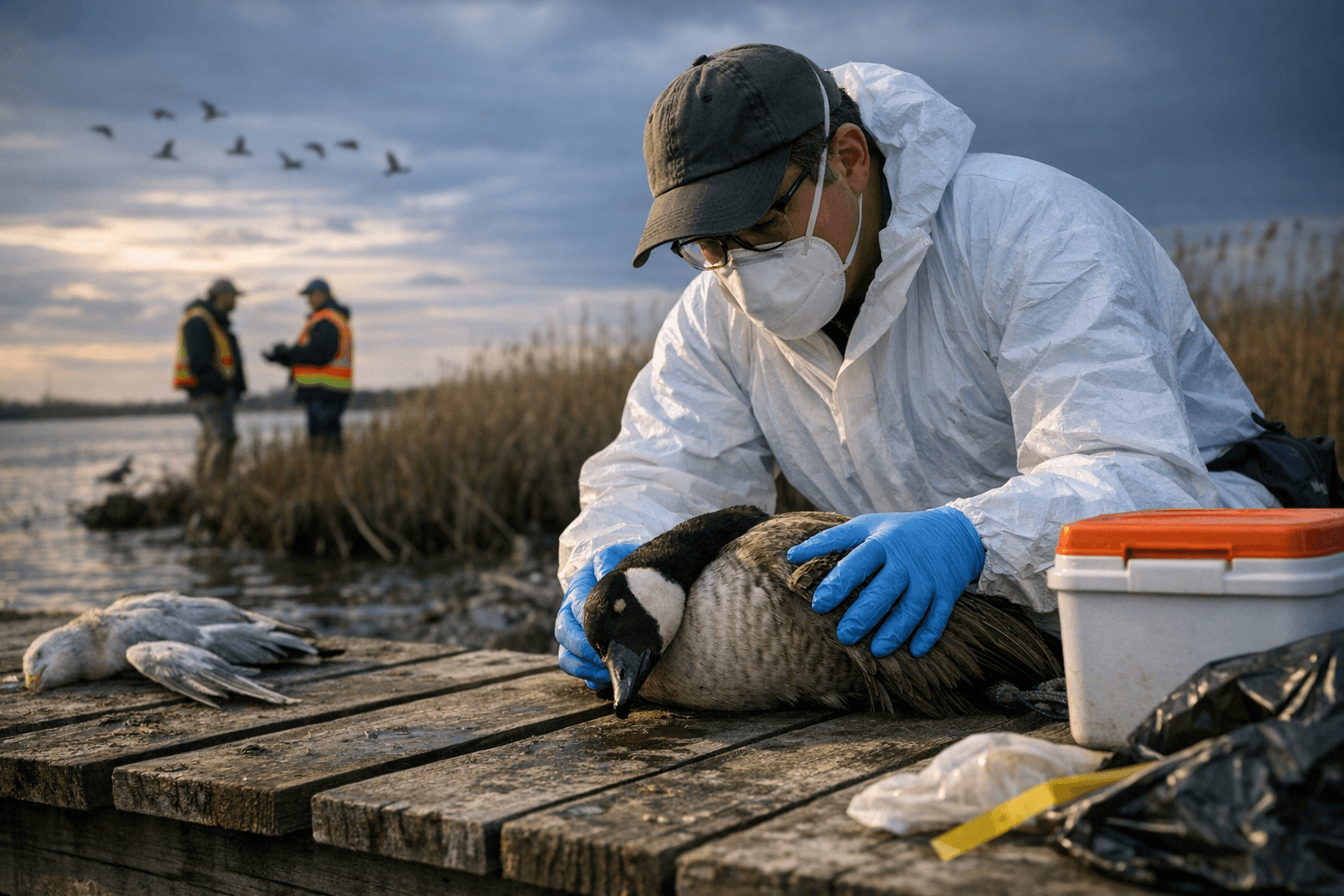
The New York State Department of Environmental Conservation confirmed five preliminary positive tests for highly pathogenic avian influenza in wild birds found in Suffolk County, a late January announcement that renews concerns across Long Island about spillover to domestic flocks and local economies. The confirmed specimens include snow geese and two duck species identified as buffleheads and hooded mergansers, with some testing linked to finds at Heckscher Park in Huntington.
DEC officials warned that “there is no way to contain infection in those animals,” and noted that “Clinical signs may be similar to other diseases or injuries or nonspecific.” Additional birds have been reported to authorities for testing; separate samples from about a half-dozen Canada geese in Heckscher Park and other specimens including crows and various raptors have been mentioned in lab reports and field collections, though it is not yet clear which birds comprise the five preliminary positives. Federal reporting described the five positives as occurring “over the last two months,” indicating some results in surveillance databases predate the public announcement.
Public-health agencies stress the immediate risk to people remains low. “While bird-to-human transmission has been rare, the avian flu can spread through direct contact with the saliva, secretions, or feces of an infected animal. Viral particles in the air can spread it; so can consuming raw food and milk. The Centers for Disease Control and Prevention says the overall public health risk remains low.” Still, the local pattern matters: last winter’s Long Island outbreak led to the culling of 100,000 ducks at a commercial farm and dozens of dead or symptomatic birds were found in East Patchogue, underscoring the economic and animal-health stakes for Suffolk County.
For Suffolk residents the immediate implications are practical and unequal. Commercial poultry operations and small backyard flocks face the highest direct risk of farm-level disruption and financial loss. Hunters, wildlife rehabilitators, park maintenance crews, and people who frequent ponds and shorelines should avoid handling dead or visibly sick birds and report finds to DEC or county authorities. Communities with limited access to veterinary services or stable supply chains may be hardest hit if domestic flocks require testing or quarantine.
Confirmatory testing at national reference laboratories and a specimen-by-specimen breakdown remain pending. DEC and federal partners are continuing surveillance and testing across Long Island; more dead birds reported by the public are being collected. For now, residents should follow official updates, keep poultry separated from wild birds, and exercise caution around carcasses. Continued monitoring and clear support for small farmers and vulnerable households will shape whether this cluster becomes a localized animal-health episode or a broader economic burden for Suffolk County.
Sources:
Know something we missed? Have a correction or additional information?
Submit a Tip