Florida pushes back on CDC quarantine guidance for cruise hantavirus case
Florida’s pushback over cruise-ship hantavirus monitoring has exposed a public-health split: the CDC wanted close supervision, while the state questioned how far quarantine should go.

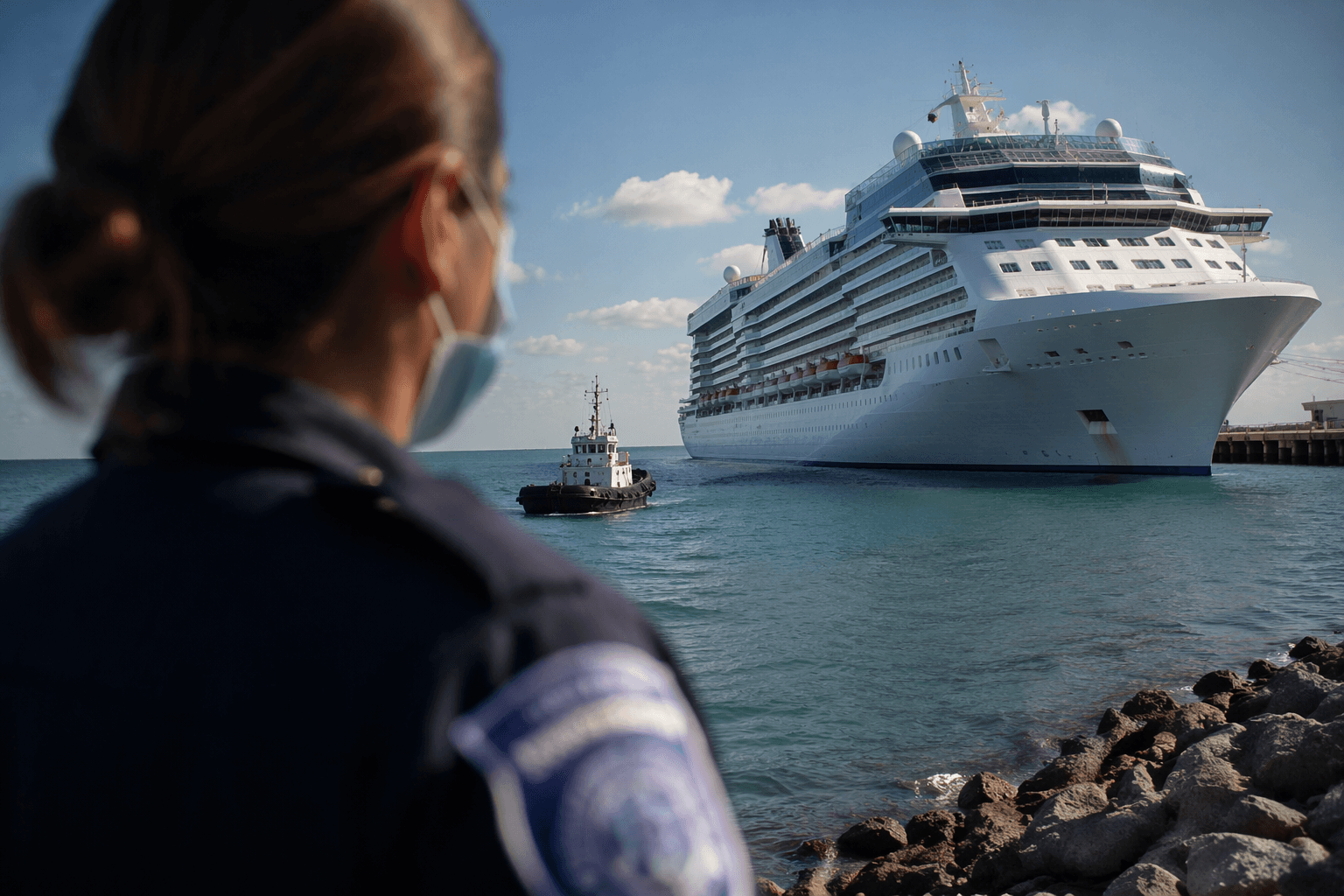
A rare hantavirus cluster aboard the Dutch-flagged MV Hondius has become more than an outbreak investigation. It has turned into a test of who gets to set the rules when federal guidance and a state’s instincts about quarantine pull in different directions, with Florida health officials pushing back as the CDC urged close monitoring of exposed passengers.
The outbreak was first reported to the World Health Organization on May 2 after severe respiratory illness was detected on the ship, which carried 147 passengers and crew on an itinerary that included remote stops across the South Atlantic and Antarctica. By May 4, WHO said seven cases had been identified, including two lab-confirmed hantavirus infections and three deaths, with illness onset reported between April 6 and April 28. The agency later said the outbreak involved Andes virus, which can cause hantavirus pulmonary syndrome, and that limited human-to-human transmission had been reported in previous Andes virus outbreaks.
The CDC said on May 8 that the U.S. government was actively monitoring the outbreak and that the risk to the American public remained extremely low. American passengers were expected to be evacuated on a U.S. government medical repatriation flight to Offutt Air Force Base in Omaha, Nebraska, then moved to the National Quarantine Center at the University of Nebraska. CDC also deployed epidemiologists and medical professionals to the Canary Islands to assess each American passenger’s exposure risk and make monitoring recommendations.
By May 13, the CDC told NBC News that all 18 U.S. passengers from the ship were still in federal quarantine while officials interviewed them, and that the agency was encouraging them to remain under observation through the 42-day incubation period for Andes hantavirus. At the time, CDC said there were no state or federal quarantine orders in place, only guidance. NBC also reported that one passenger who had symptoms and was sent to Emory University Hospital in Atlanta tested negative, and another who had initially tested faintly positive later tested negative and was moved from the biocontainment unit to quarantine.

The debate sharpened as some Americans were allowed to leave the Nebraska facility and finish quarantine at home. NBC and The Associated Press reported that five of the 18 U.S. passengers had gone home by May 19 after completing half of the six-week quarantine. That left public-health officials balancing a rare, high-anxiety infection against the burden of prolonged isolation, even as the broader risk to the public stayed low.

The outbreak did not stop at the ship. WHO reported 11 total cases by May 13, including three deaths, one inconclusive case in the United States, and cases from France and Spain. By June 11, the European Centre for Disease Prevention and Control said there were 13 total cases, including 12 confirmed and one probable, still with three deaths. ECDC said passengers and crew came from 23 countries, including nine EU and EEA countries, and warned that more cases could still appear because Andes hantavirus can take time to emerge.
This article was produced by Prism’s automated news system from verified source data, official records, and press releases, then run through automated quality and moderation checks before publishing. The system is built and supervised by the people who set the standards it runs under. Read our full AI policy.
Did this article answer your question?