Foil Surfing Guide for Beginners: Progression, Gear, Safety
This guide walks you through the full beginner progression for foil surfing, from gear basics and board selection to pop-ups, controlled lift, turning, and safety. You'll get practical drills, common mistakes and fixes, learning methods, and a 10-step checklist to speed progress while lowering risk.
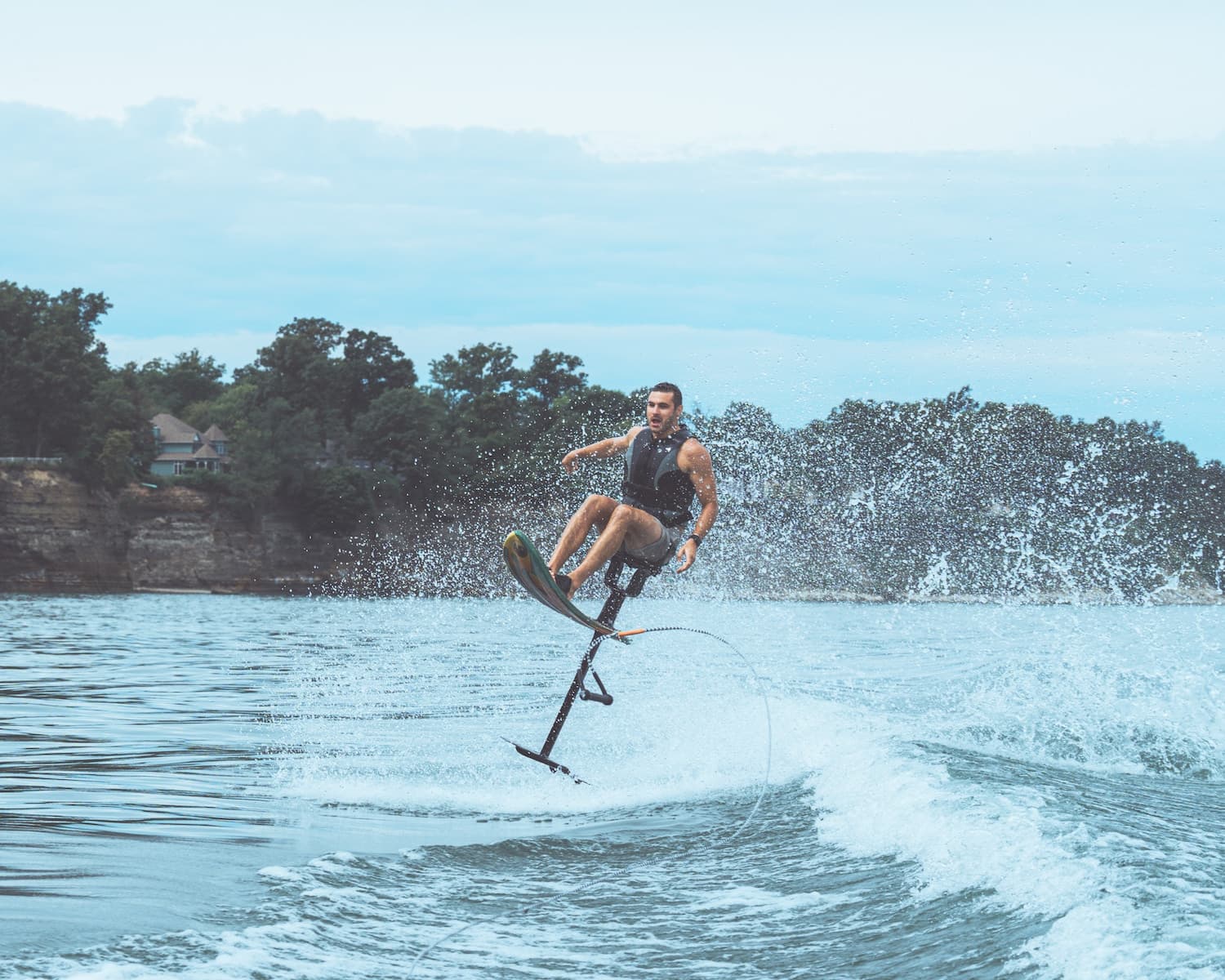
1. Gear basics: mast, fuselage, front wing, rear stabilizer
Foiling hardware breaks down into four primary parts: the mast (vertical strut), the fuselage (horizontal connector), the front wing (main lift surface), and the rear stabilizer (trim/control). The mast holds the board above the water and determines how high you’ll ride; the fuselage sets the wing spacing and influences handling; the front wing generates the lift needed to get the board flying; and the rear stabilizer balances pitch and provides stability. Knowing how each part affects lift, pitch, and responsiveness lets you pick forgiving setups for learning and switch to higher-performance parts as skills grow.
2. Why larger wings and shorter masts help beginners
Larger front wings produce more lift at lower speeds, making it easier to get on foil and stay airborne without precise speed or trim control. Shorter masts keep the board closer to the water, which reduces the severity of falls, makes recovery simpler, and helps you feel the foil’s feedback sooner. Together, larger wings and shorter masts increase margin for error, speed learning, and lower the risk associated with early attempts at flight.
3. Board selection and stability
Start with a stable, volume-forward board to practice balance, paddling, and planing. Bigger boards with more volume help you get on plane earlier and let you practice pop-ups and weight shifts without the board burying or porpoising. As you gain confidence, step down in size to increase manoeuvrability while retaining a foil setup matched to your speed and weight.
4. Step-by-step learning progression
Use a staged progression to build skills reliably: calm water basics, balance drills, board selection, pop-up technique, controlled lift/flight, then turning and trimming. Work each step until it feels consistent before advancing; rushing to lift or turns is the most common source of setbacks. Practice in conditions where wind, current, and chop are predictable so you can focus on body mechanics rather than external variables.
5. Pop-up technique: prone → knees → stand
Master the staged pop-up to maintain control as speed and forces change. Start prone, paddle or motor to planing speed, then transition to knees to manage the initial lift; from knees, plant hands and rise into a compact standing position while keeping weight centered. Keep the pop-up smooth and compact, fast frantic movements often shift weight too far forward or back and trigger porpoise or early lift failures.
6. Trim and controlled lift/flight
Controlled lift is about timing and subtle weight shifts: maintain planing speed, then slowly move your weight rearward to let the wing generate lift and raise the board. Small adjustments in fore-aft trim change pitch dramatically at foil speeds, so make incremental shifts and feel the wing’s response rather than making big corrections. Once flying, use micro adjustments of feet and hips to keep steady altitude and prevent stall or dive.
7. Turning and trimming while foiling
Turning on foil is primarily about weight shift and subtle rail angle, not exaggerated carving like on a hardboard. To turn, pressure the toes or heels depending on direction and allow the fuselage to pivot; the front wing and stabilizer will respond if you keep speed and trim steady. Practice gradual radius turns first, sharp pivots require refined trim control and confidence in altitude management.
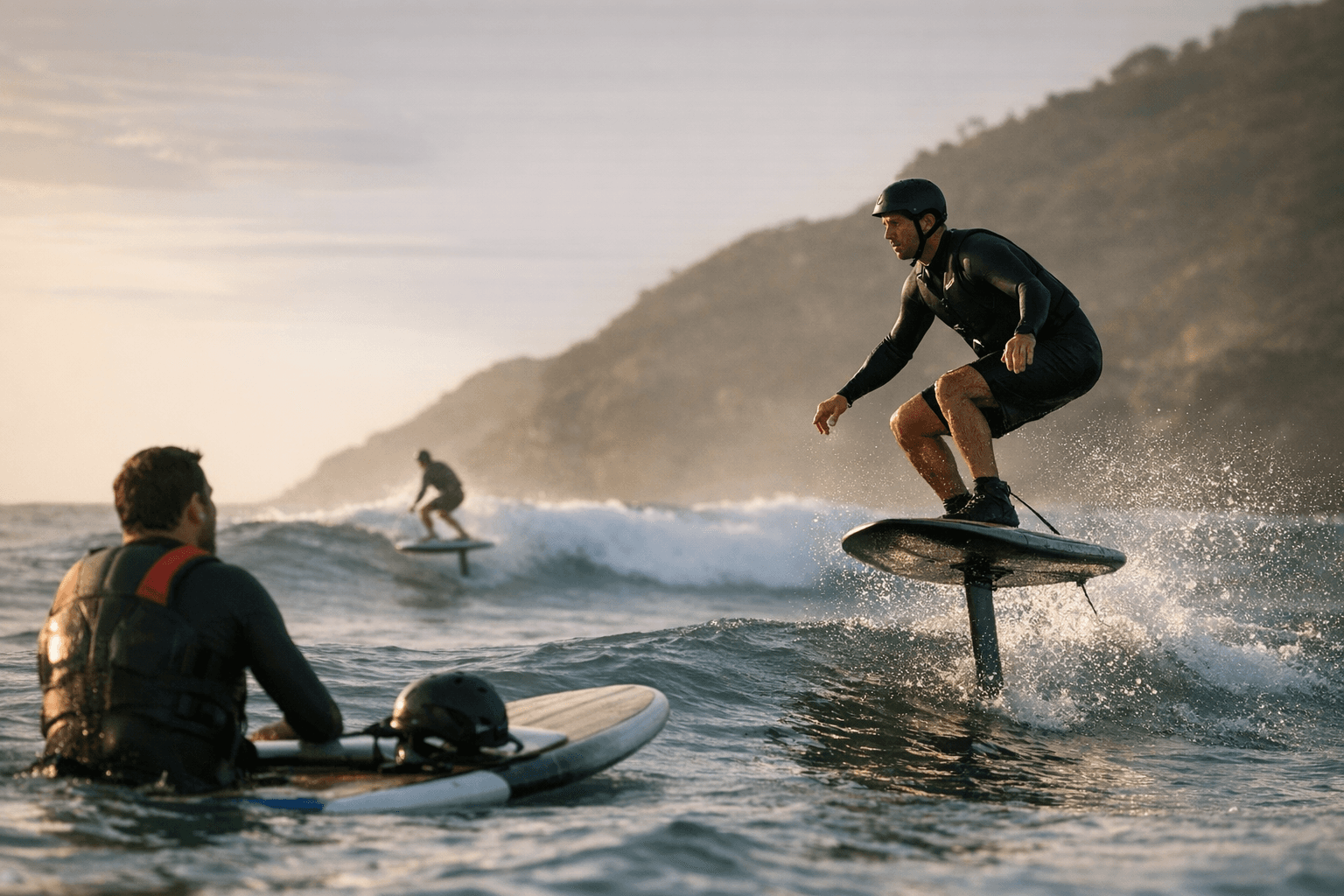
8. Safety and environment
Always wear a helmet and an impact vest when learning foil surfing; these significantly reduce risk from foil strikes and hard landings. Choose uncrowded water with adequate depth, avoid shallow reefs, rocks, and busy swimming areas, and practice in conditions with predictable wind and swell. Learn safe fall techniques: push yourself away from the foil, tuck your chin to protect your head, and try to fall flat to dissipate energy rather than reaching toward the foil.
9. Learning methods and start options
Pick a start method that matches conditions and confidence: SUP or prone starts are low-speed and steady, kneeling starts add stability while you learn trim, and boat-assist or towing offers consistent speed for focused lift practice. Each method isolates different skills: SUP/prone emphasizes balance and pop-up timing, kneeling focuses on trim control, and tow/boat helps you explore lift thresholds without chasing speed. Rotate methods to build a complete skill set faster.
10. Common mistakes and fixes
Beginners often try to lift too early, distribute weight poorly, or accelerate too much on stand; each has straightforward fixes. If you lift too soon, return to planing speed and rehearse small rearward weight shifts on knees before standing; if weight distribution is off, slow down and reset your feet to a neutral centerline stance; if you over-accelerate when standing, control throttle/wave choice and prioritize stable trim before adding speed.
- Balance board or standing on a stable SUP in calm water: practice standing and shifting weight fore/aft for 5–10 minutes to develop proprioception and foot placement familiarity.
- Kneeling trim drills on foil board: with the foil submerged, kneel and practice moving your weight slowly back and forth to feel lift thresholds without the full commitment of a stand.
- Prone-to-knees pop-up repetitions: repeat the staged pop-up from prone to knees and back on flat water until muscle memory is smooth, focusing on compact movement and hand placement.
- Short flight and recovery loops: attempt brief lifts and immediately return to water to practice safe falls and quick resets, building confidence with low-consequence repetitions.
11. Practical drills to build core skills
12. 10-step checklist to speed progress while lowering risk
1. Check gear: ensure mast, fuselage and wings are properly bolted and free of damage, and leash or quick-release systems are functional. Inspecting hardware before each session prevents avoidable failures and ensures a safe learning environment.
2. Choose the right setup: use a larger front wing and shorter mast for your first sessions to increase lift margin and reduce fall height. A forgiving setup lets you focus on technique instead of compensating for twitchy gear.
3. Pick conditions: select calm water with predictable wind and few other users to reduce variables and collision risk. Less chop makes it easier to feel the foil and practice subtle trim.
4. Wear protective gear: helmet and impact vest are non-negotiable for beginners to reduce injury severity during falls. Comfort and mobility matter, choose gear that lets you move freely while providing protection.
5. Warm up and mobility: do dynamic stretches and balance exercises on land to prime shoulders, hips and ankles for movement. Warming up reduces strain and helps with smoother pop-ups.
6. Start on a stable board: begin sessions on a high-volume board to practice paddling and planing without burying the nose. Confidence on a stable platform accelerates learning when you downsize later.
7. Practice staged pop-ups: repeat prone → knees → stand transitions until each phase is controlled and repeatable. Muscle memory here prevents late-stage balance shifts that cause porpoise or early lift.
8. Use assisted starts if needed: employ a tow or boat-assist session to get consistent planing speed for focused lift practice. Controlled speed lets you isolate trim and feel without chasing waves.
9. Limit session goals: set one technical focus per outing (e.g., trim, short turns, safe falls) to avoid cognitive overload and accelerate skill retention. A targeted approach yields steady progress and reduces risky attempts.
10. Debrief and adjust: after each session, note what worked, what didn’t, and tweak gear or goals accordingly; incremental adjustments compound into steady improvement. Community feedback and recorded sessions help you spot subtle errors and refine technique.
Know something we missed? Have a correction or additional information?
Submit a Tip