Former judges urge court to probe Trump IRS settlement terms
More than 30 former judges asked a Florida court to examine whether a $1.8 billion Trump IRS settlement was concealed from the judge.
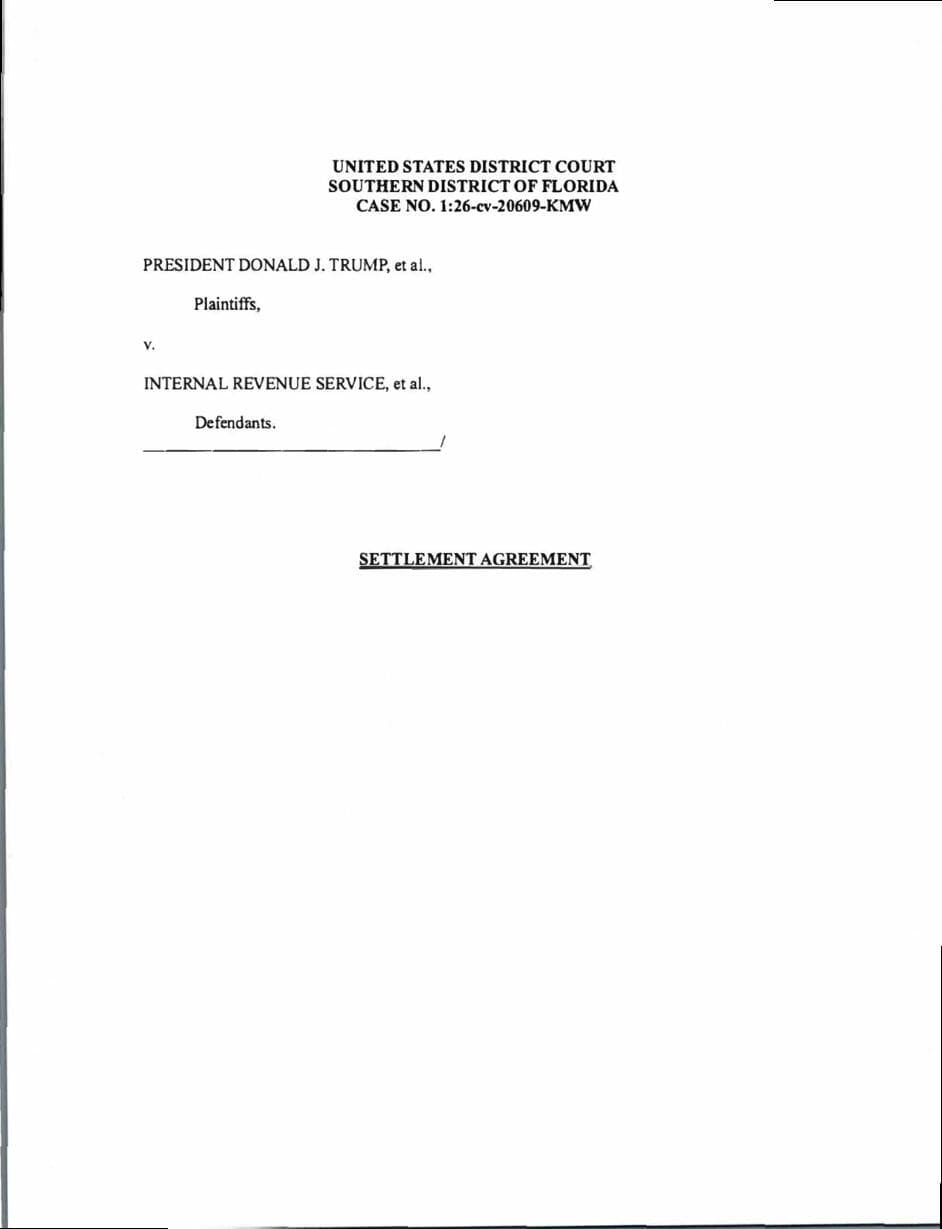
More than 30 former federal judges pressed a Florida court to scrutinize a $1.8 billion settlement tied to Donald Trump’s tax fight, arguing the arrangement may have been so unusual that it amounted to a “fraud on the court.”
The motion asked U.S. District Judge Kathleen Williams, who oversaw Trump’s original $10 billion lawsuit against the Internal Revenue Service, to investigate the settlement terms before the case is fully closed. The judges said the court should determine whether the government had presented the complete deal when it announced the agreement and whether the final terms were properly disclosed to Williams.
Trump’s lawsuit, filed in January 2026, centered on allegations that an IRS contractor leaked his tax information. On May 18, the Justice Department announced a settlement that created a $1.8 billion “anti-weaponization” or “compensation” fund. The next day, the department released an addendum that reportedly barred the IRS from taking certain actions against Trump, his family and his businesses over past tax issues.
Williams had already questioned whether the government was being transparent about the settlement as she closed the case, raising concerns about whether the court had been fully informed. That concern now sits at the center of the former judges’ motion, which treats the settlement not as a routine end to litigation but as a potential test of the judiciary’s ability to police disclosures in politically sensitive cases.

The Tax Law Center said the arrangement raised questions about possible violations of laws protecting against political interference in tax administration, the Justice Department’s authority to drop IRS audit claims, and the unprecedented use of the Judgment Fund. Critics also warned that the deal could improperly enrich Trump allies, including people tied to Jan. 6-related claims, while supporters argued it resolved litigation over the alleged unlawful disclosure of Trump’s tax returns.
The dispute has broader institutional stakes beyond Trump’s personal tax fight. If the settlement is upheld as described, it could create a precedent for bargaining over tax enforcement inside an agency meant to operate at arm’s length from the White House. For former judges, that possibility appears serious enough to warrant extraordinary scrutiny from the very court that first handled the case.
This article was produced by Prism’s automated news system from verified source data, official records, and press releases, then run through automated quality and moderation checks before publishing. The system is built and supervised by the people who set the standards it runs under. Read our full AI policy.
Did this article answer your question?

