Four Baltimore Firefighters Hurt After Truck 21 Strikes Parked Semi on Ice
Four Baltimore firefighters were hurt when Truck 21 struck a parked semi on icy Chesapeake and Maude Avenues; all were treated for minor injuries. The crash underscores winter road hazards for emergency crews and commuters.
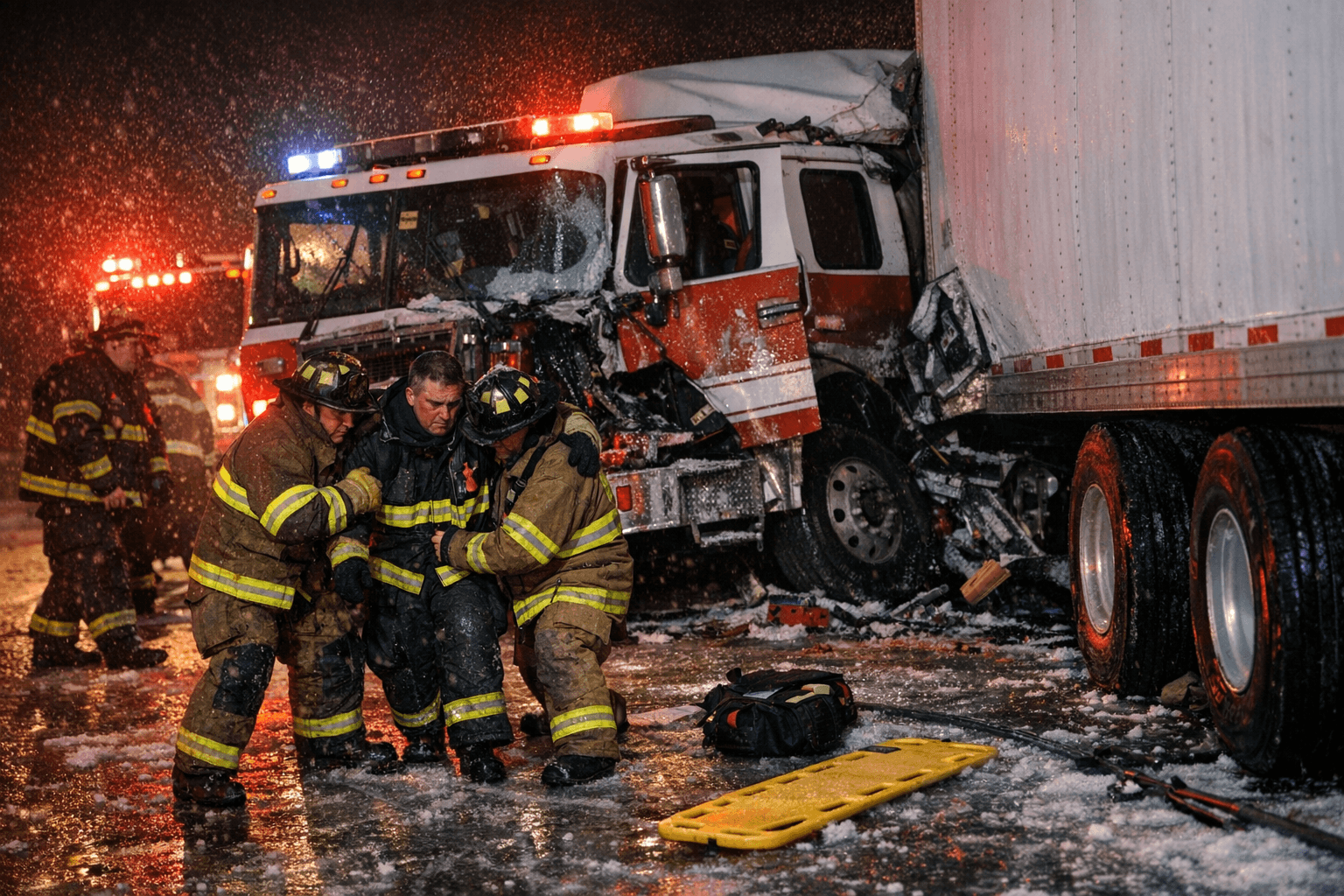
Truck 21, an aerial rig from the Baltimore Fire Department, struck a parked semi on an icy stretch of roadway near the Baltimore Harbor Tunnel late Sunday, injuring four firefighters. The collision occurred at about 11:30 p.m. on Chesapeake and Maude Avenues while the crew was responding to a fire, and all four members aboard were treated for minor injuries.
A short department report documented the incident and the injuries. Officials have not reported any life-threatening conditions; the injured personnel received on-scene treatment before being transported for further evaluation. The apparatus involved was identified as Truck 21, the department’s aerial unit assigned to that response.
The crash took place on a part of the city that is a common route for east-west commuters and heavy truck traffic serving the Port of Baltimore. Icy surface conditions were a contributing factor, according to the report, and the collision highlights the compounded risks firefighters face when operating large apparatus on slick roads. Responding to a fire requires rapid movement through traffic and challenging maneuvers; winter weather can magnify those hazards for crews and drivers alike.
For local residents, the incident raises immediate concerns about emergency response reliability during winter storms and icy conditions. The temporary loss of an aerial rig or a portion of a ladder company for repairs can stretch resources during periods of high demand. Neighbors in South Baltimore and those who use the Harbor Tunnel corridor may experience changes to response patterns while the department accounts for equipment status and personnel availability.
Baltimore drivers should remain vigilant when approaching emergency scenes and yield to responding apparatus. Slower travel speeds, greater following distances, and allowing room for maneuvering around stopped emergency vehicles help protect both civilians and first responders. City agencies traditionally review operational reports after collisions to determine whether changes in training, procedures, or equipment calibration are needed; this event is likely to prompt such an internal review.
As winter weather continues, residents can expect the fire department to provide updates on the condition of the injured firefighters and the status of Truck 21. The broader takeaway for readers is practical: icy roads are not only a hazard for private vehicles but also increase risks for the men and women who answer Baltimore’s emergencies, and that reality affects community safety and response capacity.
Sources:
Know something we missed? Have a correction or additional information?
Submit a Tip