Four Massachusetts State Police officials indicted in recruit’s training death
A hobbled recruit was sent into a mismatched sparring bout, and four State Police officials were indicted after Enrique Delgado-Garcia’s training death.
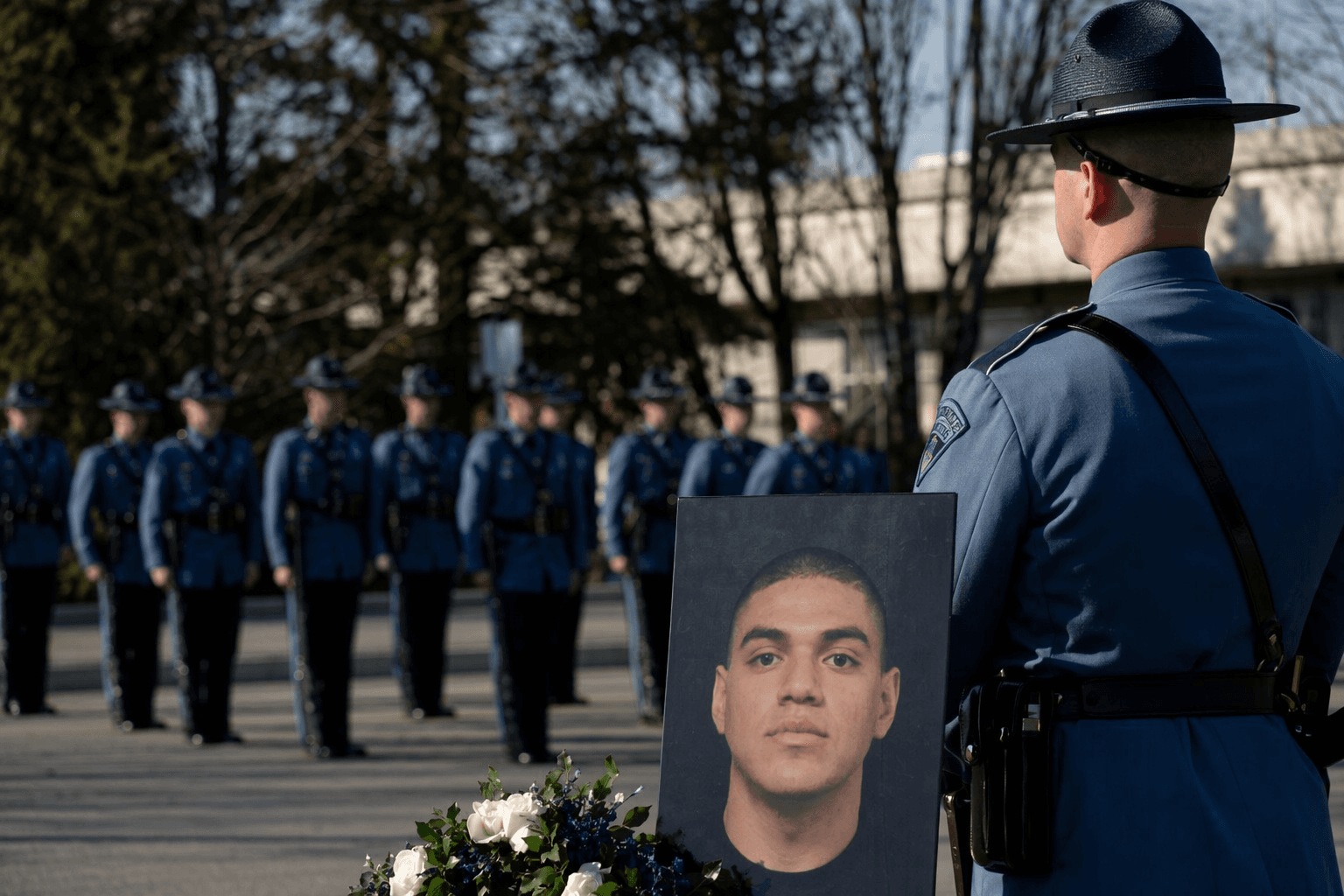
Enrique Delgado-Garcia was already injured from an earlier bout when he raised his hand for another sparring match at the Massachusetts State Police Academy in New Braintree. Investigators say nobody stopped the 25-year-old recruit from entering a fight that prosecutors later described as unauthorized, unapproved and unsupervised.
That lapse now sits at the center of a criminal case that has shaken the State Police. A Middlesex County grand jury indicted four officials after an independent investigation into Delgado-Garcia’s death concluded on Feb. 9, 2026. Sgt. Jennifer Penton faces involuntary manslaughter, causing serious bodily injury to a person participating in a training program involving physical exercise, and perjury. Troopers Edwin Rodriguez, David Montanez and Casey LaMonte were each indicted on involuntary manslaughter and the serious-bodily-injury charge.
The case presents a stark question of supervision inside a police academy built to test endurance and obedience: who had the authority to stop the bout, and why did they not use it? Delgado-Garcia died on Sept. 13, 2024, after injuries sustained during training, and later reporting said the autopsy found blunt force injuries as the cause of death. The timeline suggests a breakdown that was preventable long before it became a criminal matter.
Attorney General Andrea Joy Campbell said State Police trainees have a duty to be protected from preventable harm. Governor Maura Healey called Delgado-Garcia a beloved member of his academy class and said he was devoted to service. Their comments underscored what the indictment implies, that the academy’s culture and command structure failed to put basic safety ahead of a toughness norm that should never have overridden medical judgment.
The State Police tried to respond before the indictments arrived. On May 2, 2025, the department announced reforms that split the next recruit class into two smaller cohorts, brought in new academy leadership, and ordered an hour-by-hour curriculum review. It also commissioned the International Association of Chiefs of Police to conduct an independent assessment of the academy. The next class was set to begin in two cohorts, one in May and another later in the summer.
The department also suspended full-contact boxing training after Delgado-Garcia’s death. But the indictment now suggests the deeper problem was not the sport itself. It was a chain of decisions, and failures to intervene, that allowed an injured recruit to keep fighting until a training exercise turned fatal.
This article was produced by Prism’s automated news system from verified source data, official records, and press releases, then run through automated quality and moderation checks before publishing. The system is built and supervised by the people who set the standards it runs under. Read our full AI policy.
Did this article answer your question?

