Fourteen states condemn Israel after approval of 19 West Bank settlements
A group of 14 countries led by Western allies publicly denounces Israel after its security cabinet approves 19 new settlements in the occupied West Bank, warning the move threatens regional stability and breaches international law. The coordinated rebuke deepens diplomatic strains at a moment of fragile ceasefires and raises fresh questions about the future of a two state outcome.

Israel’s security cabinet approved the establishment of 19 new settlements in the occupied West Bank on December 24, a step that has prompted a coordinated diplomatic backlash from a group of fourteen states. Belgium, Canada, Denmark, France, Germany, Italy, Iceland, Ireland, Japan, Malta, the Netherlands, Norway, Spain and the United Kingdom issued a joint statement calling on Israel to reverse the decision and to halt further expansion.
The joint statement contained explicit language that framed the approvals as unlawful and dangerous for regional stability. It said, “We call on Israel to reverse this decision, as well as the expansion of settlements,” and warned that “such unilateral actions, as part of a wider intensification of the settlement policies in the West Bank, not only violate international law but also risk fuelling instability.” The statement also reiterated “clear opposition to any form of annexation and to the expansion of settlement policies.”
The provenance of the joint declaration is unclear, with official attribution variously directed to the French foreign ministry and to the British foreign ministry in different accounts. Governments involved did not immediately resolve that discrepancy, but the text of the joint message circulated widely among diplomatic circles in Brussels and capitals across Europe and North America.
Israeli Foreign Minister Gideon Saar rejected the condemnation in a post on X, saying the security cabinet decision was designed to address immediate security threats facing Israel. The government has not released a broader explanatory statement beyond the minister’s social media remarks as of this report.
The approvals come against a backdrop of sharply rising settlement growth in the West Bank. Israeli watchdog Peace Now reported that the number of declared settlements rose from 141 in 2022 to 210 following recent authorizations, a near 50 percent increase since 2022. United Nations bodies have long described settlement expansion in occupied territory as contrary to international law, a position underscored by the joint statement from the fourteen states.
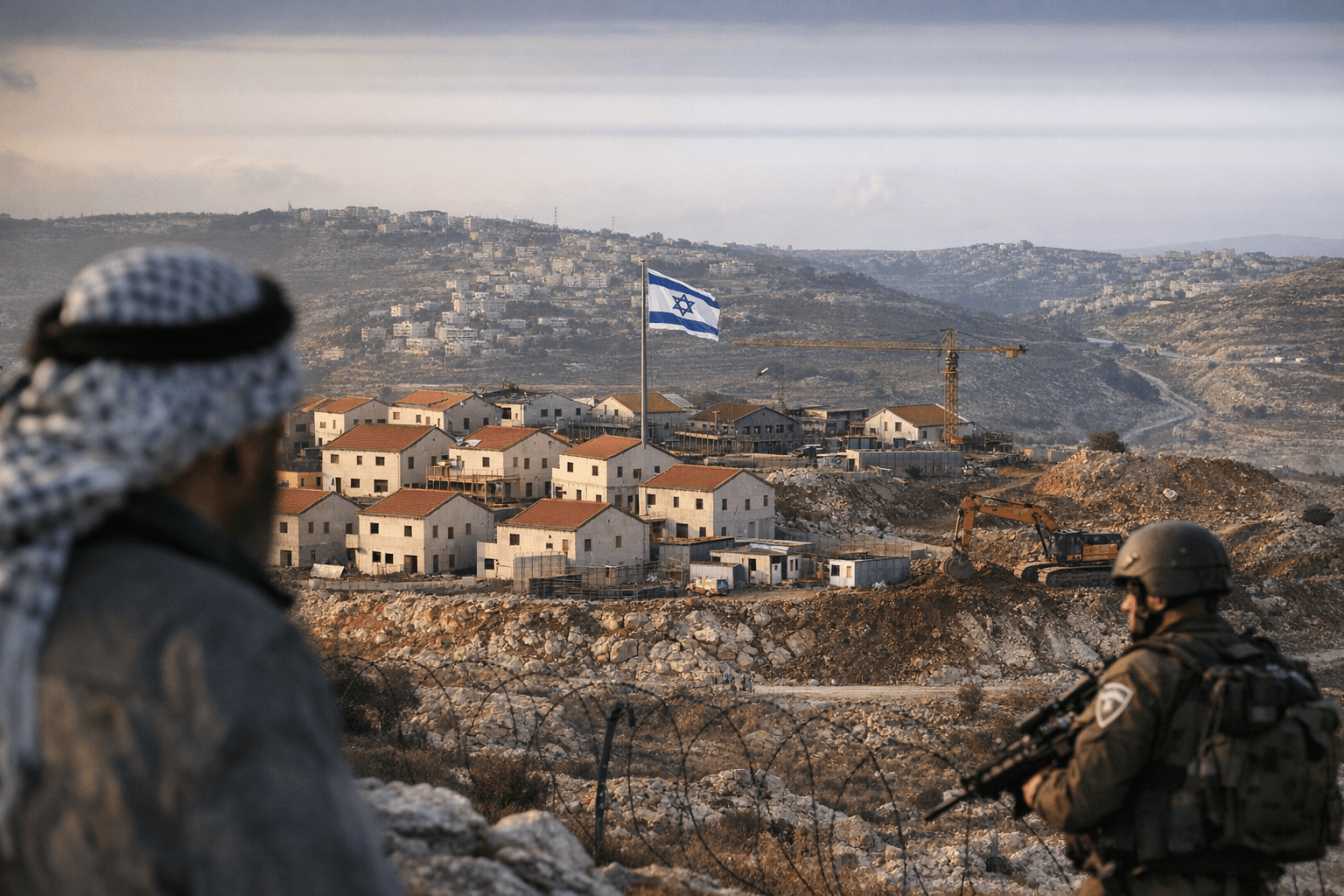
Diplomats and analysts say the move complicates already fraught efforts to consolidate ceasefires and de escalate tensions after recent violence in Gaza and the West Bank. The joint statement explicitly linked settlement expansion to the risk of undermining fragile de escalation and interrupting diplomatic avenues toward a negotiated outcome.
For Israel, the approvals are framed domestically as measures tied to security and demographic concerns in contested areas. For many European and other allies, the action is a red line in terms of international legal norms and the prospects for a negotiated two state solution. The dispute underscores growing friction between Israel and some of its traditional partners over settlement policy and strategy.
How this rupture will play out in multilateral fora including the United Nations and in bilateral ties remains uncertain. For now, the widening gap over settlements has placed questions of legality, security and diplomacy at the center of Western engagement with Israel during a sensitive period for regional stability.
This article was produced by Prism’s automated news system from verified source data, official records, and press releases, then run through automated quality and moderation checks before publishing. The system is built and supervised by the people who set the standards it runs under. Read our full AI policy.
Did this article answer your question?