French Open men’s title race guarantees a first-time Grand Slam champion
Four men chased one Paris trophy, but Alexander Zverev carried the heaviest burden after losing the 2024 final by a single set.
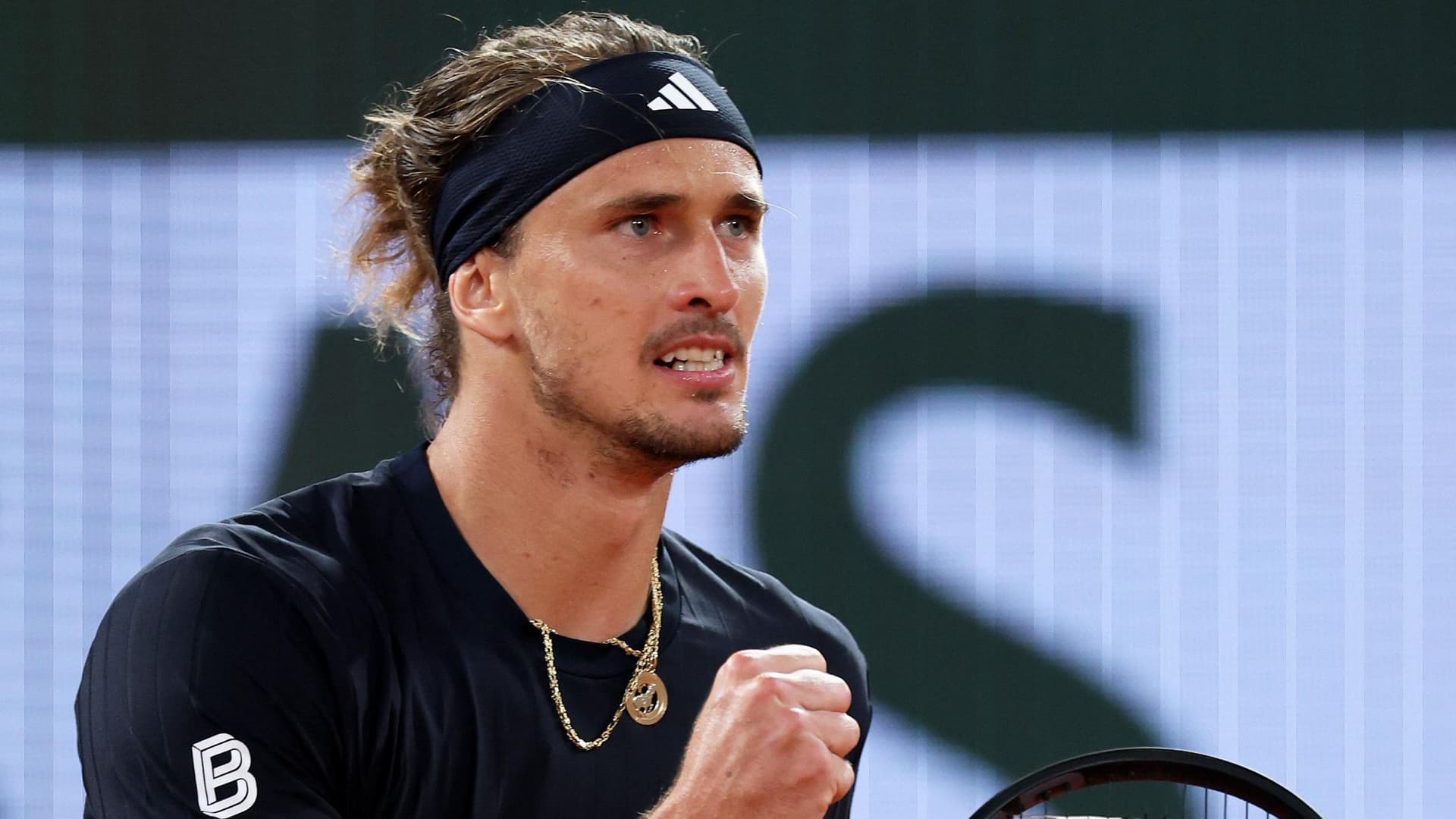
The French Open men’s semi-finals on Court Philippe-Chatrier carried an unusual guarantee: a first-time Grand Slam men’s champion would emerge from Paris. Alexander Zverev met Jakub Mensik at 2:30 p.m. CEST, and Flavio Cobolli faced Matteo Arnaldi not before 7 p.m. CEST, with Sunday’s final set to crown a new name at Roland Garros.
That made the bracket less about pedigree than about nerve. Zverev entered as the highest-ranked player left and the only top-10 man still standing, and he had reached his 11th Grand Slam semi-final after dropping only one set on the way. Yet his Paris run also carried the memory of last year’s final, when he was one set from the title before Carlos Alcaraz turned it around. John McEnroe said on TNT that Zverev faced “more pressure on him now to win a major, than at any time in his career,” a fair warning for a player whose résumé is already heavy but whose Slam cupboard is still empty.

Roland-Garros leaned on an old line that “pressure is a privilege,” and Zverev’s calm through the first week suggested he had handled the setting better than the history. The German had been in this place before, and that matters in a draw stripped of established champions. Novak Djokovic and Jannik Sinner were gone before the fourth round, and by the round of 16 no major champions remained in the men’s field, a first in the Open Era at a major. At one point, only three former Slam finalists were left in the draw: Zverev, Casper Ruud and Matteo Berrettini.
The other side of the bracket offered different kinds of pressure. Mensik reached his first major semi-final by beating Joao Fonseca in straight sets and became the first man born in 2004 or later to reach the last four of a major. Cobolli, the No. 10 seed, beat Félix Auger-Aliassime for his first Grand Slam semi-final and his first top-10 win at a major, while also ensuring an Italian man would play in the Roland Garros final for the first time since 1976.
Arnaldi advanced when Berrettini retired while trailing 7-5, 5-2, but his run had started from far harder ground. He had been 0-5 at tour level for the season before a Challenger event in Cagliari in late April helped reset his form. That is what made this semi-final line-up feel like a stress test in succession: Zverev brought the deepest major experience and the sharpest scar tissue, while Mensik, Cobolli and Arnaldi arrived with lighter histories and fewer expectations. In a Paris fortnight defined by upsets and sudden openings, the player most likely to win may be the one best able to absorb the moment rather than be consumed by it.
This article was produced by Prism’s automated news system from verified source data, official records, and press releases, then run through automated quality and moderation checks before publishing. The system is built and supervised by the people who set the standards it runs under. Read our full AI policy.
Did this article answer your question?

.jpg&w=1920&q=75)
