French Open players share tips for mastering clay courts
Clay at Roland-Garros tests legs, patience and touch, and the players in Paris say the surface rewards the fastest adapters, not just the hardest hitters.

What clay changes first: movement, not just muscle
Clay asks players to solve a different problem from the one they face on hard courts or grass. At Roland-Garros, the French Open is the only Grand Slam played on clay, and that alone makes Paris the sport’s clearest test of adaptation, endurance and point construction. The International Tennis Federation classifies Roland-Garros as a Category 1 slow court, the slowest pace tier, and most clay courts fall into that same bracket.
That slowness changes every step. A player cannot rely on the same first-step burst or the same clean footing they get on a resin or acrylic hard court. Clay also shifts under pressure, so balance becomes part of shot selection. Marta Kostyuk said the surface is finicky because it shrinks and expands, which means “each step and bounce can feel different from another.”
Why the surface behaves so differently
Roland-Garros is not just dirt spread over concrete. The court is a layered system topped with a thin layer of red brick dust, and ESPN’s breakdown of the surface puts that top layer at less than 0.08 inches thick. That tiny skin sits over a carefully maintained base, which is one reason the venue puts so much effort into daily upkeep.
Roland-Garros says 183 staff members maintain the 18 courts each morning. That scale matters because clay’s texture can alter bounce, grip and slide from one day to the next. Compared with clay, hard courts provide a more even bounce, while grass tends to keep the ball lower. Clay’s surface is also why the International Tennis Federation notes that slower courts can be matched with a slightly harder, faster Type 1 ball designed for slow surfaces such as clay.
How elite players train the legs for long rallies
Clay season is short, running from late March to early June, so players spend only a few months each year living in these conditions before returning to a calendar dominated by hard courts. That compressed schedule makes the adjustment urgent. Steve Johnson, who played in 10 French Open tournaments, said anyone reaching this level is already “a phenomenal tennis player at that point,” but even elite players still have to learn to adapt.
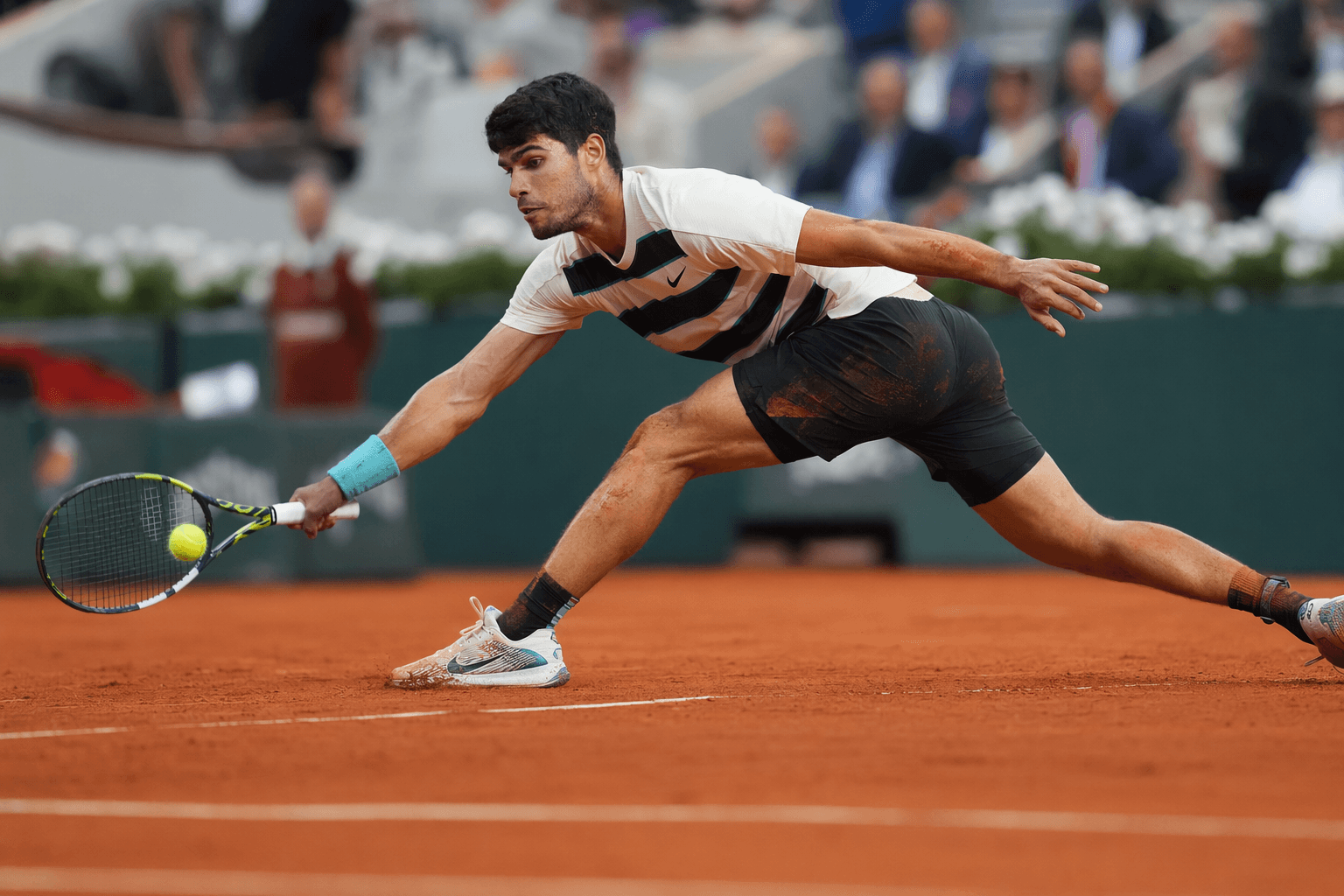
The adaptation starts with footwork. On clay, players often train to slide into shots rather than plant and stop abruptly, which helps them recover for the next ball and protect their balance when the surface gives way. The point is not just to move more, but to arrive in position early enough to control the next strike. That matters especially in Paris, where longer rallies are more common and every extra ball asks more from the legs.
Stamina becomes strategy, not just survival
Marta Kostyuk’s own arc shows how clay rewards endurance but punishes rigidity. She said she was successful on clay as a junior because she had more endurance, but that approach stopped working once she became a professional and faced opponents who could punish predictable patterns. “I would set myself to play [a] certain way, and I basically wouldn’t change it,” she said.
That is where clay reveals its deeper tactical demand. A player who tries to win with a single tempo, one pace of rally or one preferred direction can get stranded. Clay extends points, which means stamina is not just about lasting longer physically. It is also about sustaining clarity long enough to change plans mid-match, choose a safer target when needed and wait for the opponent to overreach. Kostyuk said the surface can make it hard to get into the groove because clay season is so short and each court feels like its own challenge.
Spin and point construction decide who controls the court
Clay is often described as slow, but that description misses the most important tactical shift: the surface changes how spin and depth work together. Heavy topspin grips the clay, rises higher after the bounce and can push opponents back behind the baseline. That extra bounce can open the court for a finishing ball, but only if the player has built the point patiently enough to create that opening.
The best clay-court points usually begin with margin. Players work the ball to the opponent’s weaker side, build toward the corners and wait for a shorter reply. Because clay slows the ball, outright winners are harder to find, so point construction becomes a chain of smaller advantages. That is why the surface is considered both the most physically demanding and one of the most subtle in tennis, as Roland-Garros puts it.
Why every clay court feels like its own test
Not all clay plays the same. Kostyuk pointed to Madrid as a clear example, where higher altitude and thinner air make the ball fly faster through less resistance. “So the balls are just flying,” she said. The lesson is that clay is not a single uniform surface, even if it shares the same red look.
That variation explains why experienced clay-court players often talk less about loving the surface and more about learning its language. Rafael Nadal became synonymous with clay-court success in part because he treated that language as a constant study. The smartest players do the same thing now: they watch bounce height, speed off the court and the way the ball responds to spin before they settle into their patterns.
The French Open as the season’s clearest clay exam
Because the clay season is squeezed into a few weeks between late March and early June, the French Open becomes the clearest measure of who has adjusted fastest. The men’s and women’s qualifying rounds started Monday, giving players an early chance to prove that their movement, stamina and shot tolerance have translated from hard courts to Paris. On clay, a player does not simply need power. They need patience, footwork and the willingness to change shape within a point.
That is what makes Roland-Garros so revealing. It does not just reward the strongest forehand or the biggest serve. It rewards the player who can keep balance on shifting ground, create spin that works with the bounce, and build points with enough discipline to win them on a surface that tests both body and mind.
Know something we missed? Have a correction or additional information?
Submit a Tip