French Open women’s draw looks wide open with several contenders
No one enters Paris as a runaway favorite, and that turns Roland Garros into a true parity test where clay form, draw position and nerve could all decide the champion.

Wide-open race
Roland Garros opens with a rare feeling in women’s tennis: no single player owns the conversation. The field has elite names, but the spring results have been spread across too many players for Paris to feel like a coronation, and Roland-Garros itself has called the women’s title race wide open.
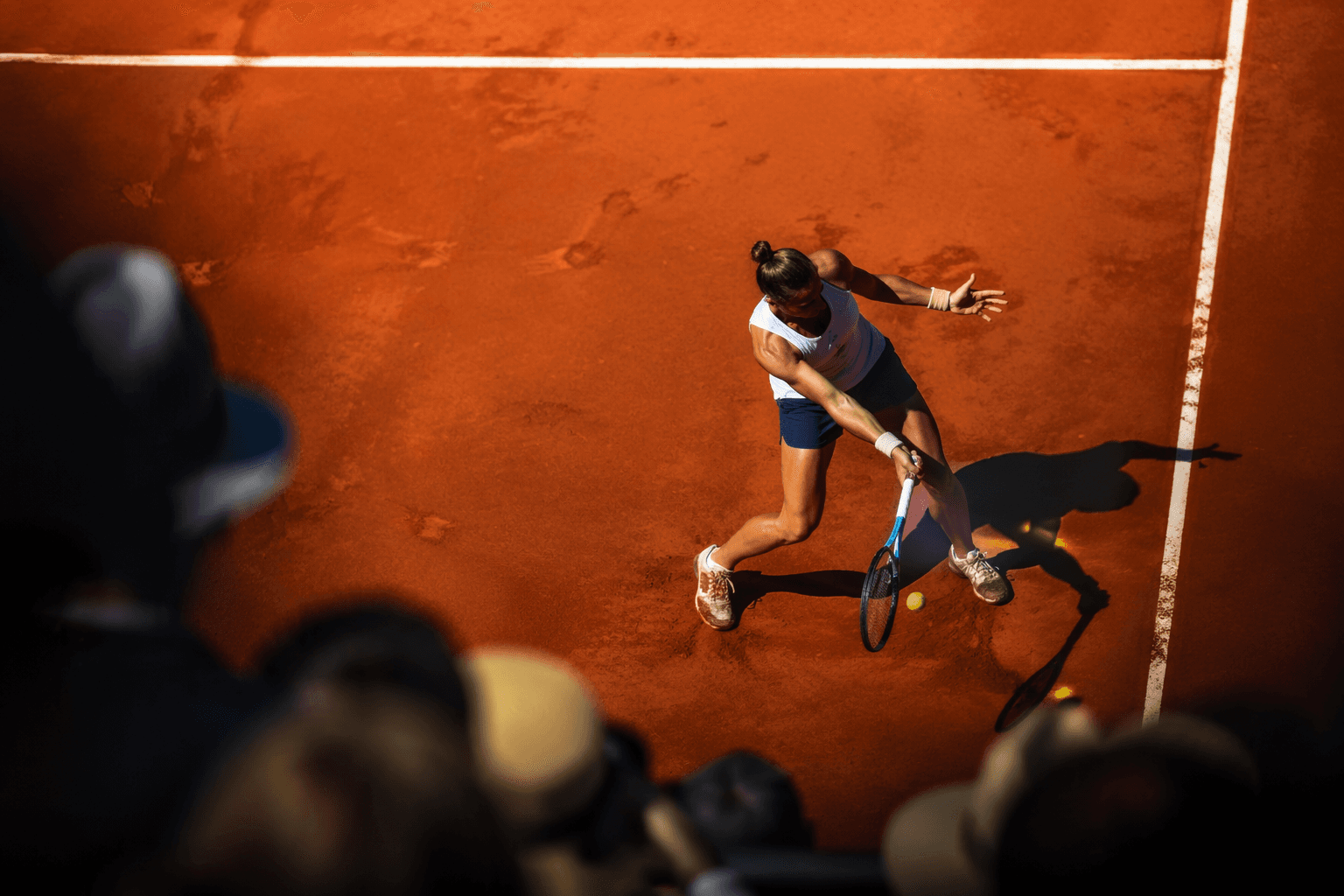
That matters because the final stretch of the clay season has not produced one dominant storyline. Madrid and Rome delivered different champions, different match styles and different proofs of form, which means the draw in Paris is being shaped by momentum rather than hierarchy. In a sport that too often narrows to one or two stars, this is a genuine parity moment.
The contenders with the clearest form
Aryna Sabalenka still enters as world No. 1, and her Sunshine Double before Paris would usually make her the obvious benchmark. Yet the draw and the recent results around her have complicated that picture. Sabalenka remains the player everyone measures against, but the week-to-week evidence suggests a title race with far more moving parts than in many recent majors.
Elena Rybakina is the clearest example of that instability at the top. Ranked No. 2, she already owns the Australian Open title this season and also defended her Stuttgart crown on clay, which gives her both hard-court pedigree and a real clay-court case. Her results have also put pressure on Sabalenka’s grip on No. 1, and that alone tells you how many points are in play at the top of the sport.
Elina Svitolina arrives with one of the strongest recent résumés in the draw. She beat Coco Gauff 6-4, 6-7(5), 6-2 to win Rome, and that victory carried extra weight because she also beat Rybakina and Iga Swiatek there. It was her 20th career WTA title, her fifth at WTA 1000 level and her first WTA 1000 trophy since returning from maternity leave, a comeback that adds both emotional force and competitive credibility to her run.
Jessica Pegula is another player whose path looks built on reliability rather than flash. She has followed up deep runs at the Australian Open and U.S. Open with a clay season that keeps her in the second tier of serious threats, and she has been working on her serve by adding spin and placement instead of leaning only on pace. That adjustment may not sound dramatic, but in a tight Paris bracket, serve variety can decide whether a player survives the first dangerous week.
Marta Kostyuk has the profile of a live dark horse, but her Madrid win made that label feel too small. She beat Mirra Andreeva 6-3, 7-5 to take her first WTA 1000 title, her third career WTA Tour title overall, and she did it after entering Madrid as the No. 26 seed. Just as important, she stretched a career-best winning streak to 12 matches, which is the kind of form that can turn a difficult draw into an opening.
Mirra Andreeva remains the youngest name in the conversation, but she is no longer an apprentice. At 19, she already has two WTA titles, including back-to-back WTA 1000 crowns in Dubai and Indian Wells in 2025, and she reached the Roland Garros quarterfinals in both 2024 and 2025. That Paris record matters because it shows she can carry her game deep into the second week on the same surface that often exposes impatience.
Why the draw makes the bracket volatile
The bracket does not soften the uncertainty; it deepens it. The official draw preview puts Gauff and Sabalenka in the same half, which creates the possibility of a semifinal between the defending champion and the world No. 1. It also places Sabalenka in the same section as Pegula, so one of the most dependable American contenders is not isolated from the top seed.
The other half of the draw is loaded in a different way. Gauff could meet Amanda Anisimova in the quarterfinals, which adds another player capable of unsettling a top seed, while Kostyuk and Svitolina are in the same quarter as four-time Roland Garros champion Swiatek. That is the kind of placement that can squeeze the margins quickly, especially on clay, where one slow start can turn into a long day.
The rankings only reinforce the depth. The WTA’s top 10 around the tournament included Sabalenka, Rybakina, Swiatek, Gauff, Pegula, Anisimova, Andreeva, Jasmine Paolini, Victoria Mboko and Svitolina, a list that shows how many players can plausibly survive into the business end of the event. That is not a bracket built for comfort. It is a bracket built for collisions.
What will decide the title in Paris
The most important storyline is not just who has the biggest name, but who has the most transferable clay-court evidence. Rybakina’s Stuttgart title, Svitolina’s Rome run and Kostyuk’s Madrid breakthrough all point to different ways of winning on dirt, whether through power, pressure or sustained streak form. Swiatek remains the gold standard in Paris with four Roland Garros titles, but the field around her is fuller than it has been in years.
There is also a broader competitive shift here. Svitolina’s return to the top level after maternity leave, Andreeva’s rise from teenage prospect to proven threat, and Pegula’s technical work on serve all show that the women’s game is being shaped by multiple pathways, not one template. That depth makes the event more dramatic and more honest: the champion will likely be the player who can handle the least predictable stretch of the draw, not simply the player with the biggest reputation.
Paris has rarely felt more open, and that is precisely what gives this edition its edge. A single hot streak, one upset, or one player finding her best clay rhythm at the right moment could reshape the entire tournament. In a field this balanced, Roland Garros is not waiting for a favorite to arrive. It is waiting for someone to take it.
This article was produced by Prism’s automated news system from verified source data, official records, and press releases, then run through automated quality and moderation checks before publishing. The system is built and supervised by the people who set the standards it runs under. Read our full AI policy.
Did this article answer your question?