From Glasgow to NBA glory, Alex McKechnie built a championship legacy
From a one-way flight from Glasgow to Vancouver with $300, Alex McKechnie turned rehab into a championship weapon and became indispensable to NBA title teams.
A Scottish reset that changed NBA medicine
Alex McKechnie did not arrive in North America with a celebrity profile or a guarantee of success. He landed in Vancouver on 7 September 1974 with $300 in his pocket, after leaving Glasgow and the Easterhouse district that shaped his early life. What followed was not just a relocation, but the start of a career that would alter how elite basketball teams think about recovery, durability and performance.
McKechnie had once imagined a different future, including a dream of playing for Rangers. A car crash that injured his father and brother changed that path and pushed him toward physiotherapy, where the value of rehabilitation became personal before it became professional. He earned a physiotherapy degree in Leeds, then began his Canadian career as head physiotherapist at Simon Fraser University in 1974, placing him on a track that would eventually take him deep into the NBA.
The craft behind the reputation
McKechnie’s significance lies less in the romance of his journey than in the methods he brought to sport. He developed an international reputation as an innovator in sport science and rehabilitation, building tools and systems that professional teams adopted far beyond basketball. Among his best-known inventions were the Torsion Board, later marketed by Reebok as the Core Board, and the Core-X System, both designed to improve movement, conditioning and recovery.
That technical edge mattered because it addressed a core problem in professional sport: how to keep high-value athletes available long enough for teams to win. In a league where injuries can reshape a season in weeks, McKechnie’s work became part medical science, part competitive advantage. His reputation spread across sports and continents, and he was eventually sought out by teams and athletes who needed more than treatment after injury. They needed a framework for staying on the floor.
The athlete list that explains the scale
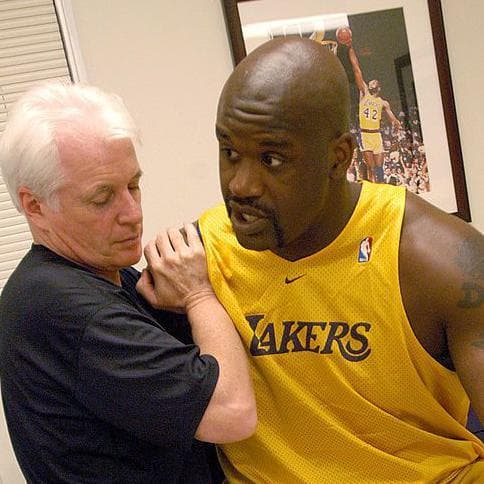
The breadth of McKechnie’s client list shows how far his influence reached. He treated Shaquille O’Neal, Kobe Bryant, Pau Gasol and Steve Nash, along with Paul Kariya, Michelle Kwan, Owen Hargreaves and Jimmy Connors. That range spans basketball, hockey, figure skating, football and tennis, and it underscores the universal appeal of his approach to injury management and performance support.
The Los Angeles Lakers made him a full-time staff member after his work with Shaquille O’Neal, a move that turned trusted consultant into embedded team figure. From there, McKechnie became part of one of basketball’s most decorated organizations, winning five NBA championship rings with the Lakers in 2000, 2001, 2002, 2009 and 2010. Those titles are the clearest evidence that his value was not abstract. He was helping teams turn health management into championship outcomes.
Why Toronto made him indispensable again
McKechnie joined the Toronto Raptors in 2011, extending his impact into another era and another continent of the NBA map. His role became especially visible during the Raptors’ 2019 title run, when he helped keep Kawhi Leonard healthy through both the regular season and the playoffs. In postseason basketball, availability is often the hidden variable, and McKechnie’s work helped turn that variable in Toronto’s favor.
The Raptors won their first NBA title in 2019, and McKechnie collected his sixth championship ring in the process. Shortly after that run, on 29 October 2019, the club promoted him to vice-president, player health and performance and signed him to a contract extension. That title reflected what the organization already understood: his influence extended beyond treatment tables and training rooms into the strategic core of team building.
A rare British legacy in the NBA
McKechnie’s career also stands out because of what it says about the globalization of sports expertise. He is described as the only Briton to win an NBA championship ring as either a player or a member of sideline staff, a distinction that makes his career unusual even in a league built on international talent. By 2019, he had six rings, and that total places him among the most decorated British figures ever connected to NBA success.
Recognition followed in other forms as well. He was inducted into the British Columbia Sports Hall of Fame in 2018, with the hall noting that he still has an off-season home in Coquitlam, British Columbia. The honor reflected not only longevity, but the credibility he built in a field where results are measured in return-to-play timelines, fewer missed games and the ability of stars to survive a long season.
What McKechnie’s career changed
McKechnie’s story is about more than a personal climb from Glasgow to North American sports prominence. It shows how modern elite teams now prize medical and performance expertise as much as scouting and tactics. His work helped define a model in which recovery is not a reactive service, but a competitive discipline that can preserve careers and protect championship windows.
His path from Easterhouse to Vancouver, from physiotherapy student to NBA architect of player health, reflects a broader shift in global sport. The best medical minds are no longer on the margins. In McKechnie’s case, they are part of the championship blueprint, and his legacy is written in rings, in rebuilt careers and in the durable idea that keeping elite athletes healthy is itself a winning strategy.
This article was produced by Prism’s automated news system from verified source data, official records, and press releases, then run through automated quality and moderation checks before publishing. The system is built and supervised by the people who set the standards it runs under. Read our full AI policy.
Did this article answer your question?