From Mason Gordon's L.A. Prototype to Series 6 Revival: SlamBall Explained
Sports fans will learn SlamBall’s origins, rules, court specs, player roles, league history, and how the Series 6 revival reshaped its business and culture.

1. Origins and the Mason Gordon prototype
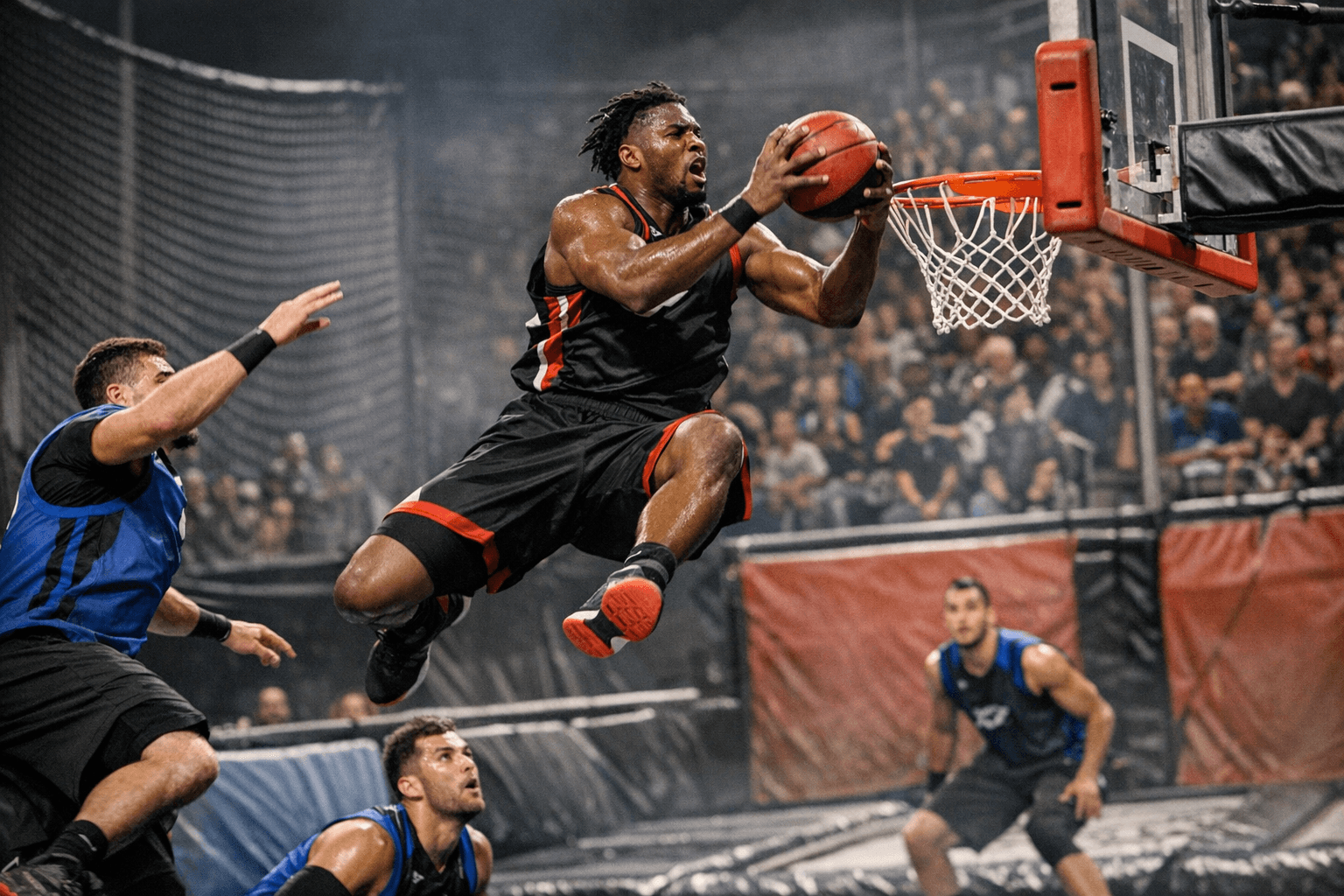
Mason Gordon invented SlamBall in the late 1990s, prototyping the concept in an L.A. warehouse where the mix of trampolines and basketball-first spectacle took shape. That prototype set the tone: purpose-built springbeds, plexiglass enclosure, and a rule set designed to reward aerial athleticism and physical contact above the waist. The DIY L.A. origin feeds SlamBall’s identity as equal parts garage innovation and televised spectacle, which has driven its appeal to fans who crave high-impact highlights and disruptive sport formats.
2. Court and equipment specifications
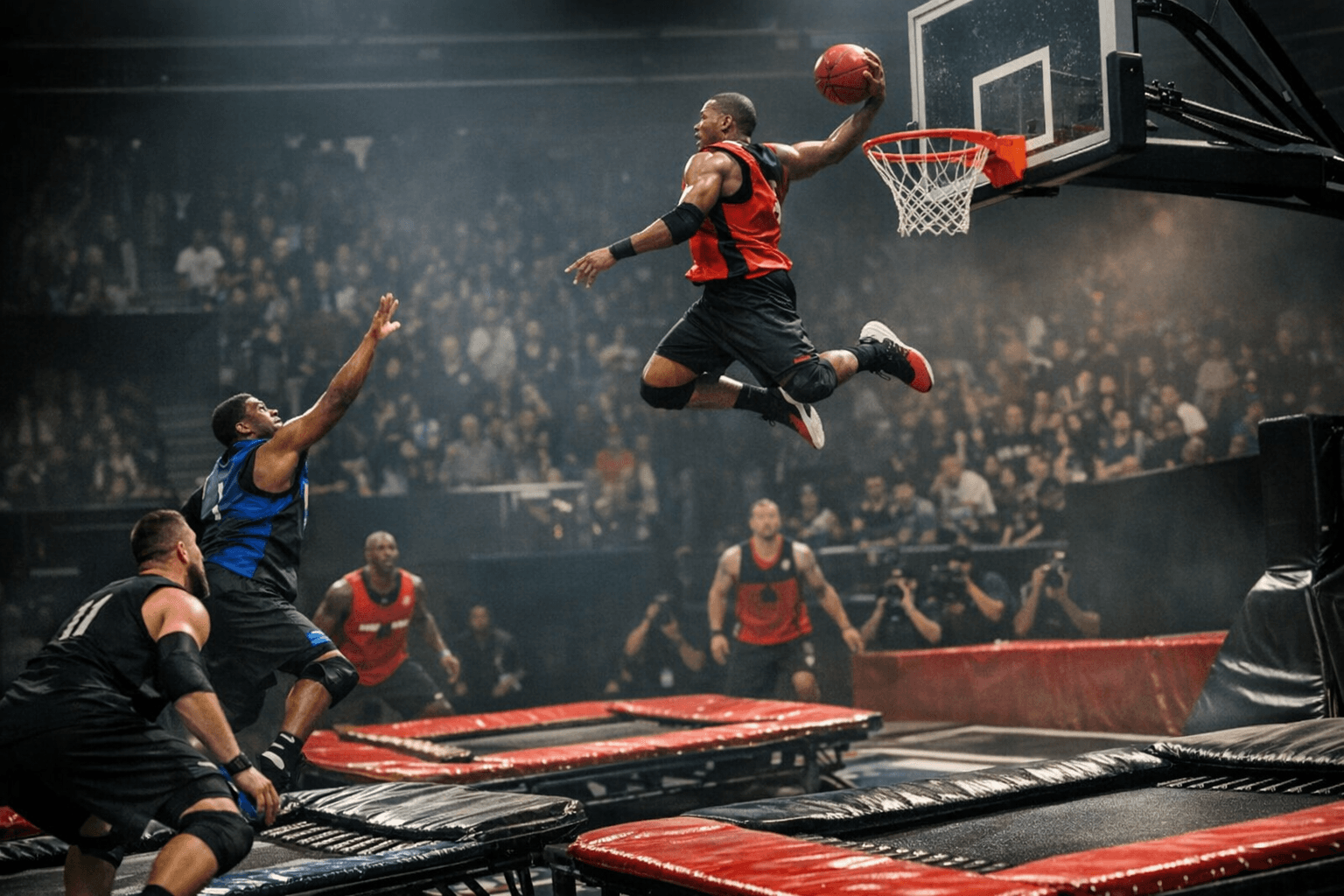
A standard SlamBall court measures roughly 96' x 64' and is configured to maximize vertical play and safe rebound landings. Each end features three 7' x 14' springbeds and one 10' x 14' scoring bed beneath the hoop, all surrounded by approximately 8' plexiglass walls; a central "island" platform is used for positioning and tactical set pieces. Equipment and arena setup emphasize durability and player protection, springbeds tuned for consistent rebound, plexiglass to contain play, and a scoring bed designed to absorb the force of repeated dunks while preserving rim access.
3. Players, roles and team composition
SlamBall is a four-on-four game with distinct role specialization: Handler (primary ball-handler), Gunners (primary scorers) and Stopper (rim protector). Handlers control tempo and distribution off the springbeds; Gunners are the airborne finishers who exploit the scoring bed and four-point opportunities; Stoppers anchor defense, contesting dunks and managing contact above the waist. Team construction rewards complementary skill sets, pairs of Gunners with elite air awareness plus a disciplined Stopper create the most explosive lineups.
4. Timing, scoring and rule variants
Games adopt four five-minute quarters with a running clock, only stopping in the final minute, this design accelerates TV-friendly pacing and forces urgency late in each quarter. Scoring prioritizes vertical showmanship: recent rule variants (documented in 2023) added a four-point arc for deep, high-difficulty attempts; dunks and long-range buckets register as three points, and standard field goals are two. This scoring structure skews outcomes toward fast swings and comeback potential, where one successful four-point bomb or contested dunk can flip momentum instantly.
5. Contact rules and foul mechanics
Contact is allowed above the waist in open-court exchanges to preserve the physical, rugby-ish flavor of SlamBall, but there are strict protections for players using springbeds and the island platform to manage collision risk during aerial play. Fouls are handled differently than traditional basketball; instead of routine free throws, some infractions can lead to "face-offs" or other restart mechanics that emphasize possession battles. The hybrid contact model lets players collide in pursuit of highlight plays while rule design mitigates repeated injury risk around the trampolines.
6. League history, international chapters, and the Series 6 revival
SlamBall first reached national TV in the early 2000s (TNN/Spike era), later resurfacing with a Chinese Championship Series between 2012–2016, and then returning to the U.S. in 2023 with Series 6. The 2023 relaunch featured an eight-team format, Mob, Slashers, Rumble, Wrath, Lava, Gryphons, Ozone, Buzzsaw, and came with modern commercial infrastructure: Series A funding, broadcast deals, and corporate partnerships. That financial and distribution backing reframed SlamBall from a cult spectacle into a commercially viable niche league, poised to monetize highlights, live events, and branded content.
7. Game outcomes, player performances, and team dynamics
Outcomes in SlamBall hinge on vertical efficiency, rotational chemistry, and the ability to protect the rim while sustaining transition offense. Player performances are evaluated on metrics different from standard hoops: air awareness, springbed timing, mid-air finishing accuracy, and contact resilience. Team dynamics reward quick ball movement to create isolated springbed mismatches, synchronized approaches to the island for set plays, and defensive discipline by the Stopper to limit high-value attempts. Because scoring can swing rapidly, roster depth and in-game substitutions often determine late-quarter outcomes.
8. Industry trends and business implications
SlamBall’s revival aligns with larger trends: appetite for short-form, highlight-driven sports content, investor interest in alternative leagues, and rights holders seeking differentiated programming. Series A funding and broadcast deals provide upfront runway, but long-term success depends on scalable ticketing, merchandising, and digital monetization of viral plays. Partnerships, sponsorships, apparel deals, and platform collaborations, will likely drive revenue diversification; leagues that package highlight reels and athlete personalities for streaming and social platforms stand to gain the most.
9. Cultural context and social significance
SlamBall sits at the intersection of street culture, extreme sports, and basketball fandom, its LA garage origin and the Chinese chapter make it a transnational phenomenon with varied cultural inflections. The sport amplifies narratives about gravity-defying skill, risk-taking athleticism, and spectacle-led entertainment that resonate with younger audiences. Socially, SlamBall creates alternative professional pathways for dunk specialists and crossover athletes, while also raising conversations about safety standards and athlete welfare in high-impact entertainment sports.
- Require helmets or scrum caps and padding focused on head and shoulder protection to reduce concussion risk.
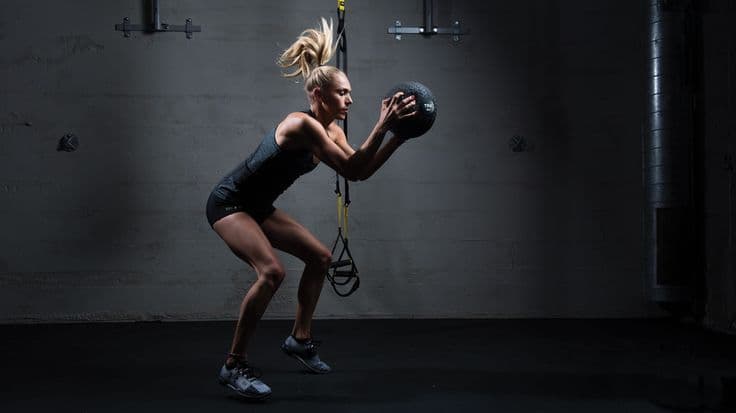
- Emphasize plyometrics, impact management drills, and air-awareness training in conditioning cycles to improve rebound control and landing mechanics.
- Plan for TV pacing with condensed quarters and marketing around high-value scoring moments.
- Build safety protocols around springbed maintenance and medical readiness for high-impact landings.
10. Practical takeaways for teams, coaches and event operators
Court setup and equipment: adhere to the 96' x 64' footprint, install three 7' x 14' beds plus a 10' x 14' scoring bed at each end, and secure ~8' plexiglass surrounds to maintain play integrity. Protective gear and conditioning:
Operational tips:
11. Closing practical wisdom
SlamBall is a calculated blend of physics and showmanship, if you’re coaching, focus on timing and safe aerial technique; if you’re promoting, package the highlights into snackable content and secure broadcast partners early. The sport’s comeback shows that innovation plus responsible safety practices can turn a warehouse prototype into a sustainable entertainment product, position your team, event, or coverage strategy to amplify the air time while protecting the athletes who make it fly.
Know something we missed? Have a correction or additional information?
Submit a Tip