From novice to ultramarathoner, woman runs 100 marathons across India
From a first-ever run after 40 to 100 marathons in 100 days, Hannah Cox turned grief into a punishing tribute to her father and a public climate campaign.
A route built from mourning
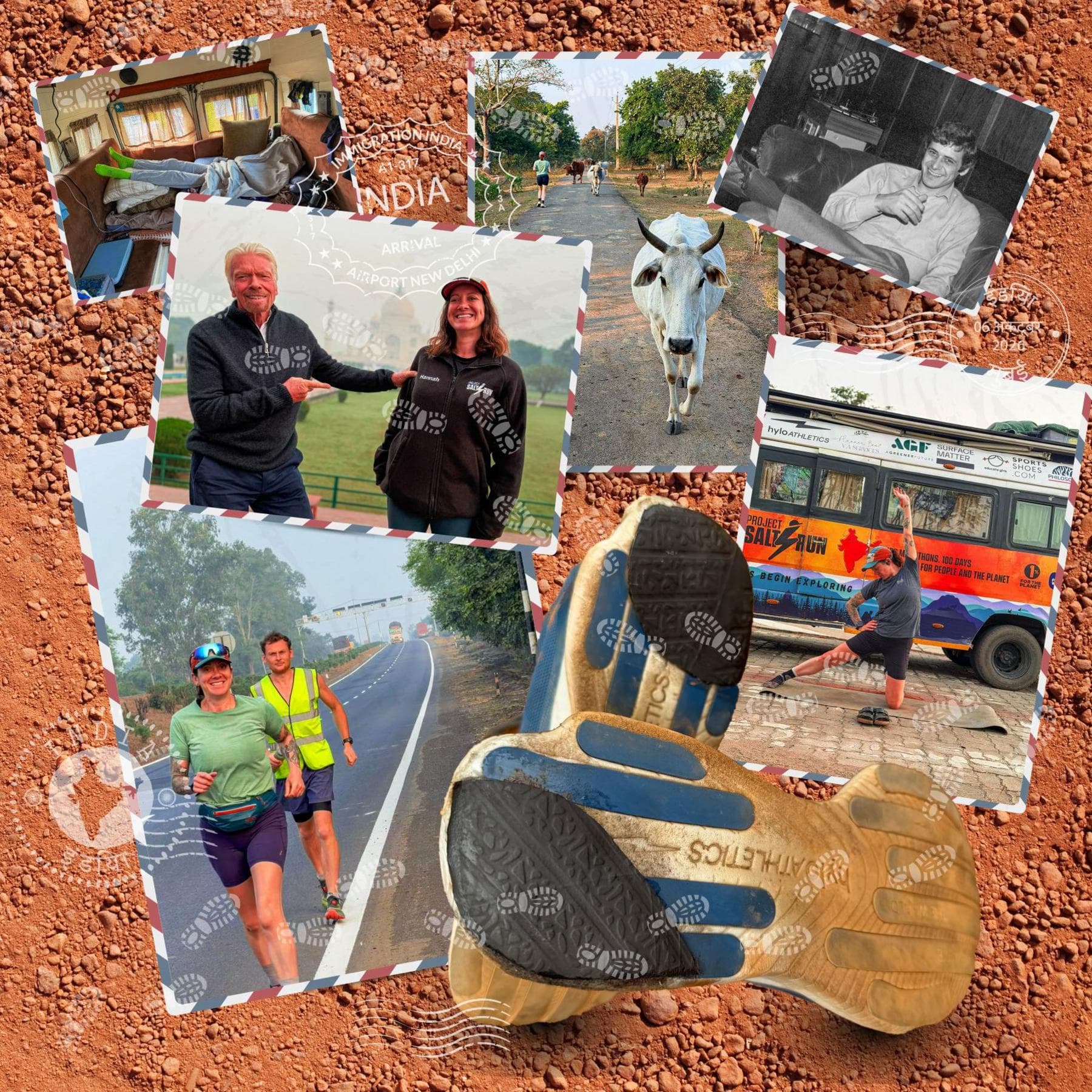
Hannah Cox crossed India with one extraordinary purpose: to turn grief into motion. She set out to run 100 marathons in 100 days, tracing the Indian section of the Old Inland Customs Line, a colonial route once used to enforce the salt tax, and remaking it as a journey of connection, courage and climate action.
For Cox, the run was a love letter to her late father, Deric Cox, who was born in Kolkata and later moved to the UK as a child. After his death in 2011, she became more interested in her Indian heritage, and the route gave that personal search a physical form. What began as a memorial became Project Salt Run, a campaign that folded remembrance, environmental advocacy and endurance sport into one 4,200km mission.
From no running shoes to a finish in Kolkata
The transformation is striking because Cox had never been for a run before she turned 40. She began training in earnest only about 18 months before the challenge, after a friend suggested in summer 2024 that she should attempt the route. From there, she joined a local running club in Manchester and built her base slowly, starting with 30-minute runs three times a week before moving to 5Ks and 10Ks.
Her training then became far more severe. She worked through back-to-back efforts such as “20 20 20”, meaning 20km every weekday for 20 days, and later completed seven marathons in seven days across the UK. That progression mattered because the challenge in India was not a symbolic jog between landmarks. It demanded the kind of body conditioning, pacing discipline and psychological endurance usually associated with seasoned ultrarunners, not someone who had only recently started.
Cox also carried a personal physical history that made the feat even more unlikely. In her 30s, she wore a back brace for 18 months after taking 30 painkillers a day for back pain, and she lives with scoliosis. Her ability to go from chronic pain management to repeated marathon days was not just a fitness story. It was a reminder that endurance often depends as much on adaptation, support and persistence as on natural talent.
How Project Salt Run was organised
Cox quit her job, assembled a support team and acquired a van before setting off. The campaign set a fundraising goal of £1 million for environmental charities and named four partners: 1% for the Planet, Frank Water, Big Change and ClientEarth. Project Salt Run describes the challenge as a peaceful act of resistance and a shared platform for a fairer, sustainable future.
The support setup was central to making the route possible. Natalie Smith handled communications and social media, Alex Fowler provided podiatry and daily run support, and Joel Chevaillier worked as filmmaker and logistics lead. Later reporting also identified Asgar Ali and Raja Ali as drivers and helpers. The structure matters because a 100-day run across India is not a solo athletic statement. It is a moving operation, with sleep, food, transport, foot care, repairs and morale all having to function every day.
Cox started from the Attari-Wagah border between Pakistan and India on 26 October 2025 and finished in Kolkata on Monday 2 February 2026, only a few miles from where her father was born. Telegraph reporting says she covered 2,458 miles through nine Indian states, while Project Salt Run describes the overall route as 4,200km. Those numbers underscore the scale of the undertaking: she was not circling a track or repeating a short loop, but moving through a long and varied corridor of terrain and history.
The bodily cost of 100 marathons
The route was as punishing as it sounds. Cox battled acute gastroenteritis and fell ill multiple times during the challenge. At one point, she superglued pieces of a rubber tyre to her trainers after wearing them down, a vivid detail that captures the wear-and-tear of running a marathon distance day after day on roads that were never designed to accommodate this kind of movement.
She also endured the hazards of traffic and the everyday unpredictability of Indian roads. Her route took her past busy highways, cows, snakes and goats in the road, and drivers travelling on the wrong side. A collision with a motorbike left a scar on her right leg. Some days included a full 42km on highways she described as “boring as hell”, while other stretches passed through nature reserves, canals and farmers’ fields. The contrast between monotony and beauty was part of the discipline: she had to keep going whether the day offered inspiration or not.
The emotional low point came around day 40, when she cried by the roadside and felt like giving up. What carried her through, according to her own account, was Natalie Smith’s encouragement and the knowledge that hundreds of people had already backed the project. That detail matters because endurance is often romanticised as individual toughness. In reality, Cox’s finish depended on an emotional and logistical network that helped absorb the moments when her own resolve sagged.
What the finish meant
By early February 2026, reports said Cox had raised more than £81,000 for environmental charities, with the wider goal still set at £1 million. The fundraising total had not reached the campaign’s full ambition, but it had already turned a private act of mourning into a public platform for climate and social-purpose work.
The deeper significance of the journey lies in how Cox linked her father’s story to a wider history. The Old Inland Customs Line was a colonial system built to enforce extraction and control through the salt tax. By running it in the opposite spirit, Cox reframed a route of oppression as one of memory, endurance and solidarity. That does not erase the violence of the original history, but it does insist that inherited landscapes can be reinterpreted rather than accepted as fixed.
Cox said the experience was “life-affirming” and that she felt like a “completely different person” after finishing. The phrasing fits a project that was never only about athletic performance. It was about grief carried mile by mile, a daughter’s relationship to her father’s birthplace, and the stubborn work of turning loss into something that could still move people forward.
This article was produced by Prism’s automated news system from verified source data, official records, and press releases, then run through automated quality and moderation checks before publishing. The system is built and supervised by the people who set the standards it runs under. Read our full AI policy.
Did this article answer your question?