FTSE 100 Tops 10,000 for First Time as Markets Open 2026 Risk-On
London’s benchmark stock index climbed past the symbolic 10,000-point barrier on Jan. 2, 2026, as global markets opened the year with a risk-on tone driven by optimism around AI, strong commodity flows and robust year-end reallocations. The milestone underscores a rally that began in 2025 and raises questions about market concentration, policy implications and the durability of gains into the new year.

The FTSE 100 briefly surged above the 10,000 mark on Jan. 2, 2026, reaching fresh intraday highs early in trading before trimming gains later in the session. Early prints varied, with intraday peaks recorded between roughly 10,019.56 and 10,046.25, and one reading showing 10,036.82, reflecting differences in reporting and opening prints across data feeds.
The move was part of a broadly risk-on market opening. Investors cited renewed enthusiasm for advanced artificial intelligence applications, strength in precious metals and heavy year-end fund flows reshaping allocations. Those forces compounded momentum from a very strong 2025 for the FTSE 100: estimates put last year’s gain at about 21.5–22 percent, its best annual performance since 2009 and the strongest 16-year showing by some measures.
Sector composition shaped the breakout. Mining stocks were key contributors, led by Fresnillo, which jumped 3.6 percent on the day and was singled out for an extraordinary 2025 advance of roughly 368 percent. Defence and aerospace names also powered the rally, aided in part by comments from Ukraine’s president that a peace deal was “90% ready,” a development that lifted defence-related securities. Major bank stocks added to the upward pressure, reflecting better-than-expected sentiment about lending conditions and investor appetite for cyclical exposure.
Market breadth at the open was positive beyond the headline index. The FTSE 250 opened higher, trading around 22,506.38 in early moves, while the AIM All-Share advanced to near 769.91. Cboe‑based measures of UK equities were also firmer, with the Cboe UK 100 near 1,003.81, the Cboe UK 250 around 19,582.55 and the Cboe Small Companies index near 17,689.92.
Political and market actors immediately weighed in on the symbolic threshold. Chancellor Rachel Reeves wrote that surpassing 10,000 was a “vote of confidence in Britain’s economy,” while noting that a majority of FTSE 100 revenues are generated overseas. Dan Coatsworth, head of markets at an investment platform, described the milestone as “a historic moment,” saying it already made 2026 one of the most significant years for the blue‑chip index since its launch.
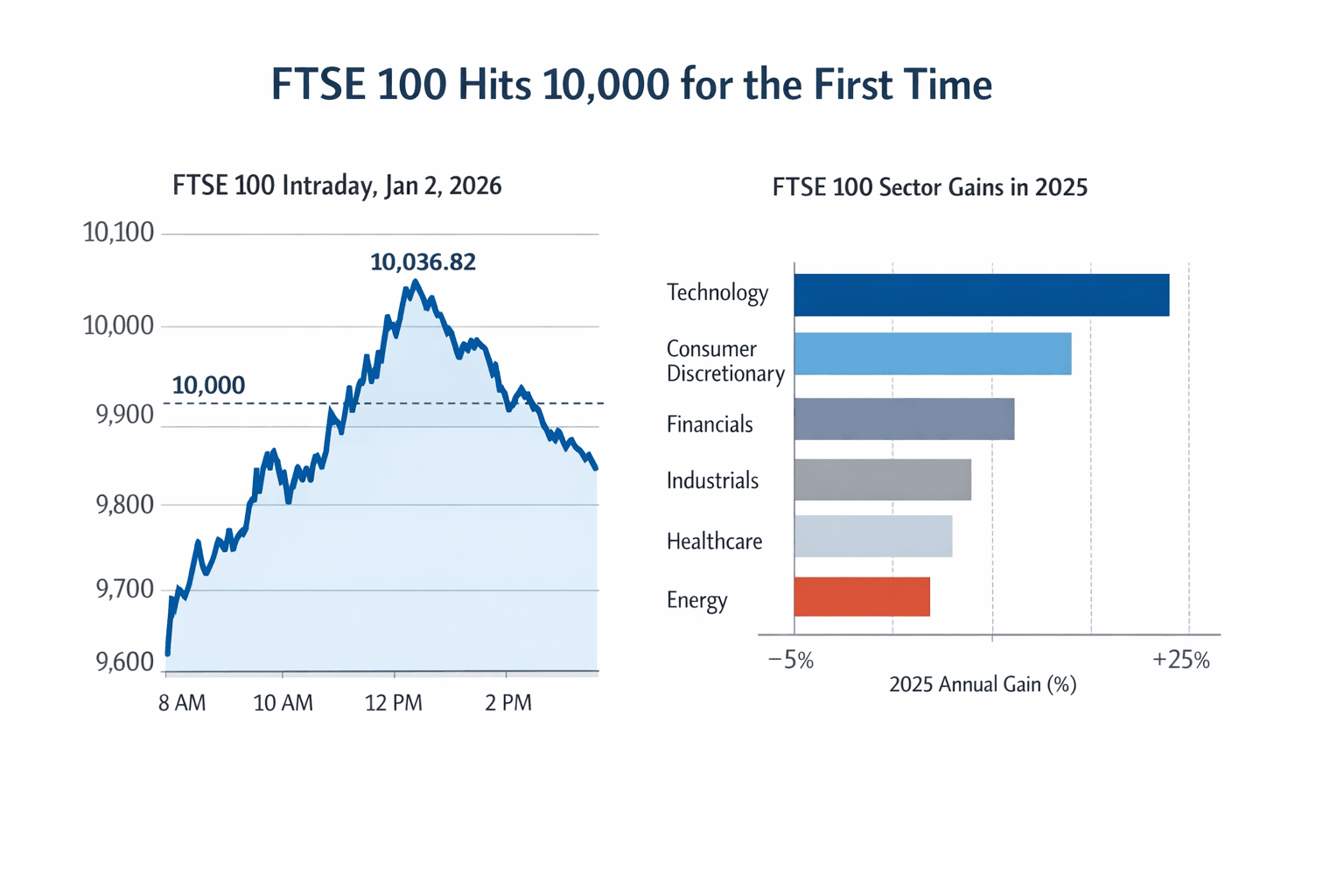
Analytically, the milestone reflects both macro tailwinds and index structure. The FTSE 100’s heavy weighting to mining, oil and large multinational banks means global commodity cycles and the dollar‑and‑demand outlook can have outsized effects on the benchmark. That concentration also raises the risk that outsized gains from a handful of names, such as Fresnillo, could amplify headline moves while underlying domestic economic indicators tell a different story.
For policymakers, the new high is largely symbolic. It may bolster fiscal confidence in the short term, but it does not alter the Bank of England’s inflation mandate or the structural challenge of boosting domestic productivity. Market participants will now watch whether AI developments, commodity prices and geopolitical negotiations sustain the early‑year rally or prompt volatility as investors reassess valuations and corporate earnings through 2026.
This article was produced by Prism’s automated news system from verified source data, official records, and press releases, then run through automated quality and moderation checks before publishing. The system is built and supervised by the people who set the standards it runs under. Read our full AI policy.
Did this article answer your question?

