Fuel Prices and Gas Curbs Hammer India’s Glass Capital Firozabad
Firozabad’s furnaces are being squeezed by conflict-linked gas curbs, pushing output down, idle workers off shifts, and a historic glass hub toward deeper strain.
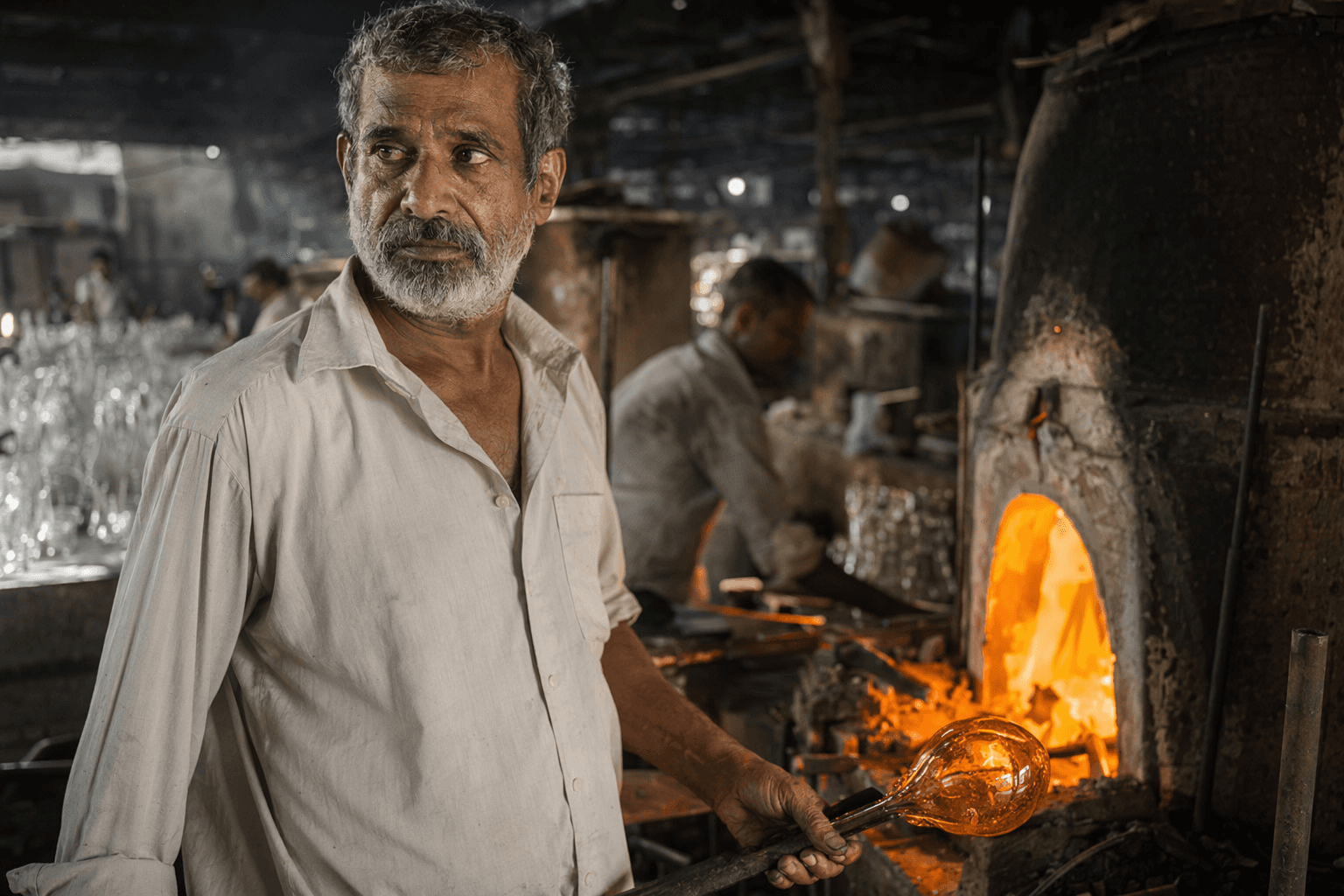
A furnace economy under pressure
Firozabad’s glassmakers are being hit where their industry is most vulnerable: the furnace. In the “City of Glass,” where production has been shaped for centuries by uninterrupted heat, conflict-linked gas disruptions and tighter supply rules are now forcing factories to slow down, shut units, and cut shifts.
The city, about 37 to 40 km from Agra, has been known for generations as India’s “Bangle City” as well as its “City of Glass.” Government tourism material says its glassmaking tradition dates back to the Mughal era of the 16th century, when Akbar established a glass factory there. Today, the sector in Firozabad accounts for almost 70% of India’s glass production and supports more than 150,000 people, with one estimate putting employment at around three lakh people across nearly 150 bangle factories and 30 to 40 glassware units.
Why gas is the choke point
The industry cannot simply switch to another fuel source and keep moving. Glass furnaces in Firozabad must run continuously, often at temperatures as high as 1,500°C, and natural gas makes up about 30% to 35% of total production costs. That makes fuel access, not just fuel price, the critical variable.
Following the escalation in the Iran conflict, authorities invoked the Essential Commodities Act, 1955, and capped gas usage at 80% of the previous six-month average. For an industry built around steady, round-the-clock heat, that kind of rationing is more than an inconvenience. It breaks production cycles, raises wastage risk, and forces manufacturers to choose between keeping furnaces alive and meeting orders on time.
The squeeze is especially severe because Firozabad sits inside the Taj Trapezium Zone, a 10,400 sq km protected area around the Taj Mahal. Coal is banned there, and industries are pushed toward natural gas to limit pollution near the monument. That environmental safeguard, designed to protect a world heritage site, has left glassmakers with few alternatives when gas supply tightens.
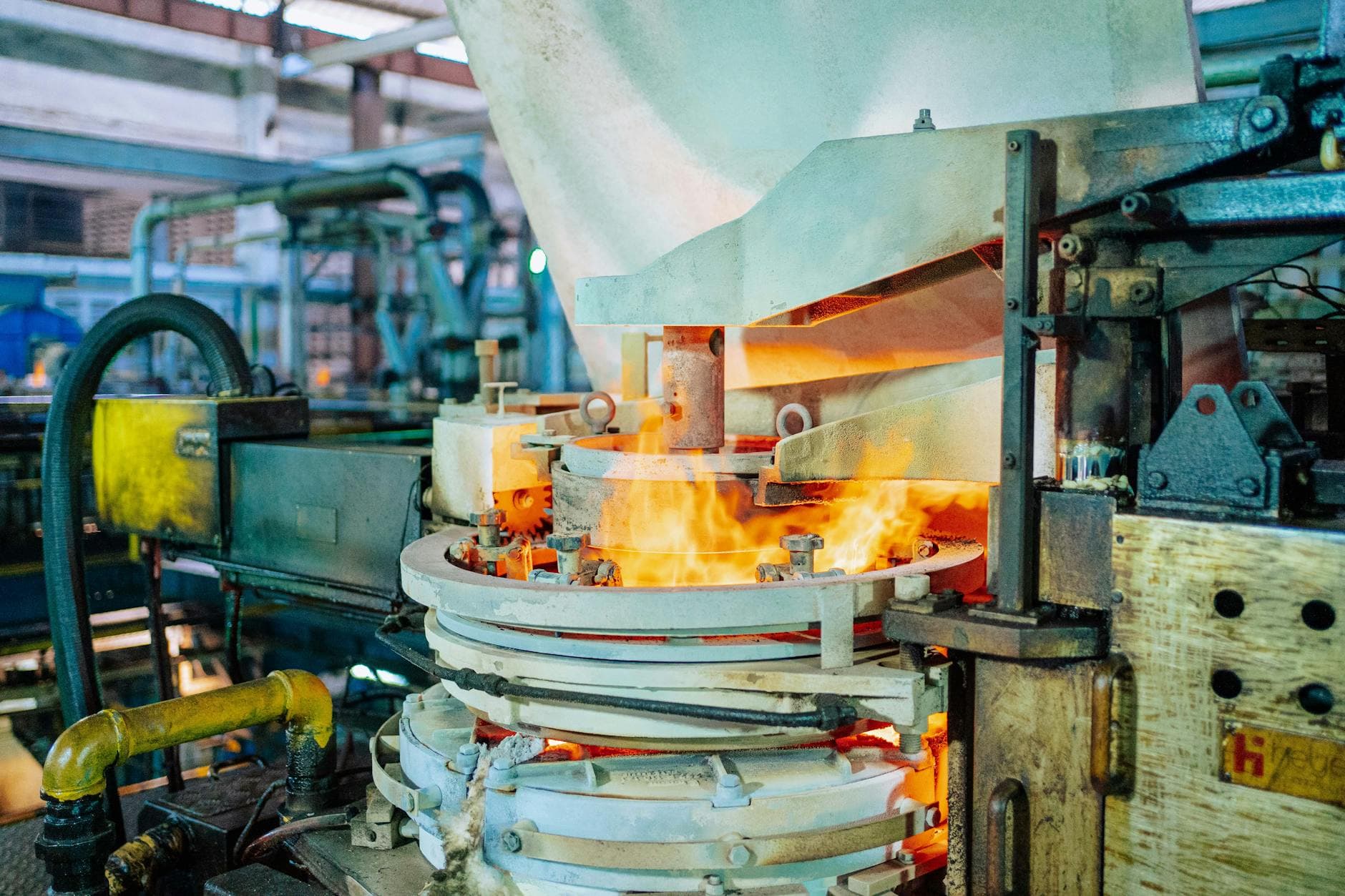
Output is falling as furnaces are idled
The production damage is already visible. One report says output in Firozabad’s glass industry has declined by nearly 40%. Another says production is running at only 50% to 60% of normal and that 20 to 25 units have shut after a 20% gas cut. Some manufacturers are delaying or reducing furnace operations several days a week simply to conserve fuel and prevent deeper losses.
Industry voices including Hemant Agarwal, Mukesh Kumar Bansal and Lalitesh Jain describe a system under strain, where every hour of lost heat translates into lost product and higher restart costs. At units such as Sri Sitaram Glass Works, the pressure is not abstract. It shows up in fewer shifts, lower throughput, and a growing gap between what factories can produce and what buyers are asking for.
The effect ripples through the workforce quickly. Daily-wage laborers lose shifts first, and families that depend on steady factory income begin trimming essential spending. In a craft economy where many households are tied to the same industrial cycle, a furnace slowdown becomes a community slowdown.
Exports are weakening at the same time
The fuel shock is not hitting in isolation. Export demand has weakened in West Asia, and shipping costs have surged sharply. Container rates reportedly climbed from about $3,500 to $3,600 to roughly $6,000 to $6,500, nearly doubling a major line item for exporters already managing thinner margins.
That matters because Firozabad’s glass trade depends not only on domestic buyers but also on overseas orders that smooth out production. When freight costs jump and regional demand softens at the same time, exporters lose both competitiveness and predictability. Order cycles become harder to plan, inventories become riskier to carry, and smaller units can be pushed to the edge of temporary closure.
Glass makers also say the longer shadow of Donald Trump-era U.S. tariffs is still being felt. They argue that those duties caused a lasting 60% drop in exports and disrupted order cycles, weakening a market that might otherwise have provided a buffer against the current gas shortage. Now, with West Asia demand cooling and freight costs surging, there is little room left to absorb another shock.
How geopolitics reaches the workshop floor
This is what a supply-chain shock looks like in a craft economy. A conflict in West Asia can rattle gas flows linked to the Strait of Hormuz, trigger rationing at home, push freight rates higher, and then land in a furnace town in Uttar Pradesh where workers are paid by the shift and heat cannot be paused without damage.
Firozabad’s glass industry has survived for centuries because its production model was tightly disciplined, technically specialized, and deeply rooted in local labor. But that same structure makes it fragile when energy becomes scarce. The city’s manufacturers cannot easily relocate, cannot freely switch fuels, and cannot stop and start furnaces without paying a steep price.
The result is a broader warning for India’s craft-based manufacturing clusters. When energy markets tighten and geopolitics disrupts supply routes, the pain does not stay at the level of fuel traders or shipping firms. It moves down the chain into factory schedules, export contracts, household incomes, and the long-term viability of industries that define entire towns. For Firozabad, the question is no longer whether the glass sector matters. It is whether the fuel system can still keep its furnaces burning often enough to preserve it.
This article was produced by Prism’s automated news system from verified source data, official records, and press releases, then run through automated quality and moderation checks before publishing. The system is built and supervised by the people who set the standards it runs under. Read our full AI policy.
Did this article answer your question?

