G7 leaders gather in Italy amid shifting global economic pressures
Seven wealthy democracies met in Italy as leaders tried to coordinate on trade, energy and Ukraine, testing an informal club with no treaty or secretariat.
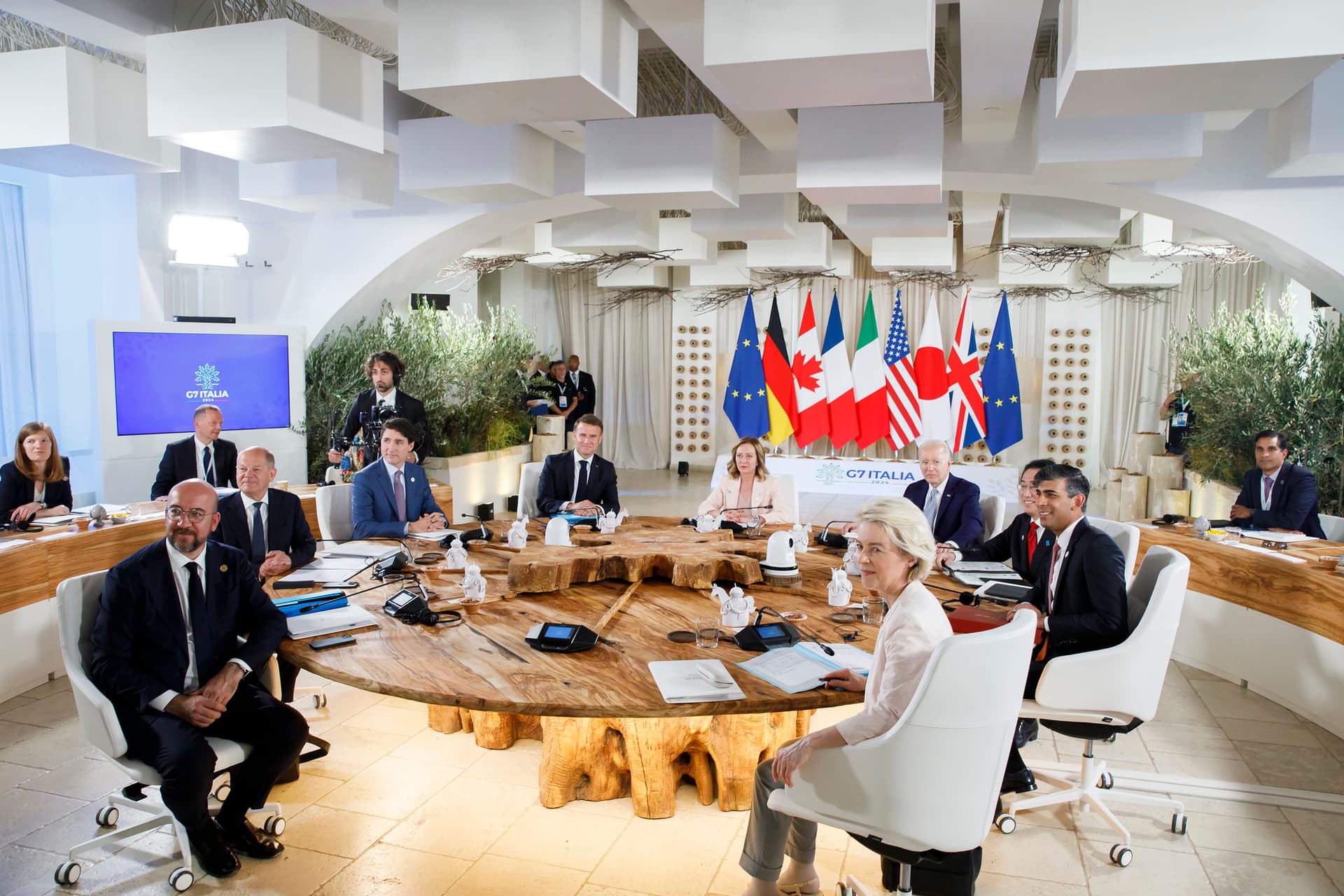
Seven of the world’s wealthiest large democracies gathered in Italy with a simple but stubborn purpose, to try to align their responses to trade shocks, energy pressure and war in Europe. The G7 meeting at Borgo Egnazia in Apulia put a spotlight on a club that has no treaty, no permanent secretariat and no standing office, yet still brings together the United States, France, the United Kingdom, Germany, Japan, Italy and Canada, with the European Union also represented.
That structure is part of the point. The G7 was born in the first half of the 1970s, when the collapse of the Bretton Woods monetary system and the 1973 oil crisis forced leaders to look for a place to coordinate on macroeconomics, currency, trade and energy. The first summit, then in G6 format, was held at Rambouillet, France, from Nov. 15-17, 1975. Canada joined in 1976, and the format that followed became the G7.
The group still works the way it always has: the presidency rotates every year, the host organizes the summit and the preparatory ministerial meetings, and leaders usually leave with a communiqué rather than binding rules. That makes the G7 less powerful than a treaty-based institution, but it also makes it flexible. On issues that move markets and shape household budgets, from trade frictions to fuel costs, the seven governments can set a common political line quickly, even if they cannot enforce it on their own.

Over time, the agenda has widened far beyond economics. G7 leaders now talk about development aid, climate change, food security, health, gender equality and peace and security. The countries in the club also account for more than 70% of official development assistance worldwide, with OECD data cited for 2020 putting that support at more than US$100 billion. For Americans, that matters because the G7 is one of the few places where the major democratic powers can try to coordinate on the rules and pressure points that affect supply chains, energy markets and security commitments.
The group’s limits are just as important. Russia was a member of the G8 from 1998 until the G7 suspended its participation in 2014 after Russia’s actions in Ukraine, and the format has remained the G7 since then. That history underscores both the club’s political weight and its lack of formal authority. The next summit is scheduled for Evian-les-Bains, France, from June 15-17, 2026, a reminder that the G7 endures not because it can dictate outcomes, but because its members still need a place to negotiate them.
This article was produced by Prism’s automated news system from verified source data, official records, and press releases, then run through automated quality and moderation checks before publishing. The system is built and supervised by the people who set the standards it runs under. Read our full AI policy.
Did this article answer your question?