Gallant Goblin guide shows how to start Pathfinder 2e for free
Gallant Goblin’s longform guide maps a free-first route into Pathfinder 2e using Paizo’s SRD, Nexus Primer, free sheets and community tools so you can run games without buying every core book.
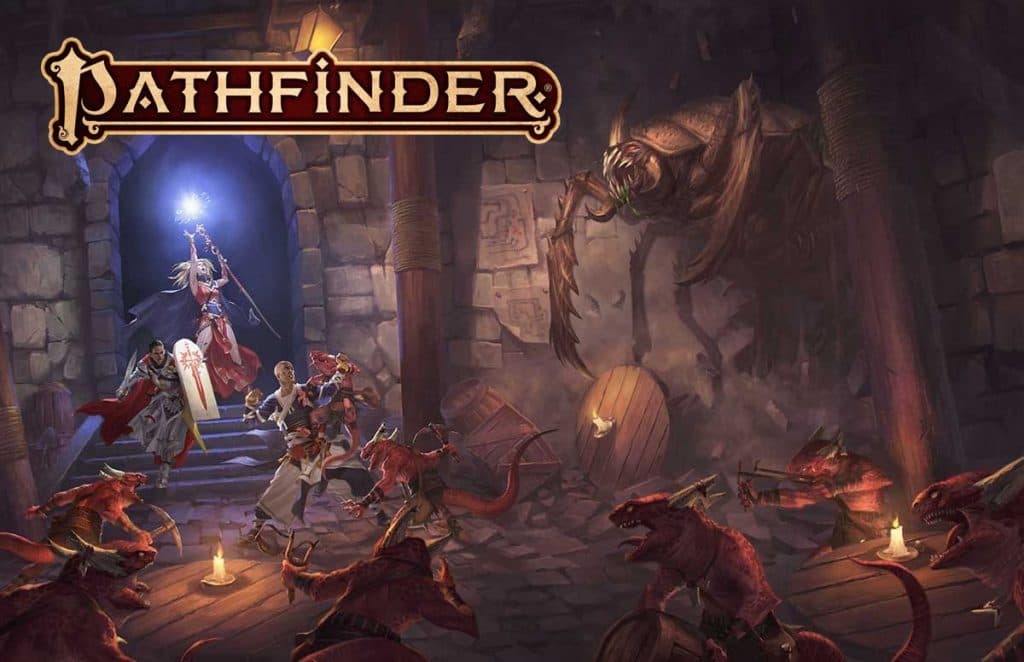
Gallant Goblin’s longform guide “Get Started with Pathfinder 2e for Free” lays out a step‑by‑step path so new GMs and players can begin playing without purchasing every core book. That promise changes the opening question for anyone moving from curiosity to the table: do you buy the boxed starter or bootstrap a complete, playable game from free digital resources? Below I walk you through both tracks, the tools you’ll actually use, GM-first tips from community video advice, and the organised play and conversion resources that keep you connected.
Two clear starting paths: free-first vs. beginner box
If you want to avoid upfront purchases, follow the Gallant Goblin’s free-first approach: use chapter excerpts, the SRD, free adventures and other no-cost materials to stand up play. Paizo itself supplies the SRD through Archives of Nethys and the Pathfinder Primer on Pathfinder Nexus, so you’re not inventing workarounds—these are official entry points.
If you prefer a tactile, plug-and-play option, Trollishdelver’s recommendation is blunt: “If you're finding it difficult to understand where to start with Pathfinder 2e, the Beginner Box is the best place to begin your journey.” The Beginner Box is a packaged, premium-quality product with a solo adventure, GM handbook, dice, pregens, 100 card pawns with bases, reference cards, and a flip mat. Trollishdelver notes it’s “more expensive than the 5e starter sets” but argues “you get more in it at a premium quality...” — the tradeoff is convenience and a lower learning curve at cost.
- Archives of Nethys hosts the official Pathfinder Second Edition System Reference Document (SRD) and functions as the central free rule repository; Paizo points to the SRD location as PFRD.Info and says Archives “offers a free online Pathfinder Player's Guide to help you learn and play!”
- Pathfinder Nexus carries the Pathfinder Primer, “a free 'mini' core rulebook with all the basics of play at Paizo’s official digital toolset: Pathfinder Nexus.” Use the Primer for the basic mechanics and the SRD for deeper lookup.
- Paizo also offers downloadable character sheets: the Pathfinder Beginner Box Character Sheets (308 kB zip/PDF), plus Remastered and Legacy character sheets in color and black-and-white; you can also purchase class-specific versions if you want polished physical sheets.
Essential free resources to build a playable game
Start with the official free pieces so your rules and monsters are accurate:
Those three pieces—Primer, Archives of Nethys/PFRD.Info, and the free character sheets—are enough to run a session without buying the Core Rulebook or Bestiary, though many GMs still opt to buy the softcover Core for a smoother read.
Tools for character creation and play
Community tools make life easier fast. Trollishdelver flags two by name: “Pathbuilder is probably the most popular app available, but there's also Wanderer's Guide as a free character manager.” Use Pathbuilder for feature-rich character builds and Wanderer's Guide when you want a no-cost manager that’s easy to share with players. Pregenerated characters bundled in the Beginner Box and the Pre-Generated Characters section on Paizo are also useful if you want to jump in immediately.
Organised play and campaign hooks
If you want to plug into a global play experience, explore Pathfinder Society organised play. As Trollishdelver describes it: “The Pathfinder Society is a global organised play initiative that features an ongoing campaign.” Its structure matters for long-term play: “Each player enlists with a faction with their own objectives. You'll gather reputation with your faction as you play. At the end of the adventure you'll report back the outcome to the Society which can change the course of the global campaign.” That reputation-and-reporting loop keeps single-table play connected to a broader narrative.
Practical GM advice from a community video
A community YouTube guide mapped what you really need to know to start GMing PF2e, and its takeaways are blunt and useful. The presenter urges new GMs not to overcommit: “don't commit to a long campaign right off the bat people will build characters without fully knowing the system you will make some stupid mistakes that you don't want to be stuck with forever so I'd say don't start with long campaign right off the bat.” The video also advises restraint on house rules: “I also recommend don't make any major changes to rules uh the most major change you should use is enabling a couple variant rules that already in the book.” Importantly, the host normalizes learning-on-the-job: “also be ready to be wrong and look stuff up that that's just a thing you don't need a lot of knowledge to start but you will need a lot of time to become a master or about two sessions because if you're me you are goated that way and that's just how it goes so yeah [...]” And for the simplest beginning: “start level one so your players don't have to learn the entire game at once.” Those direct lines capture the community’s practical, forgiving approach to starting PF2e.
Supplements, modularity, and the Remaster
If you want more options later, Trollishdelver lists common supplements—Gamemastery Guide, Advanced Players Guide, Dark Archives and Secrets of Magic—saying they “can take your game to the next level with new rules, classes, spells and feats.” He’s careful to add that “None of these are required though - Pathfinder is a modular system to include whatever rules and options you wish.” Paizo’s Remaster work is also relevant for incoming players: “The Pathfinder Remaster Project offers a fresh entry point to the game. The four new rulebooks are compatible with existing Pathfinder Second Edition products, incorporat[e] comprehensive errata and rules updates as well as some of the best additions from later books into new, easy-to-access volumes with streamlined presentations inspired by years of player feedback.” In practice that means free-first players using the SRD and Primer will still be able to align with the Remaster’s clarified, compatible structure.
Community, conversions and continuing support
Want to move material between games? Paizo recommends a Conversion Guide and suggests you “consider the Pathfinder Second Edition subreddit’s guides for conversions from other RPGs.” The subreddit and community channels are also where the fun build ideas live—Redditors pitched ranges from “Rogue: Rogues are good damage dealers and amazing skill monkeys.” to the wilder “Gingerbread witch: cookie familiar, hunt kids, and the ability to swallow similar sized creatures whole.” For live discussion and quick-help, YouTube presenters often link Discord servers like the “Grapple Based community on discord,” and the same creators offer $5 support tiers for early access and community perks (“$5 to get 24 hours early access to new videos, a few neat emoji, and priority comments”).
- “Spheres of might works well with pathfinder so might be worth a shot.”
- “Fighter duel wielding picks or maybe gnome flickmaces can be a bit ahead of the curve.”
- “Druids can do good damage or heals, with utility.”
- “Eldritch guardian with a monkey mauler familiar.”
Community build ideas (short sampler, from Reddit threads)
These are community starters—fun, not official design guidance.
Conclusion You don’t have to buy every book to start running Pathfinder Second Edition. Use Gallant Goblin’s “Get Started with Pathfinder 2e for Free” as your map: base the campaign on the free SRD at Archives of Nethys (PFRD.Info), pick up the Pathfinder Primer on Pathfinder Nexus, grab the 308 kB Beginner Box character sheets if you want polished PDFs, and use Pathbuilder or Wanderer's Guide to build characters. If you later want the tactile ease of a boxed set, the Beginner Box bundles everything you’d otherwise track down; and when you’re ready to expand, the modular supplements and Paizo’s Remaster Project offer compatible, clarified rules. Start simple—level one, short arcs, rules lookups on hand—and you’ll be running games that feel every bit like the full Pathfinder experience without paying for every hardcover on day one.
Know something we missed? Have a correction or additional information?
Submit a Tip