Games Workshop Limits Generative AI Use, Raising Concerns for Miniature Painters
Games Workshop said it has put internal limits on generative AI for Warhammer design and content, a move that could affect reference art, kitbash tools, and marketing used by miniature painters.

Games Workshop leadership outlined a cautious internal policy that restricts the use of generative AI inside its Warhammer design and content pipelines, a development with immediate consequences for miniature painters who rely on AI tools for reference, concept work, and community content.
The company said the restrictions center on limiting AI use where it would feed into official design, branding, or commercial content. The reasoning cited focuses on controlling copyright exposure, maintaining quality standards, and protecting the brand’s visual identity. That combination of legal and creative concerns led to a practical rule: generative AI is not to be used within core design and content processes without specific oversight.
For painters and conversion artists the change matters on several practical levels. Many in the community use image and kitbash generators, AI-assisted concept art, or palette-suggestion tools to sketch conversions, compose photography for social media, or draft box-art-style thumbnails for commission pages. Those workflows could face tighter scrutiny when they intersect with officially licensed materials or when creators work for commission under the Warhammer umbrella. Community tooling that trains on or reproduces Warhammer IP may see limits on how it can present or label outputs.
The policy also affects marketing and reference use. AI-created imagery used to advertise commissions, stream thumbnails, or paint-along classes may now require clearer provenance or restrictions when it resembles official Warhammer assets. That raises questions about what counts as permissible fan content versus derivative commercial work, and how painters should document their process when AI played a part.
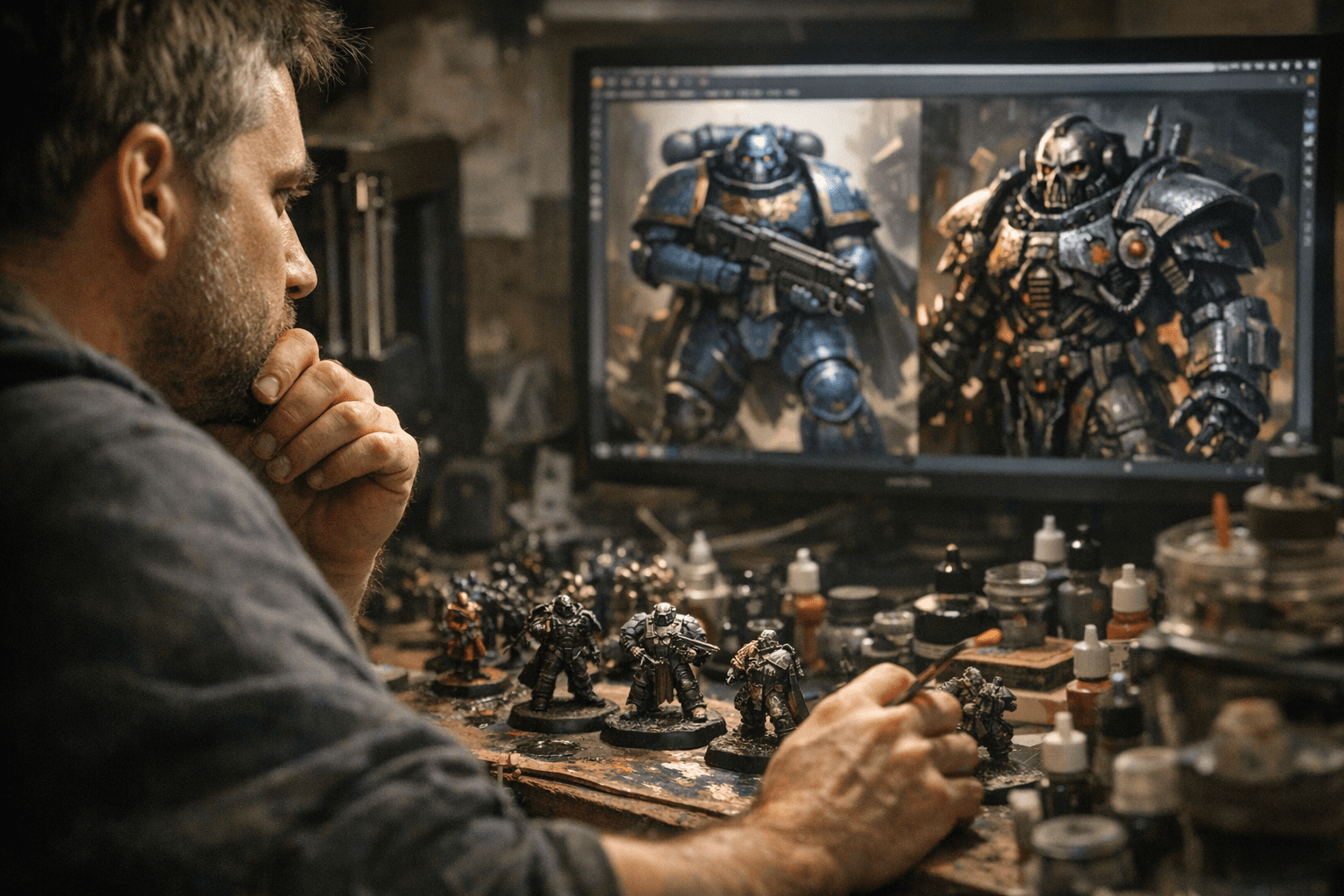
Practically useful steps are straightforward. Verify sources, keep records of prompts and reference images, and label AI-generated or AI-assisted artwork when posting. Preserve traditional references - photographs of sprues, test-paint stages, and in-progress shots - as clear documentation of technique and originality. Tool developers should expect to add licensing controls, clearer attribution, or opt-out mechanisms for Warhammer-trained models if they want to avoid conflicts.
The move is more a tightening of internal controls than a blanket public ban, but it changes the risk calculus for creators who mix AI into their workflow. Expect community discussion to focus on how to balance creative speed and experimentation with respect for IP and brand quality. For miniature painters, the immediate takeaway is to keep your process transparent and your references clean - treat your reference folders like a conversion log rather than an afterthought.
What comes next is implementation detail and community response. Watch for clearer public guidance from Games Workshop, updates to community platforms and tool UIs, and examples of how restrictions are applied in practice. Until then, document processes, label AI material, and plan for workflows that can stand up to closer scrutiny without losing the joy of a good kitbash.
Sources:
Know something we missed? Have a correction or additional information?
Submit a Tip