Gary Shteyngart's dystopian novel still feels eerily prophetic today
Gary Shteyngart’s 2010 novel captured a media- and credit-driven America before it felt obvious, and its warnings about surveillance and precarity still sting.
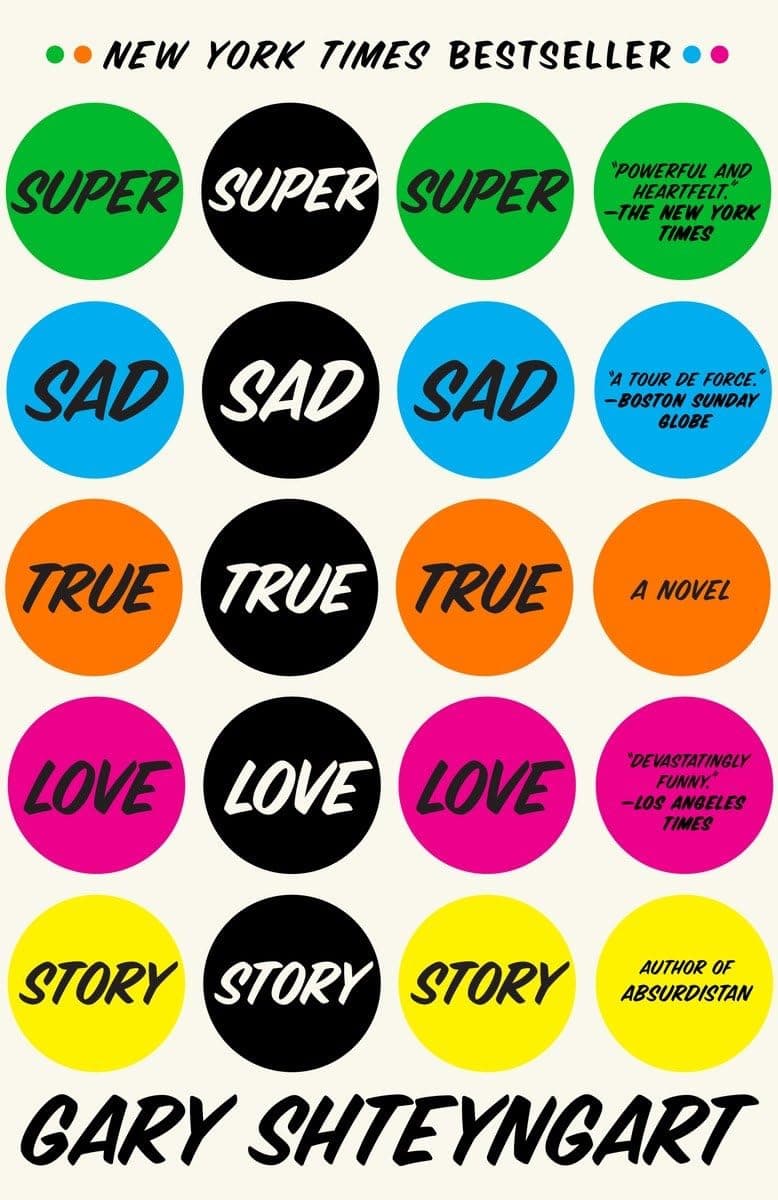
Gary Shteyngart’s *Super Sad True Love Story* reads less like a fantasy of tomorrow than a blunt diagnosis of how power, status, and desire already worked beneath the surface. Published on July 27, 2010, the novel imagines a near-future New York and America organized around media, credit, and retail, with public life fraying as the country edges toward collapse.
A dystopia built from ordinary systems
What makes the book endure is not that it invents a far-off civilization. It starts from familiar institutions and pushes them to their logical extreme. Shteyngart’s America has narrowed into three remaining industries, Media, Credit, and Retail, a commercial order that leaves little room for civic identity, collective memory, or democratic seriousness.
That framing gives the novel its political edge. Power no longer looks like government alone; it moves through screens, scores, debt, and consumption. In that sense, the book is not simply about futuristic gadgets. It is about what happens when the institutions that shape daily life reward visibility, spending, and compliance more than reflection or citizenship.
Lenny Abramov and Eunice Park as witnesses to the breakdown
The novel’s emotional engine comes from its two central figures: Lenny Abramov, a middle-aged Russian-Jewish immigrant son, and Eunice Park, a young Korean-American woman from New Jersey. Their relationship gives the story its human scale, but it also exposes the age divide, cultural dislocation, and social anxiety built into Shteyngart’s world.
Lenny and Eunice do not merely inhabit the dystopia. They measure it differently. Lenny carries memory, displacement, and the habits of an older America; Eunice comes from a younger generation more fluent in the codes of image, desirability, and digital performance. Together they show how economic strain and cultural atomization can shape intimacy itself, turning romance into another site where insecurity, aspiration, and surveillance collide.
The book’s form mirrors the society it depicts
Shteyngart reinforces that argument through structure. The novel alternates between Lenny’s diary entries and Eunice’s digital correspondence, a device that makes the reader move between private confession and mediated self-presentation. That split is crucial: it captures a world where people are never fully offstage and where language itself is filtered through technology.
The iPhone-like “apparats” in the novel are more than a prop. They are a symbol of total immersion, devices that compress social life, communication, and status into a single interface. The result is a society in which surveillance feels casual, youth obsession feels normalized, and materialism becomes less a vice than a default operating system.
Why it still lands now
The novel’s staying power comes from how accurately it names structural pressures that are now hard to ignore. Digital intimacy no longer feels exceptional; it is a routine condition of work, family, dating, and political life. Social ranking is also more visible than ever, whether through formal credit systems, workplace metrics, or the informal but constant scoring that happens on platforms and feeds.
Shteyngart also understood something important about economic precarity. In *Super Sad True Love Story*, collapse is not sudden. It is ambient, woven into consumer culture, debt, and the sense that public institutions are weaker than private appetites. That is why the book feels prophetic without needing to be mystical about it. It anticipated a political economy in which people are asked to live inside the market’s logic while the common world around them thins out.
Shteyngart’s own background sharpened the satire
Shteyngart’s authority as a satirist is tied to his biography. He was born in Leningrad in 1972 and came to the United States at age seven. That experience gave him an unusually sharp eye for the distance between official stories and lived reality, between what institutions claim to be and what they actually do.
His work has been recognized for that clarity. *Super Sad True Love Story* won the Bollinger Everyman Wodehouse Prize for Comic Fiction, and it was named among the year’s best books by multiple outlets. The praise made sense because the novel is funny even as it is bleak, using comic excess to expose the absurdity of a society that confuses consumption with meaning.
**From *Super Sad True Love Story* to *Vera, or Faith***
Shteyngart has kept writing from the same anxious register about family, power, and social decay. His novel *Vera, or Faith*, published by Random House in July 2025, centers on a 10-year-old girl in an unraveling, politically unstable America. It extends the same terrain that *Super Sad True Love Story* mapped more than a decade earlier: domestic life under pressure, national instability, and the fragile human need for connection inside systems that encourage fear and fragmentation.
That continuity matters. It shows that Shteyngart’s fiction has never depended on a single gimmick or one-off warning. His books return again and again to the way American life is reorganized by status, technology, and insecurity, and to how families absorb the shock when public institutions stop feeling reliable.
What the novel ultimately gets right
The deepest prediction in *Super Sad True Love Story* is not a specific device or trend. It is the insight that when media, finance, and retail become the dominant grammar of everyday life, democracy itself becomes harder to recognize. People still vote, buy, post, and date, but the surrounding system quietly teaches them to think of themselves as consumers first and citizens second.
That is why the novel still feels so close to the present. It does not ask readers to imagine a world of flying cars or totalitarian uniforms. It asks them to look at the structure already in place: a culture of constant exposure, shrinking civic trust, and economic anxiety dressed up as normal life. Shteyngart saw that shape early, and the warning has only grown more relevant as the distance between fiction and public reality has narrowed.
This article was produced by Prism’s automated news system from verified source data, official records, and press releases, then run through automated quality and moderation checks before publishing. The system is built and supervised by the people who set the standards it runs under. Read our full AI policy.
Did this article answer your question?