Genealogists link 2007 Franklin County John Doe to Central America
Volunteers found leads tying the 2007 Scioto River John Doe to El Salvador and Honduras. Investigators ask communities with roots there to upload DNA or share tips.
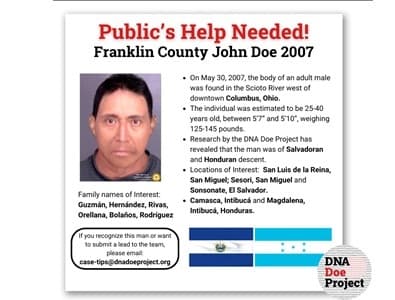
Volunteers with the DNA Doe Project have uncovered geographic and familial leads in the long-unsolved 2007 John Doe case from Franklin County, Ohio. The unidentified man, found floating in the Scioto River in 2007, remained unclaimed for years; new investigative genetic genealogy work now points investigators toward Central America.
The recent analysis indicates the decedent likely had roots in El Salvador and Honduras. Genealogists identified specific ties to districts in El Salvador’s San Miguel department and Honduras’ Intibucá region, narrowing the search to geographic areas and family clusters that were previously unknown. That narrowing transforms a nameless case file into a set of actionable lines of inquiry.
Volunteers also produced a list of surnames and family clusters that may be connected to the decedent. Names highlighted by the investigation include Guzmán, Hernández, Orellana, Bolaños, Rivas and Rodríguez. Those surnames appear across multiple match clusters, giving investigators footholds to construct family trees and pursue potential relatives who might provide a positive identification.
The DNA Doe Project and the Franklin County Coroner are asking for public help in two concrete ways. First, people with family origins in El Salvador’s San Miguel department or Honduras’ Intibucá region, or those who carry the surnames identified, are urged to upload consumer DNA test results to searchable databases so genealogists can compare matches. Second, anyone with tips about missing relatives or family stories that fit the timeline should contact investigators so leads can be followed up and compared with the genetic work.
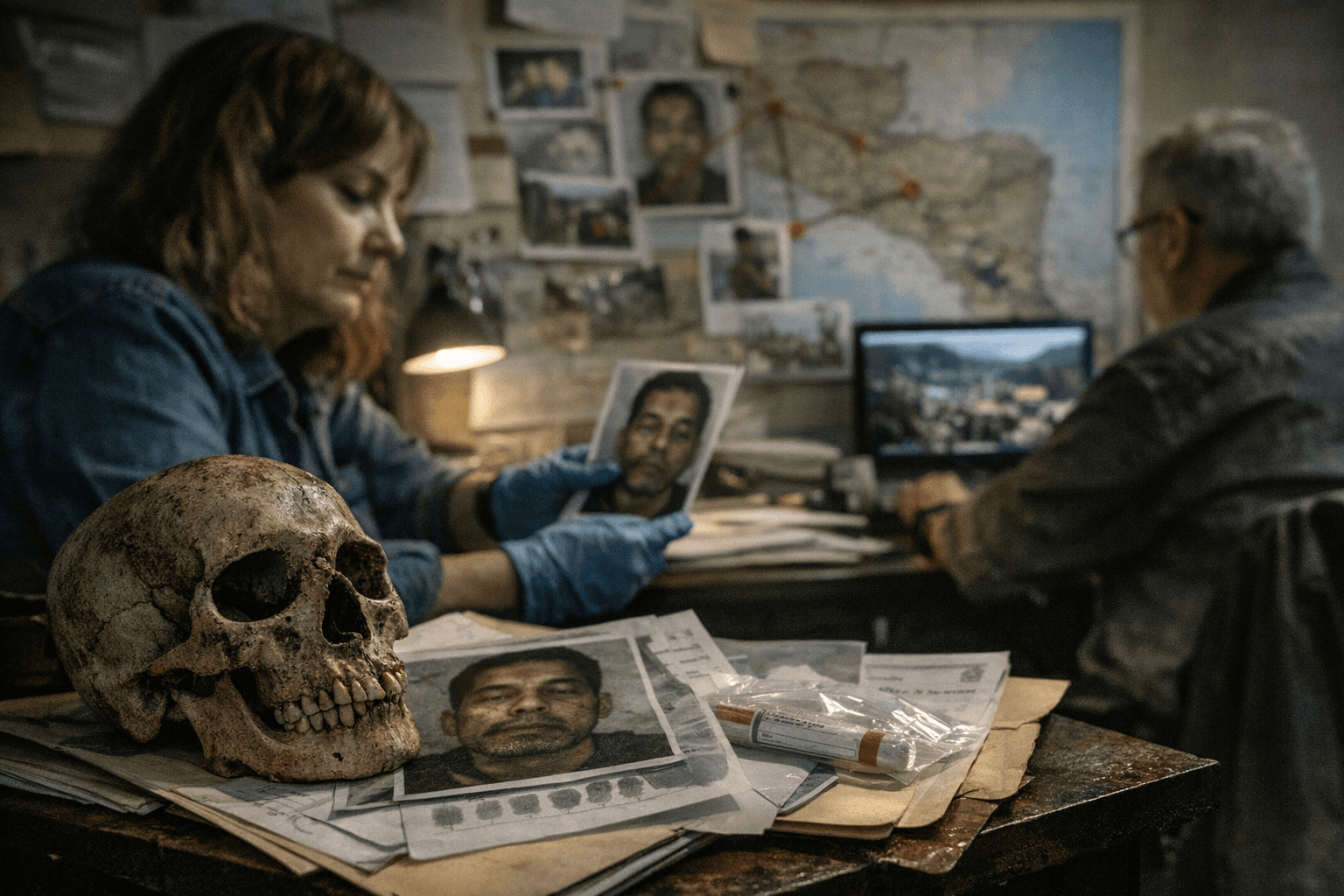
For the local community and for immigrant communities with ties to Central America, this development is more than a technical breakthrough. A positive identification can provide closure for families who may not know a relative was lost or whose absence was never explained. It can also help the coroner conclude an open case, allow for proper death documentation, and potentially alert relatives who need information about their family history or circumstances.
Investigative genetic genealogy proved decisive in directing attention from an undifferentiated cold case to defined places and names. That means the next steps depend on participation: uploading raw DNA files to searchable platforms and sharing family knowledge can move the investigation from leads to a confirmed identity.
The takeaway? If your family traces to San Miguel or Intibucá, or you carry one of the listed surnames, consider making your DNA searchable and reach out to the Franklin County Coroner or DNA Doe Project with any relevant information. Helping close this chapter could bring a name to a man who has been anonymous for nearly two decades.
Know something we missed? Have a correction or additional information?
Submit a Tip