Geologist Crowdfunds to Sustain Bears Ears Research Amid Water Quality Concerns
Dr. Jonathan Stine launched a GoFundMe after his NSF grant is set to lapse in March to keep studying unexpectedly high radioactivity in Cedar Mesa Sandstone near Onion Creek.
A geologist working in Bears Ears has turned to the public to avoid an abrupt halt to field and lab work after his National Science Foundation grant is set to lapse in March, saying even modest donations would buy critical time. Dr. Jonathan Stine, who is studying the Cutler Group including Cedar Mesa Sandstone, launched a GoFundMe to bridge the urgent funding gap and continue testing that began after he "noticed something strange: the sandstone was more radioactive than he expected it to be."
Stine’s research centers on the chemical, magnetic, and radioactive properties of the Cutler Group. He told Moab Sun News that his team intends to probe how a past ice age, a major drying event, and shifts in evolutionary patterns of life may link to the sedimentary signals preserved in the Cedar Mesa Sandstone. "That pattern persists today," said Stine. "Most of the animals that you see wandering on land are terrestrial animals, with a smaller percentage of aquatic, semi-aquatic amphibians."
Funding is the immediate bottleneck. Stine said, "Even if I get $5,000, that’s enough to extend the position by an extra month," and added, "Every little bit counts." Moab Sun News reporter Eliza Nelson included a call to action: "To help Dr. Stine continue his investigation of the chemical, magnetic and radioactive properties of the Cutler Group, please consider making a donation to his GoFundMe page." The report did not include a campaign goal, amount raised to date, number of donors, or a campaign URL.
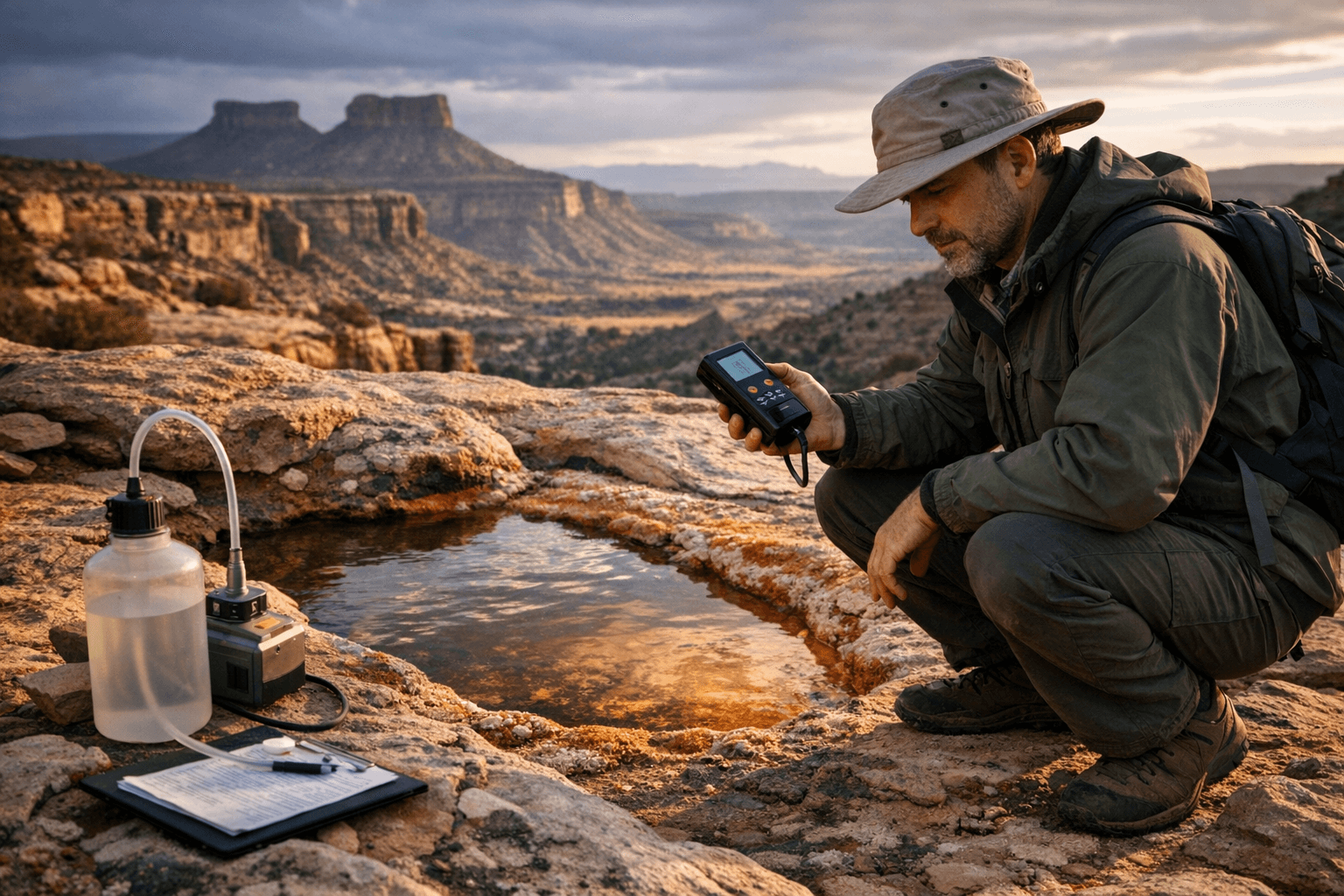
On the ground, fieldwork photos show Stine kneeling at a rock outcrop near Onion Creek, collecting geological samples with red desert terrain in the background. The image and reporting underscore that the observation of elevated radioactivity began in situ and that additional laboratory assays and instrument tests are needed to quantify the anomaly and understand its implications.
The reporting frames the work within broader federal funding pressures in the region. Moab Sun News lists this story as part of its Federal Government coverage and related Bears Ears reporting; nearby entries in that package include Feb 9 — "Garfield County begins paving Hole-in-the-Rock Road in Grand Staircase, drawing federal lawsuit," Nov 27 — "'Winter won't wait': Navajo nonprofit Warm Elders keeps community warm despite federal funding freeze," Oct 28 — "Moab food banks support families and federal workers during shutdown," Oct 27 — "During federal shutdown, Utah senators push bills to open national parks to off-road vehicles," and Oct 21 — "Volunteers step up to watch archaeological sites during federal shutdown."
Important unanswered items remain: the NSF grant number and exact lapse date, Stine’s institutional affiliation, the GoFundMe campaign target and current totals, laboratory values for the reported radioactivity and how they compare to background, whether any water-quality sampling has been conducted or is planned, and whether state or federal agencies have been notified. Stine’s appeal makes clear that short-term community donations can buy months of work while those technical details are established and peer-reviewed results are developed.
Know something we missed? Have a correction or additional information?
Submit a Tip