Geologist Seeks Crowdfunding After Grant Cuts, Water Safety Threatens Bears Ears
Geologist Jonathan Stine launched a GoFundMe after his NSF grant is set to lapse in March to fund tests on unexpectedly radioactive Cedar Mesa sandstone near Onion Creek.
Dr. Jonathan Stine, a geologist studying the Cutler Group and Cedar Mesa Sandstone in the Bears Ears region, has launched a GoFundMe campaign after his National Science Foundation grant is set to lapse in March due to reductions in federal research funding. Stine says the sandstone he sampled in Cedar Mesa “was more radioactive than he expected it to be” and that he needs money “to perform more tests” on the chemical, magnetic and radioactive properties of the Cutler Group; “Even if I get $5,000, that’s enough to extend the position by an extra month,” he said. “Every little bit counts.”
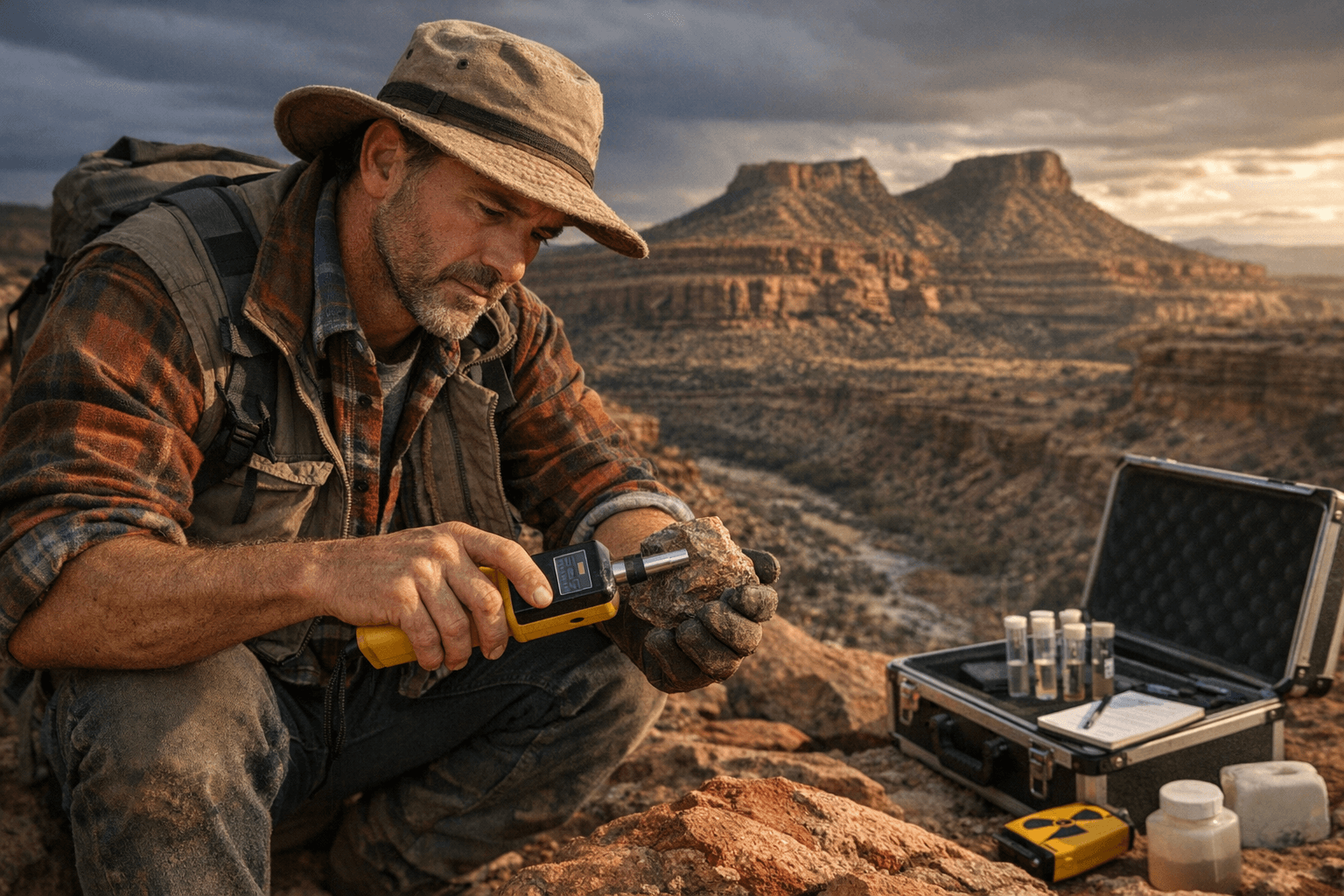
Fieldwork images and reporting place Stine at Onion Creek, where a photograph shows him in the red desert terrain collecting samples: “Dr. Jonathan Stine kneels at a rock outcrop near Onion Creek, collecting geological samples with red desert terrain in the background.” Stine frames the work as part of a broader inquiry into past environmental change on Cedar Mesa. He hopes to test whether an ice age, a drying event and a concurrent change in evolutionary patterns of life are connected, and he points to modern ecological proportions as context: “That pattern persists today,” said Stine. “Most of the animals that you see wandering on land are terrestrial animals, with a smaller percentage of aquatic, semi-aquatic amphibians.”
Stine’s immediate funding need is tied to the scheduled lapse of his NSF award in March; the reports do not list an overall GoFundMe target or measured radioactivity values. Stine is explicitly asking the community for funds to buy time and testing capacity while he pursues laboratory analyses of Cutler Group samples. The planned analyses are chemical, magnetic and radioactive tests aimed at clarifying when and how environmental shifts altered local ecosystems.
The Stine crowdfunding push arrives amid a wider pattern of federal funding losses affecting geology programs. At Sul Ross State University, Title III and Title V federal grants were cut “as of last year,” prompting department leaders to pivot to fundraising and community outreach. Sul Ross is planning a Geo Fest scheduled for March that aims “to raise at least $20,000 to cover scholarships for 8 to 10 students heading into field camp this summer.” As one organizer put it, “We realized we can't raise this kind of money through bake sales. We need corporate and community sponsors. But more importantly, we want to bring the geology program to the community. It’s going to be a fun and family-friendly event.” Graduate student Carissa Chambers warned of broader impacts: “These Title III and Title V funds really helped level the playing field for smaller institutions like Sul Ross... When our support disappears, it directly affects our retention and the students’ ability to complete their degrees.”
Stine’s campaign seeks short-term relief while he lines up the testing needed to assess the unexpected radioactivity in Cedar Mesa sandstone and to pursue the linked questions about ice age timing, drying events and evolutionary change. He has urged community contributions as a stopgap while those tests are arranged.
Know something we missed? Have a correction or additional information?
Submit a Tip