German Inflation Rises to 2.8% in March, Complicating ECB Policy Outlook
Germany's consumer prices jumped to 2.8% in March as energy costs surged 7.2%, complicating the ECB's path to rate cuts.
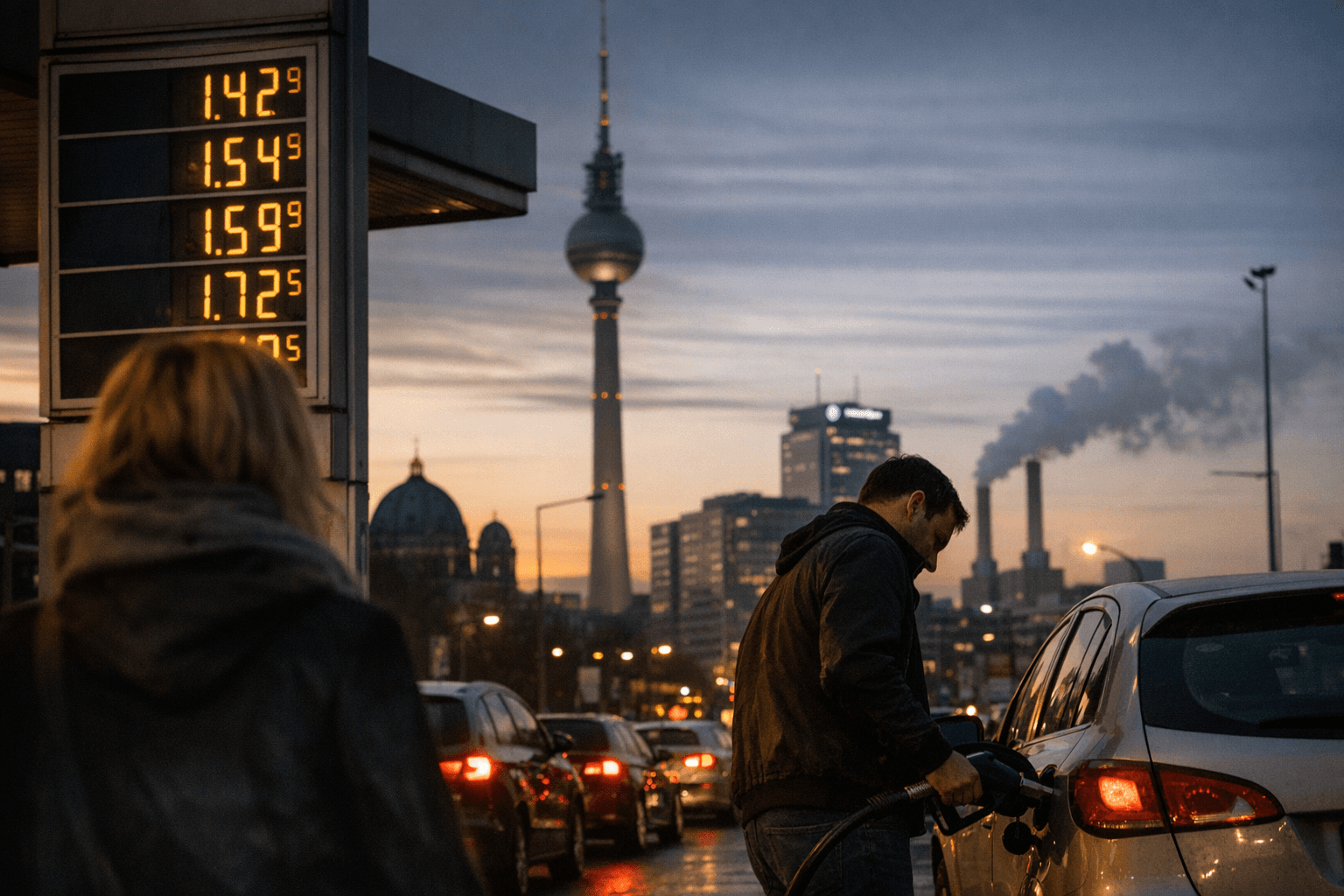
Energy prices in Germany posted their first annual gain in more than two years, jumping 7.2% year-on-year in March against the backdrop of the Iran conflict and pushing headline consumer price inflation to 2.8%, according to preliminary figures from the federal statistics office released Monday.
The March reading, EU-harmonized and up sharply from 2.0% in February, landed in line with some analyst forecasts compiled by Reuters but above others, arriving at an awkward moment for the European Central Bank, which has been navigating how quickly to ease monetary policy across the bloc.
Core inflation, which excludes food and energy, held steady at 2.5%, suggesting broader price pressures have not yet ignited. But geopolitically driven energy shocks carry a track record of feeding through into wider cost structures over time.
Ralph Solveen, senior economist at Commerzbank, noted that the Iran conflict "has seemingly not affected other prices" so far. The longer the war persists and keeps raw materials under strain, however, "the more likely it is that underlying inflation will also pick up, as business surveys already suggest," Solveen said.
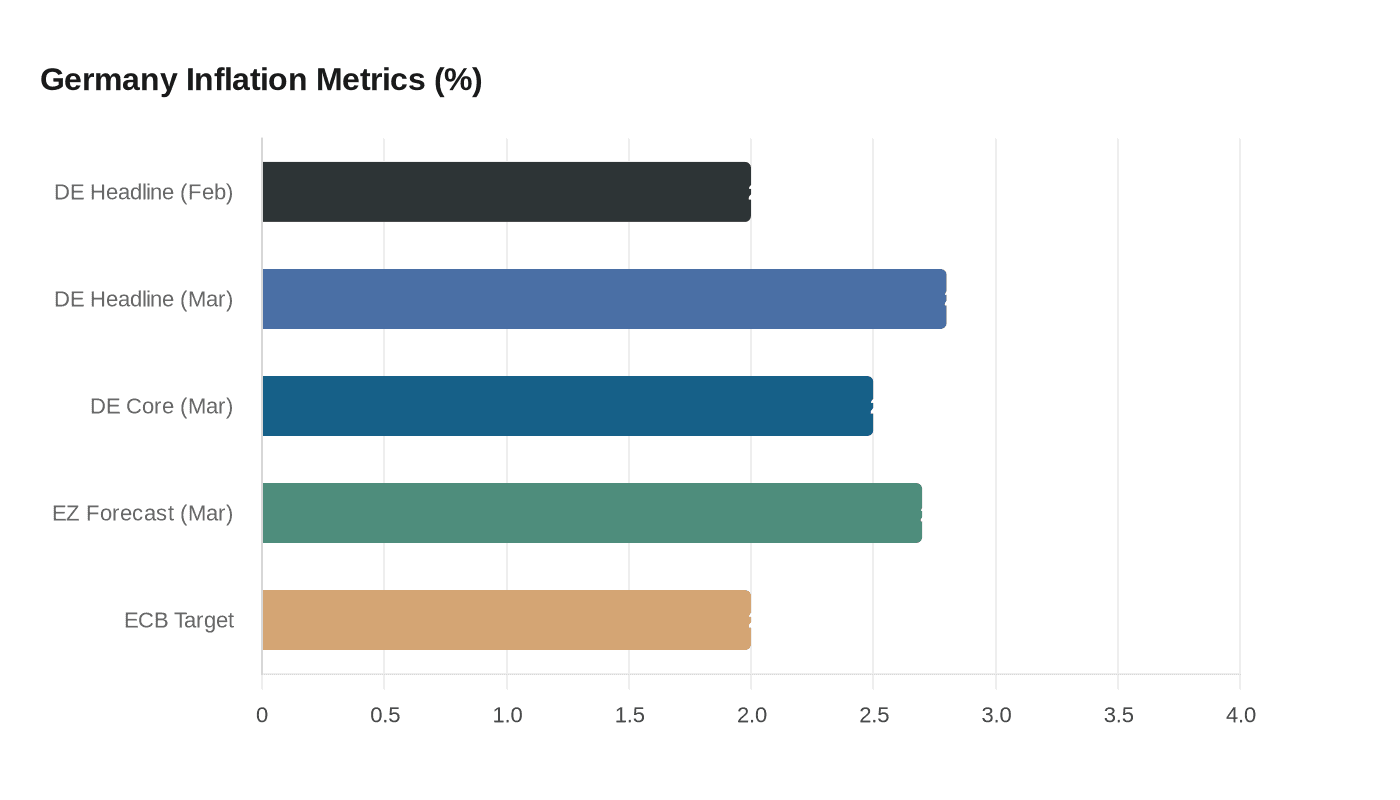
That scenario is precisely what ECB policymakers are working to preempt. Germany's inflation trajectory carries outsized weight in Frankfurt: the country's scale, industrial footprint, and deep trade links make its consumer price data a leading signal for eurozone-wide dynamics. With Germany's March headline reading sitting 80 basis points above the ECB's 2% target, any sustained energy-driven pressure could slow talk of policy easing and push the bank toward a more cautious posture.
Attention now shifts to Tuesday's eurozone-wide harmonized consumer price index, which economists expect to register 2.7% in March. If that figure confirms the directional move, ECB communications in the weeks ahead will face harder questions about the pace and scope of rate reductions that markets have been pricing in.
For German households, the squeeze is immediate: real wages erode when headline inflation outpaces the ECB target, and for energy-intensive businesses, the first annual energy price increase since December 2023 may signal that the extended cost relief enjoyed through 2024 and into 2025 has run its course.
This article was produced by Prism’s automated news system from verified source data, official records, and press releases, then run through automated quality and moderation checks before publishing. The system is built and supervised by the people who set the standards it runs under. Read our full AI policy.
Did this article answer your question?

