Germany Slashes 2026 Growth Forecast, Raises Inflation Outlook on Energy Surge
Germany's five leading economic institutes more than halved the 2026 growth forecast to 0.6%, with inflation now projected at 2.8% as the Iran war drives energy costs higher.
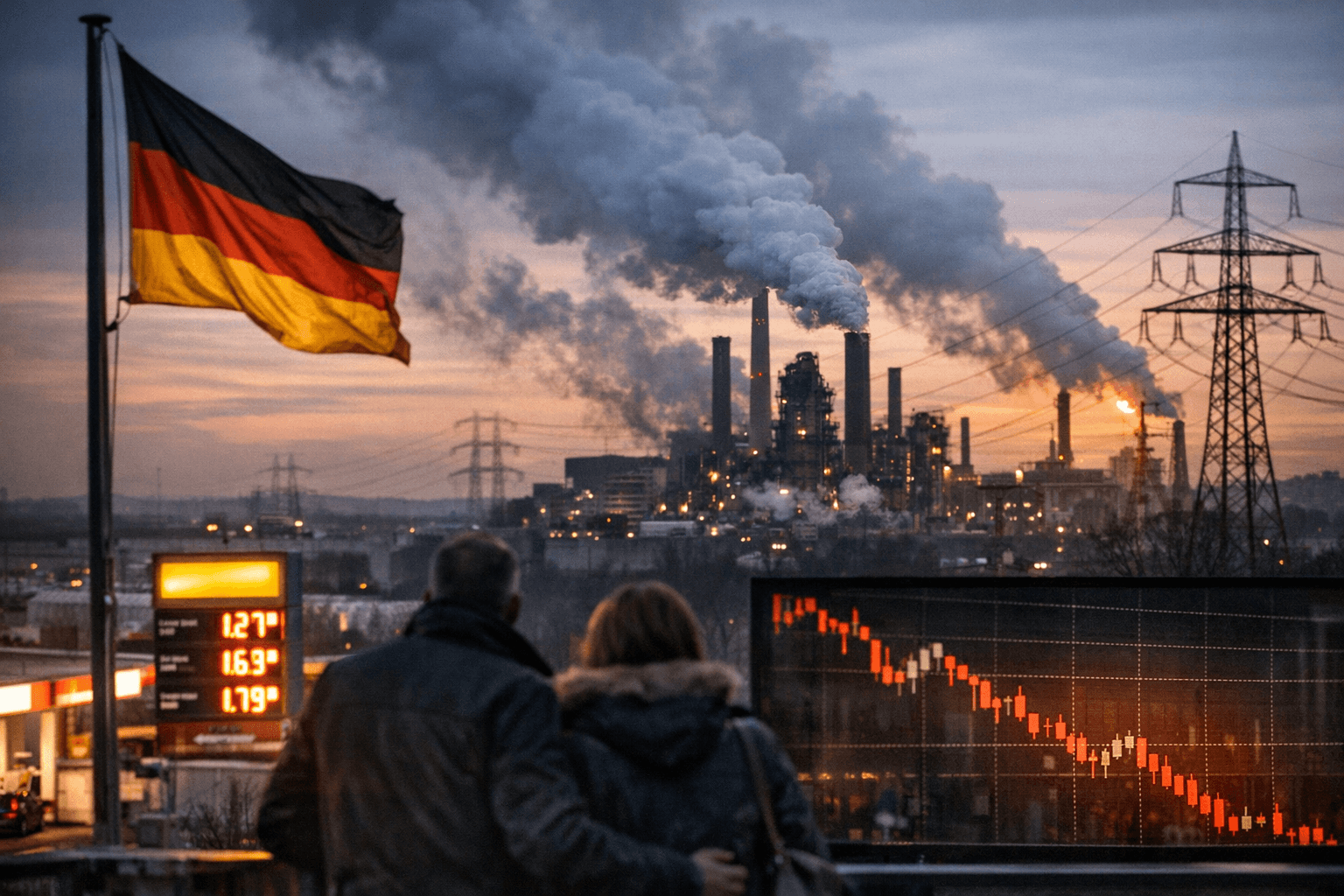
Germany's five leading economic research institutes more than halved their 2026 growth projection on March 31, cutting it to 0.6% from the 1.3% they had set in September 2025, and sharply raised their inflation outlook as surging energy costs tied to the war in the Middle East cut through the country's economic foundations.
The forecast package, the product of a joint effort by RWI in Essen, the Ifo Institute in Munich, IfW Kiel, IWH in Halle, and DIW, was set to be presented formally to the German government in Berlin on Wednesday. The institutes lifted their expected inflation rate to roughly 2.8% for both 2026 and 2027, up from prior projections of approximately 2.0% and 2.3% respectively. The breadth of that inflation revision reflects how the Iran war's disruption of oil and gas markets has spread well beyond the fuel pump and into the wider price level.
The transmission runs through three interlocking channels. Higher energy and transport costs raise manufacturers' input bills, compressing margins at exactly the moment when slower global demand is squeezing export volumes. Those same cost increases erode real household incomes, depressing domestic consumption. Together, they undercut the price competitiveness that Germany's export-driven industrial base depends on. The result is a self-reinforcing drag: factories produce less, workers spend less, and the fiscal receipts that Berlin counts on to fund its budget shrink alongside output.
The shock echoes 2022, when Russia's cutoff of pipeline gas sent European energy prices into crisis and forced Germany into emergency liquefied natural gas procurement. The present crisis is oil-led, originating from geopolitical disruption in the Middle East rather than the abrupt removal of a primary supply line. That difference matters for the policy response: gas rationing and LNG infrastructure buildout were the tools of 2022; oil-price exposure runs more directly through industrial fuel costs and supply-chain logistics, demanding different relief instruments and leaving household heating less directly exposed than four years ago. Yet the structural vulnerability is identical: Germany's energy-intensive manufacturing economy has narrow tolerance for sudden commodity shocks, and the reforms intended to reduce that exposure after 2022 have not been completed.
Germany is the eurozone's largest economy, and the revised forecast carries consequences far beyond its borders. Policymakers in Berlin rely on the institutes' projections to set budgets and calibrate fiscal support, and a growth figure of 0.6% compresses expected tax receipts, tightens the envelope for new spending, and complicates debt-servicing. The political pressure to shield households from fuel-price pain pulls in the opposite direction, creating a fiscal pinch that the formal Wednesday presentation will force ministers to confront directly.
The available levers in Berlin include targeted energy subsidies to blunt the household income effect, investment incentives to partially offset the structural competitive drag, and activation of the economy's automatic fiscal stabilizers. Each carries costs and constraints, particularly given Germany's constitutional debt brake, which limits how much the government can borrow to absorb the shortfall.
For the European Central Bank, the institutes' inflation revision poses a sharp dilemma. Inflation running at 2.8% sustains the case for higher borrowing costs at precisely the moment when weaker output in the eurozone's anchor economy argues for easing. The risk that energy-driven price pressures become entrenched adds further complexity to rate decisions in Frankfurt. The 0.6% growth number is, in effect, a stress-test result for Europe's largest economy: it held, but with almost no margin to spare.
This article was produced by Prism’s automated news system from verified source data, official records, and press releases, then run through automated quality and moderation checks before publishing. The system is built and supervised by the people who set the standards it runs under. Read our full AI policy.
Did this article answer your question?
%3Amax_bytes(150000)%3Astrip_icc()%2FCertificate-of-deposit-2301f2164ceb4e91b100cb92aa6f868a.jpg&w=1920&q=75)