Germany Surpasses U.S. as Brazil’s Top Coffee Buyer in 2025
Cecafé data show Germany imported 5.4 million 60-kg bags of Brazilian coffee in 2025, pushing the United States to second place as U.S. imports fell amid a 50% tariff window.
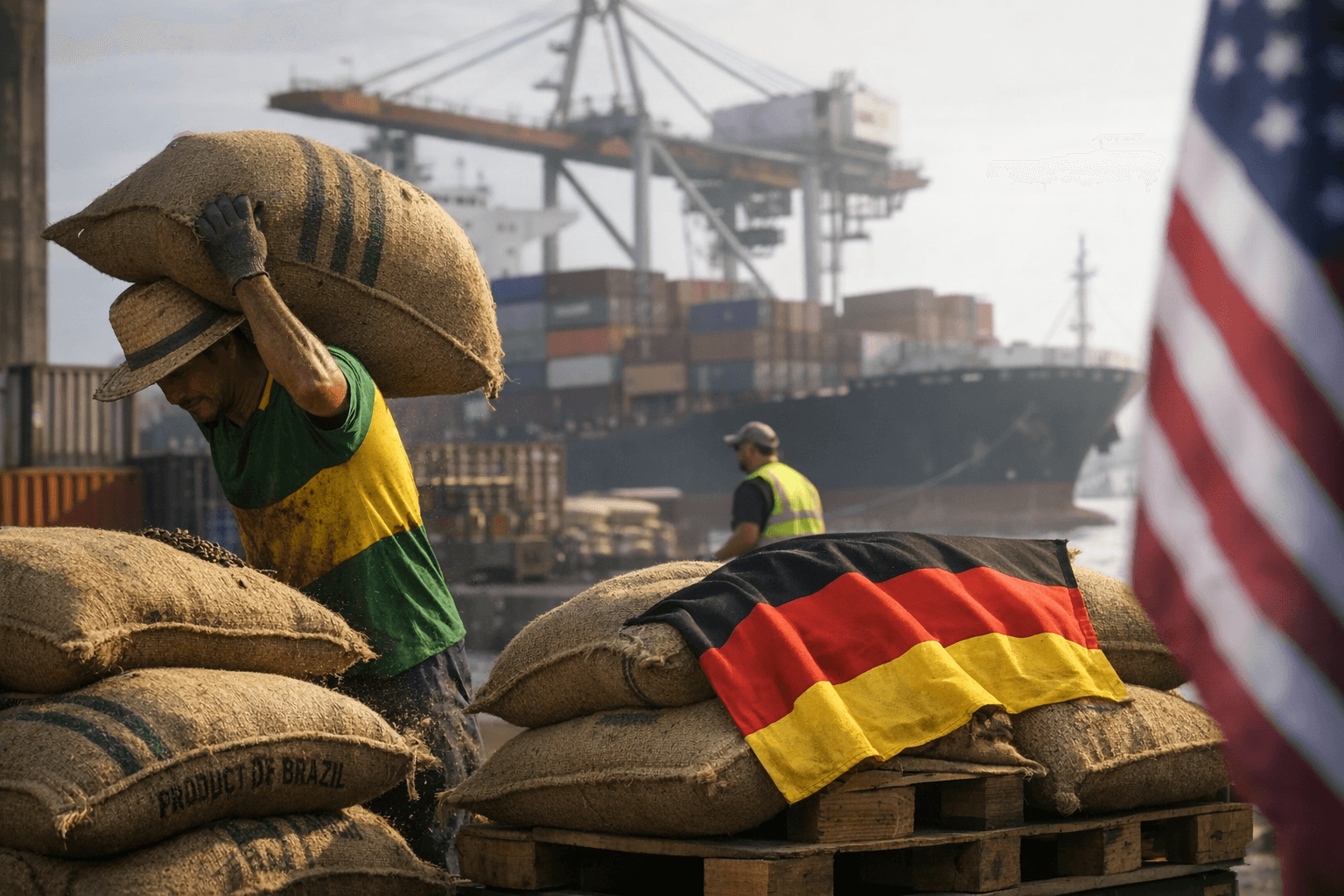
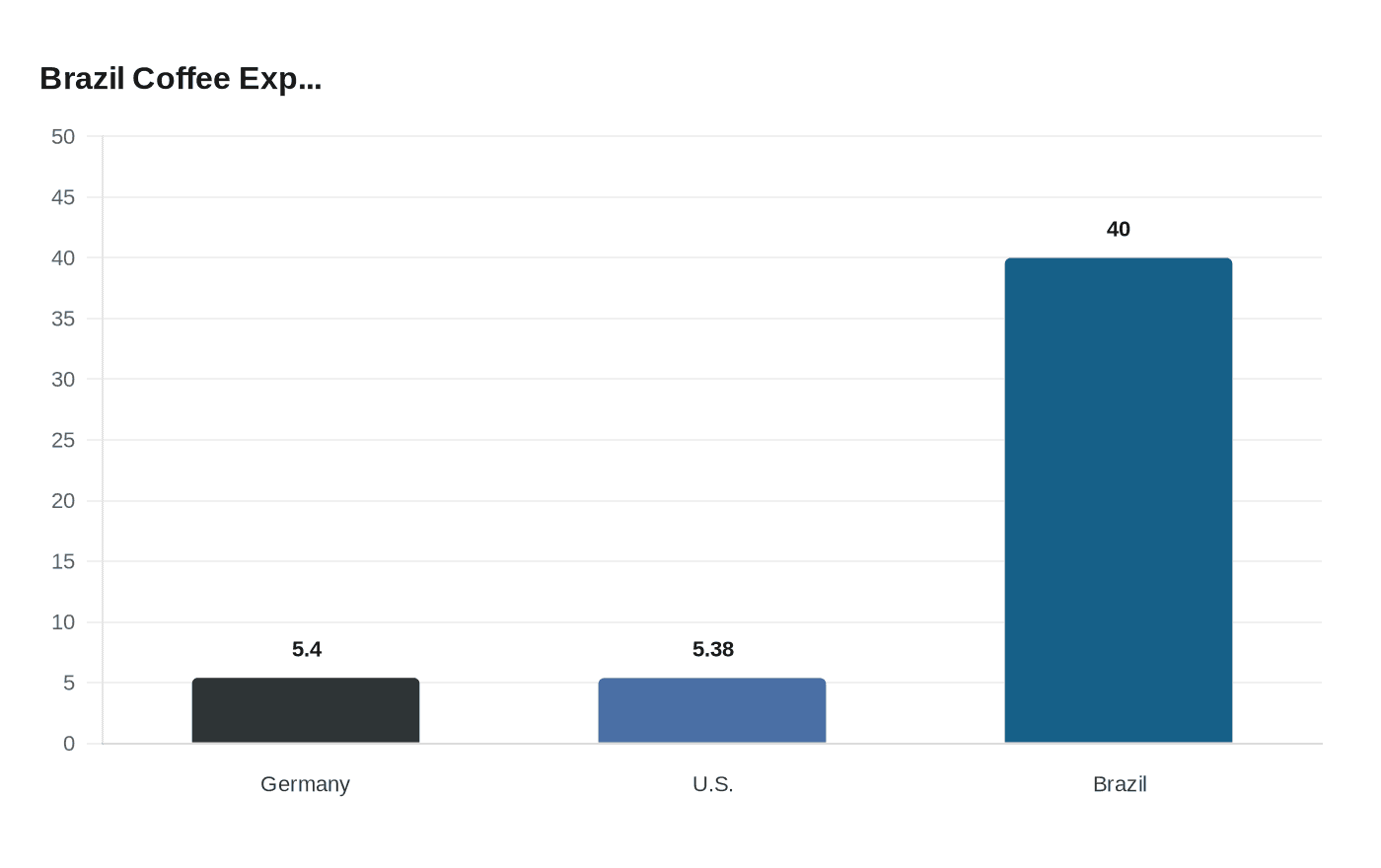
Cecafé data cited across industry outlets show Germany imported 5.4 million 60-kilogram bags of Brazilian coffee in 2025, equal to 13.5 percent of Brazil’s total exports, making it the country’s top buyer by volume last year. The United States slipped to second with about 5.3 million 60-kg bags reported by most outlets and 5.38 million in Folha de S. Paulo’s exclusive feature, a loss of ground with immediate implications for U.S. roasters and Brazil’s trade routing.
Industry reporting attributes the U.S. fall largely to temporary tariffs. Multiple outlets note that the Trump administration imposed import levies of up to 50 percent, and Márcio Ferreira, head of Cecafé, said, "Shipments to the US fell by 55% during the period from early August to late November when high tariffs were imposed on all Brazilian coffee varieties." World Coffee Portal placed the overtaking event in August 2025, while one outlet reported Brazilian exports to the U.S. fell 46 percent year-on-year in a single month after the levy.
Numbers diverge slightly across sources. Environment Africa, Dmarketforces, and MarketForces Africa cited a roughly 33 percent drop in U.S. purchases year-on-year; Folha reported a 33.9 percent fall and stated the 50 percent tariff was in place between August and November, and "lifted for green coffee in November, it remains in place for instant coffee." These differing percentages reflect distinct measurement windows: annual totals, monthly year-on-year comparisons, and the specific August to November tariff window cited by Cecafé.
Brazil’s aggregate picture is equally specific. Coffee Geography reported Brazil exported 40 million 60-kg bags in 2025, a roughly 20 percent decline from the previous year, even as export revenues rose by 24 percent to a record $15.5 billion. Folha reported export revenues of $15.6 billion or R$83.7 billion and said the U.S. market impact reduced Brazil’s total export volume by 20.8 percent. Ferreira noted, "The stronger global prices more than offset the volume decline."
Coffee Geography framed Germany’s role beyond consumption, arguing Germany "has reinforced its position as the central banker and processor of the European coffee market, leveraging its infrastructure to dominate both the import of raw materials and the export of the finished product." That processing and re-export function means German import swings can signal changes in European manufacturing demand rather than shifts in German retail consumption. After Germany and the United States, Italy, Japan and Belgium remained among the largest buyers of Brazilian coffee in 2025.
The headline shift from the United States to Germany underlines how trade policy can reroute commodity flows: U.S. tariffs coincided with steep shipment declines during the August to November period and a measurable reallocation of Brazilian volumes to Europe. Markets, roasters and processors will be watching whether the reported November lift for green coffee stands while tariffs on instant coffee remain in force, and whether monthly Cecafé breakdowns confirm the August overtake as a lasting realignment.
Know something we missed? Have a correction or additional information?
Submit a Tip