Germany’s economy edges back to growth, but recovery remains fragile
Germany eked out 0.2% growth in 2025, but exports, manufacturing and jobs still show a recovery too weak to repair the damage.
Germany’s economy has stopped contracting, but only barely. After two years of recession, real GDP rose just 0.2% in 2025, and the 0.3% increase in the fourth quarter left Europe’s largest economy ending the year in positive territory without regaining real momentum.
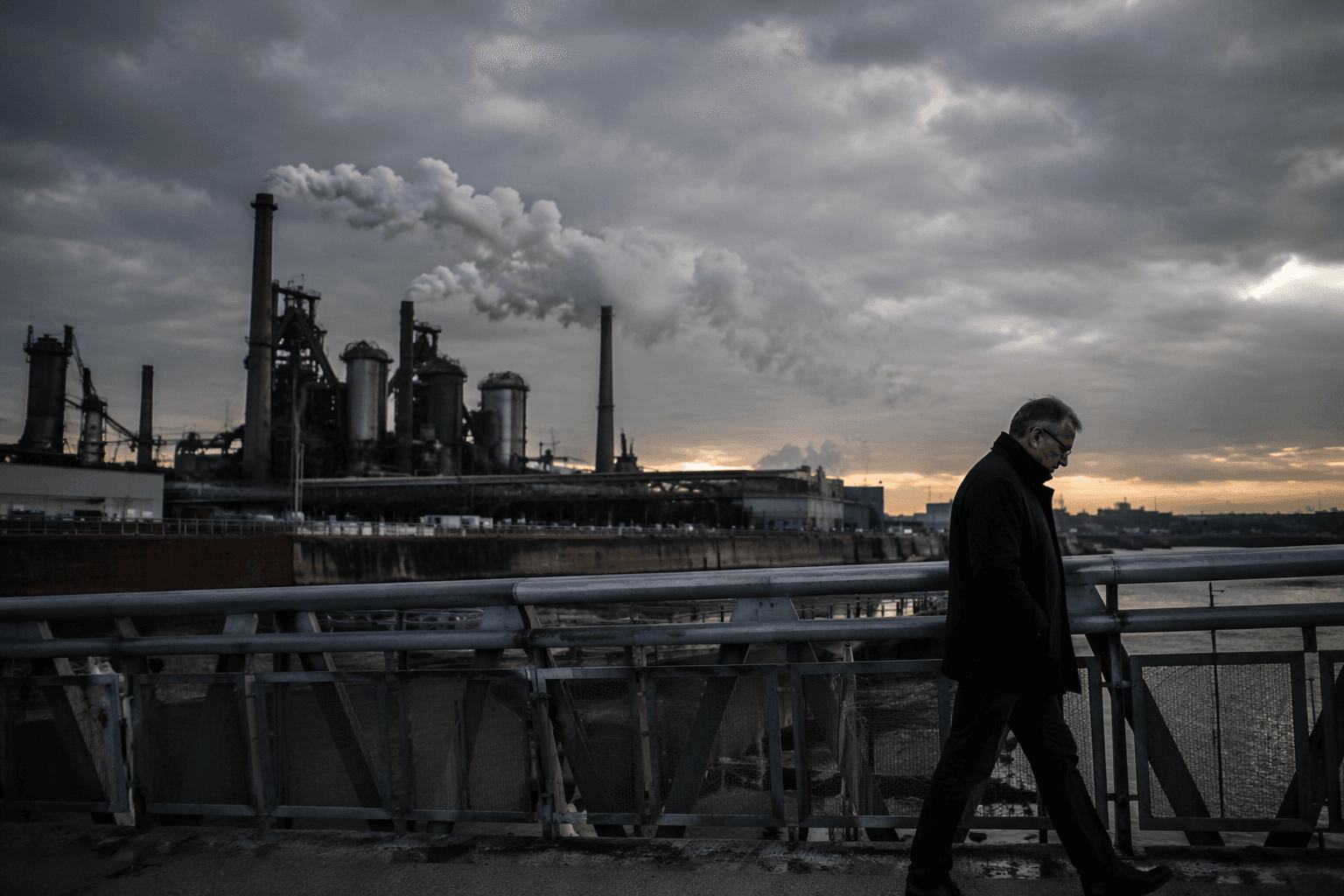
The rebound masks how many pillars of Germany’s old growth model have cracked at once. The shutdown of Russian gas supplies in mid-2022 hit energy-intensive industry just as tighter monetary policy was cooling demand and global trade tensions were rising. That combination has been especially painful for a country that spent a decade thriving on export-led manufacturing.
Exports remain a weak spot. Germany’s foreign trade came under pressure from higher U.S. tariffs, a stronger euro and tougher competition from China, leaving the export machine that once powered growth far less reliable. Manufacturing and construction are still subdued, showing that the economy has not yet found a new engine to replace cheap energy and strong external demand.
The labor market has held up better than output, but it is not signaling a strong upswing. Germany had about 45.61 million employed residents in April 2026, virtually unchanged from the previous month. The unemployment rate was 6.4%, with 1.68 million people out of work and 643,000 notified vacancies, a sign of softness rather than collapse. Producer prices for industrial products were 1.7% higher in April 2026 than a year earlier, suggesting that cost pressures have eased from their peak but have not disappeared.
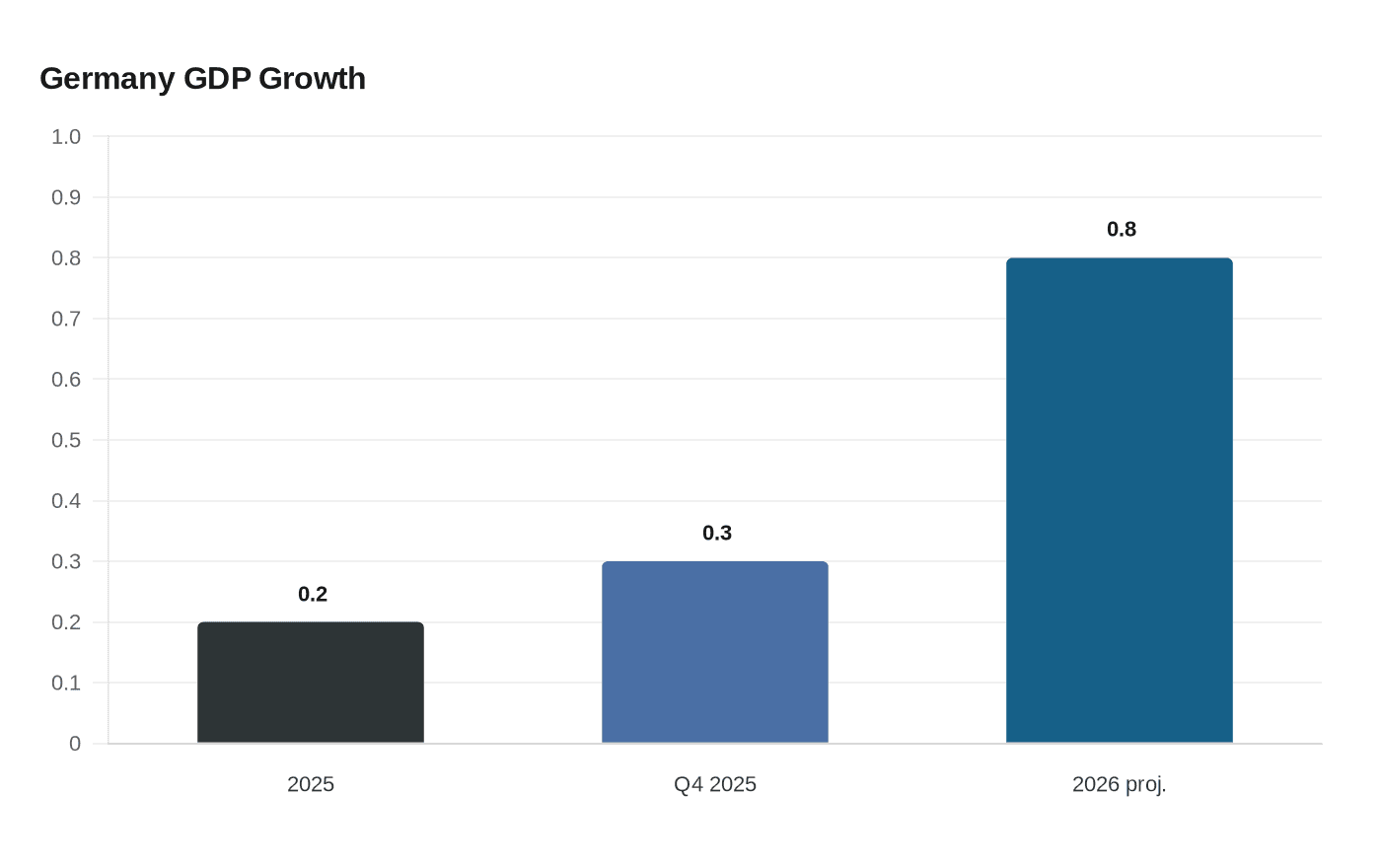
International institutions say the problem is deeper than a single bad year. The International Monetary Fund projected 2026 real GDP growth of only 0.8%, and its latest Article IV consultation on February 6, 2026, underscored how limited the rebound remains. The OECD has warned that Germany faces a large infrastructure backlog and needs faster structural reform, as the effects of the COVID-19 pandemic, Russia’s war against Ukraine and rising trade tensions continue to weigh on activity.
The political response now sits in the hands of the CDU/CSU and SPD coalition that emerged from the February 2025 parliamentary elections in Berlin. Its challenge is not simply to push growth a little higher. Germany must rebuild the foundations of an economy that once depended on abundant energy, open trade and steady global demand, because all three assumptions have weakened at the same time.
This article was produced by Prism’s automated news system from verified source data, official records, and press releases, then run through automated quality and moderation checks before publishing. The system is built and supervised by the people who set the standards it runs under. Read our full AI policy.
Know something we missed? Have a correction or additional information?
Submit a Tip