Giannis Antetokounmpo expects extended absence after right-calf setback
Giannis Antetokounmpo re-injured his right calf and says he will miss an extended period, a blow to the Bucks' title hopes and Milwaukee's broader sports economy.
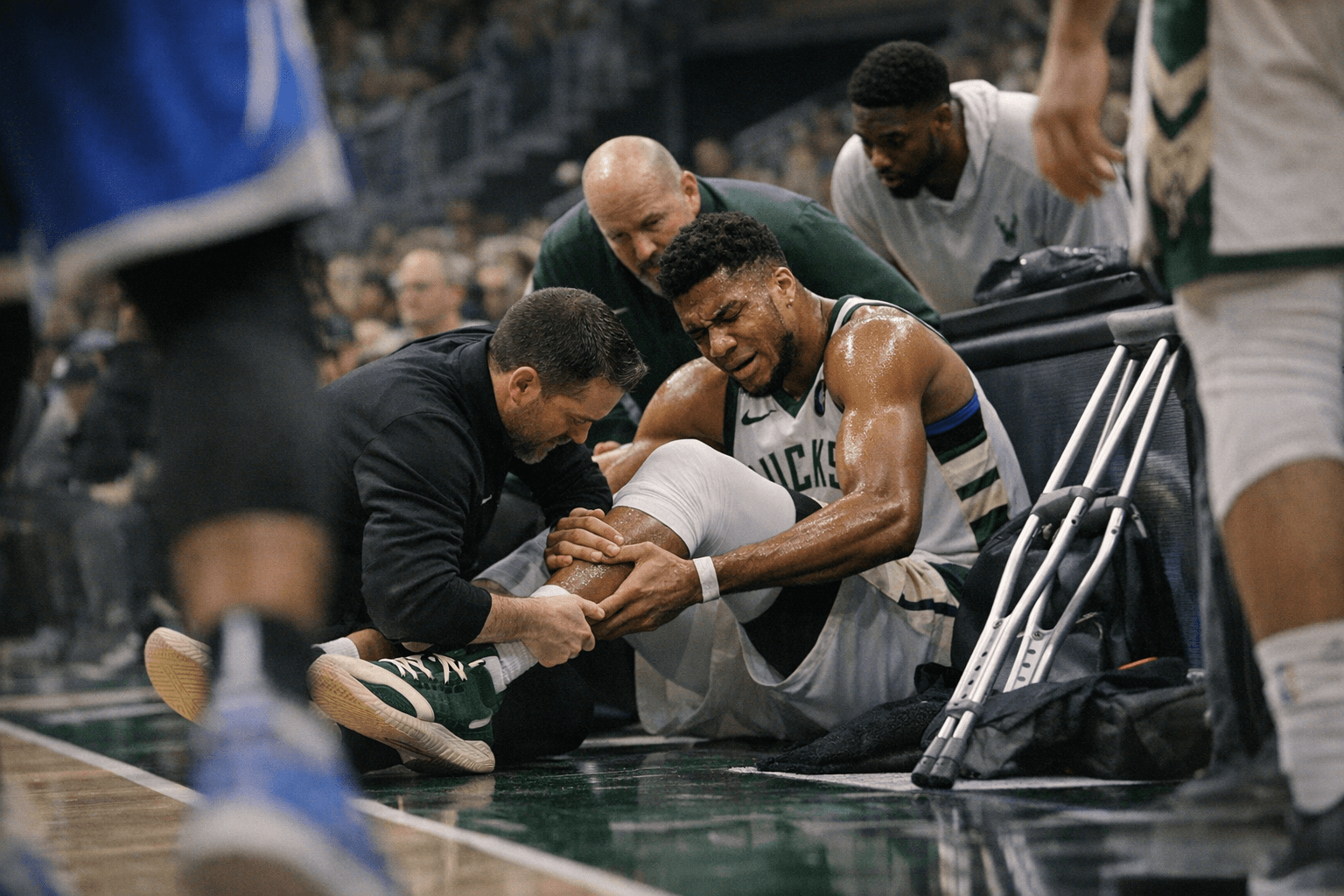
Giannis Antetokounmpo says he expects to miss an extended period after re-injuring his right calf late in the Milwaukee Bucks' game on Jan. 23. The superstar, who already missed eight games this season with a similar strain, left Friday's contest and now confronts another unexplained halt in a season that had hinged on his availability.
The immediate basketball consequence is stark. Giannis is the fulcrum of Milwaukee's offense and defense, and his absence forces coach and front office to reconfigure rotations, offensive sets and defensive schemes. The Bucks will have to lean more heavily on ball handlers and shot creators who until now have operated in Giannis's gravitational field. That shift alters not only playcalling but also matchup planning for opponents, who will adjust scouting and personnel to exploit the Bucks' weakened interior presence.
Beyond Xs and Os, the timing complicates Milwaukee's business calculus. Star players drive attendance, local television ratings and merchandise sales; prolonged absence of an emblematic figure reduces game-day revenues and places pressure on sponsorship activations tied to star appearances. The ripple extends to downtown restaurants and bars that rely on Bucks home dates to generate weekend traffic. For a franchise that markets itself around Giannis as both an athletic and civic standard-bearer, the pause is a material economic hit.
The injury also underscores larger shifts in how the NBA manages star health. Teams increasingly prioritize cautious rehabilitation for muscle injuries that are prone to recurrence, balancing short-term competitive desires against long-term player availability and contract value. Giannis's recurrence fits a pattern seen across the league: muscle strains that recur under dense schedules and heavy minutes prompt conservative timelines and greater investment in sports medicine, staffing and alternative conditioning programs. That trend has implications for roster construction, as front offices hedge by stockpiling depth and multi-positional wings who can cover several responsibilities if a star is sidelined.
Culturally, Giannis's absence resonates beyond wins and losses. He is central to Milwaukee's civic identity, a rare global superstar who embodies immigrant success and local pride. The city has tied its recent renaissance in commerce and branding in part to the Bucks' on-court prominence and Giannis's international profile. When he plays, Milwaukee enjoys a halo effect; when he sits, the emotional lift that accompanies his performances diminishes, affecting community morale and philanthropic engagement tied to the player and franchise.
Socially, the episode raises questions about athlete workload and the expectations placed on elite performers. Young players and fans watch how teams respond to re-injury: whether medical staffs are empowered to slow returns, how organizations communicate uncertainties, and how leagues adapt scheduling and break structures to preserve player health. For a sport increasingly global in reach, these are not merely team-level concerns but influences on how the NBA markets itself to international audiences who associate the league with peak athletic contest.
For now, the Bucks face an immediate competitive test and a longer conversation about health management at the top of the sport. The team will navigate lineup adjustments and a tense watch for medical updates while the city's seasonal fortunes adjust to the absence of its most visible athletic ambassador.
This article was produced by Prism’s automated news system from verified source data, official records, and press releases, then run through automated quality and moderation checks before publishing. The system is built and supervised by the people who set the standards it runs under. Read our full AI policy.
Did this article answer your question?

.jpg&w=1920&q=75)
