Global Tournaments Elevate Malaysian Pickleball Ratings From 4.0 to 5.0
Pickle361’s March 2 analysis shows competing abroad helps Malaysian players advance from a 4.0 to 5.0, citing international exposure and "the first 1.4 million bookings" as evidence of rapid growth.

Pickle361 published an analytical piece on March 2 laying out how Malaysia’s players can convert exposure to international tournaments into rating and performance gains, specifically moving from a 4.0 to a 5.0 level. The report, titled "How Competing in Global Tournaments Elevates Your Rating 4.0 to 5.0," is part of the publisher’s Malaysia Pickleball Reality Check 2026 series and links tournament exposure to measurable shifts in training and benchmarks.
The analysis argues that Malaysia’s growing participation in international tournaments has become a key driver in elevating local competitive standards. Pickle361 cites higher tempos, sharper decision-making, and greater tactical discipline on global stages as the on-court mechanisms that force immediate adaptation when Malaysian players compete abroad. The piece also references another Pickle361 article, "Malaysia Pickleball Was Never Sudden: What the First 1.4 Million Bookings Reveal," using that bookings figure as a data point for rapid uptake.
Coaching changes are central to the pathway from 4.0 to 5.0, the report states. "When coaches bring back refined frameworks, local players benefit immediately. Training curricula become more systematic. Development pathways become clearer. Benchmarks become more objective." Those four sentences are presented by Pickle361 as the operational link between international exposure and measurable player advancement.
Pickle361 highlights process and recovery practices as further evidence that tournament travel matters. "This exposure resets ambition levels. Training intensity rises. Recovery protocols improve. Tournament preparation becomes more data-driven rather than purely instinctive." The analysis frames those shifts as concrete behavioral changes documented across coaching circles since Malaysian competitors began entering more international fields.
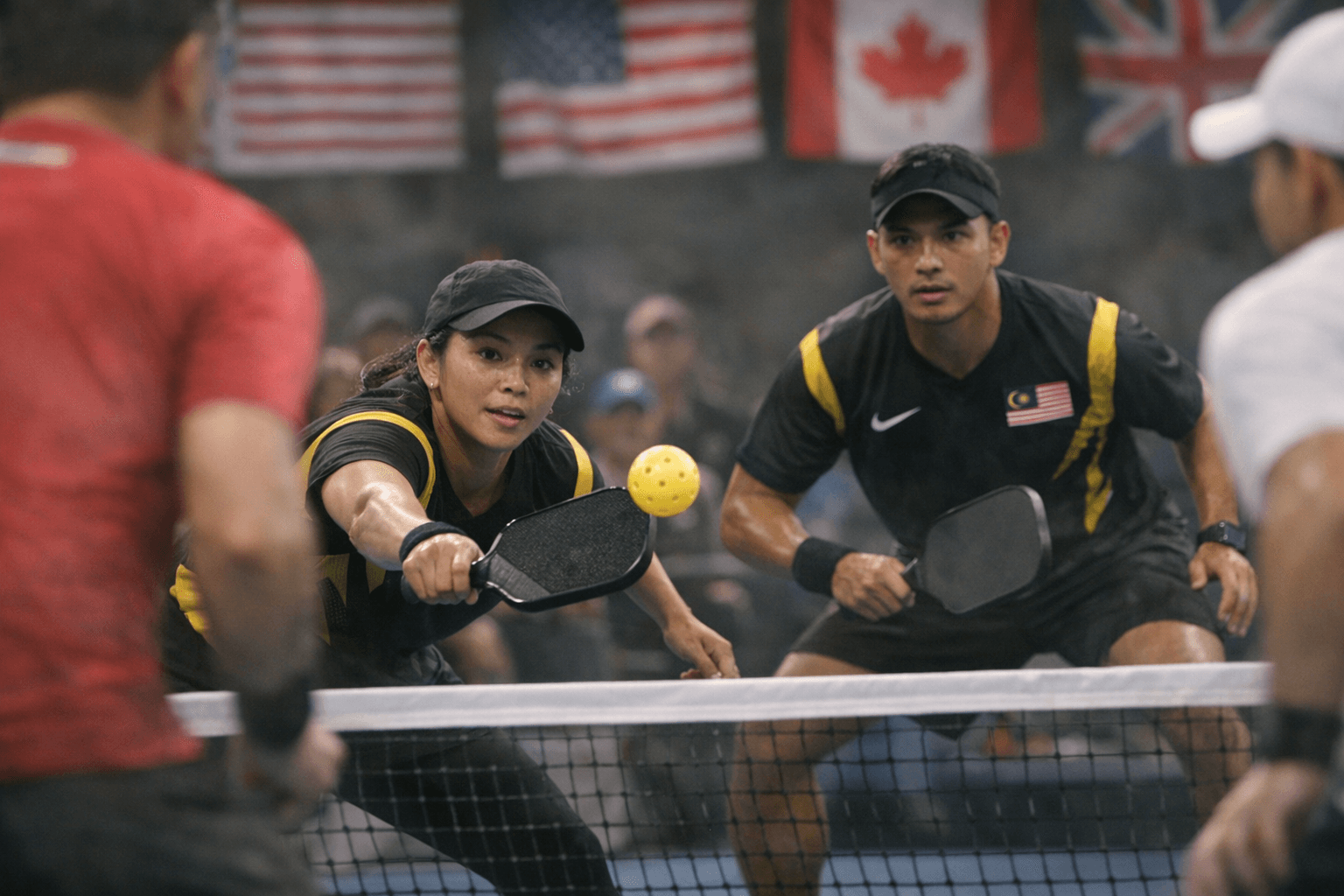
On governance and competition depth, Pickle361 notes that the International Federation of Pickleball continues expanding its member nations, reflecting how quickly competitive standards are spreading worldwide. The report emphasizes that as international depth increases, Malaysian players can no longer measure progress solely against local peers; they must calibrate against global metrics if they aim to carry a 5.0 rating sustainably.
Infrastructure dynamics in Malaysia also appear in the Reality Check 2026 material: "More courts are opening across Malaysia, yet utilisation is quietly becoming thinner." Pickle361 uses that juxtaposition to warn that court supply without concentrated competitive use may blunt the performance gains that international exposure can trigger.
The Pickle361 March 2 analysis leaves a clear strategic implication for Malaysian pickleball: international tournament participation, combined with the returning expertise of coaches and more data-driven preparation, is the most direct route from a 4.0 benchmark to a 5.0 standard. The challenge highlighted in the report for 2026 is converting the momentum behind "the first 1.4 million bookings" into denser, higher-quality court time and measurable rating upgrades.
Know something we missed? Have a correction or additional information?
Submit a Tip