Goldman CEO Solomon Says Markets Need Weeks as Inflation Pressures Rise
Goldman CEO David Solomon said markets may need "a couple of weeks" to digest Iran conflict fallout as investors demand higher risk premia and inflationary pressures rise.

Goldman Sachs Chief Executive David Solomon told an Australian Financial Review Business Summit in Sydney that markets will likely need "a couple of weeks" to absorb the economic implications of the recent Iran and wider Middle East conflict. "I think it's going to take a couple of weeks for markets to really digest the implications of what's happened both in the short term or in the medium term," Solomon said, flagging a window in which investors may reprice risk.
Solomon said he was surprised by how muted markets have been so far. "I look at the market reaction, and I’m actually surprised that the market reaction has been more benign given the magnitude of this as you might think," he told summit attendees, noting that geopolitical shocks often push investors to demand higher risk premia across asset classes.
He warned the current episode could still produce a cumulative effect that forces "a much harsher reaction" if events stack up. "There’s a cumulative effect of everything that’s happening and a much harsher reaction. Up to this point, we haven’t seen that cumulative effect," Solomon said, and added that "it’s very hard to speculate because there is so much that is unknown at this point."
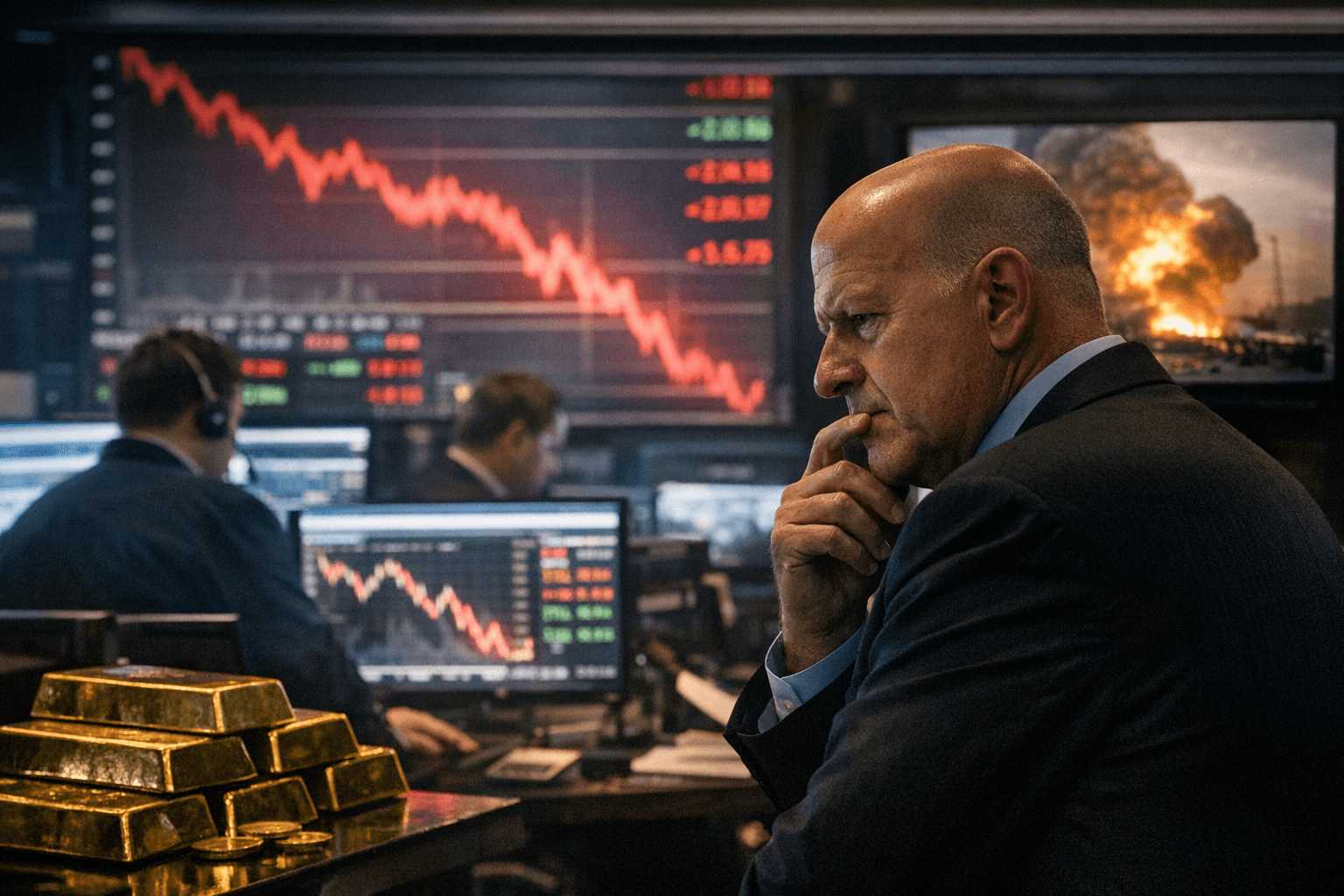
Market signs cited in coverage underline the immediate repricing Solomon described. The MSCI Emerging Market Index has fallen about 5.2% so far this month, and South Korea’s Kospi plunged enough to trigger a circuit breaker after losing roughly 8% on Wednesday. Commodity and equity headers in market snapshots showed crude oil up about 2.08%, the Euro against the US dollar down about 0.16%, and the US500 off roughly 0.94% in the same windows.
Solomon connected those moves to a familiar investor dynamic. "The one thing that happens for sure whenever you have an event like this is people want a higher risk premium for any kind of risk asset they're in, and so people start repricing things at the margin. And certainly we're seeing that," he said, pointing to pressure across risk assets such as emerging market equities and cryptocurrencies.
The coverage situates Solomon’s remarks amid reports that US and Israel carried out strikes on Iran over the weekend and that the conflict widened across the Middle East, raising concerns about potential energy supply disruptions and knock-on effects for consumer confidence and spending. Solomon listed those pathways as key uncertainties that will determine how markets and inflation react.
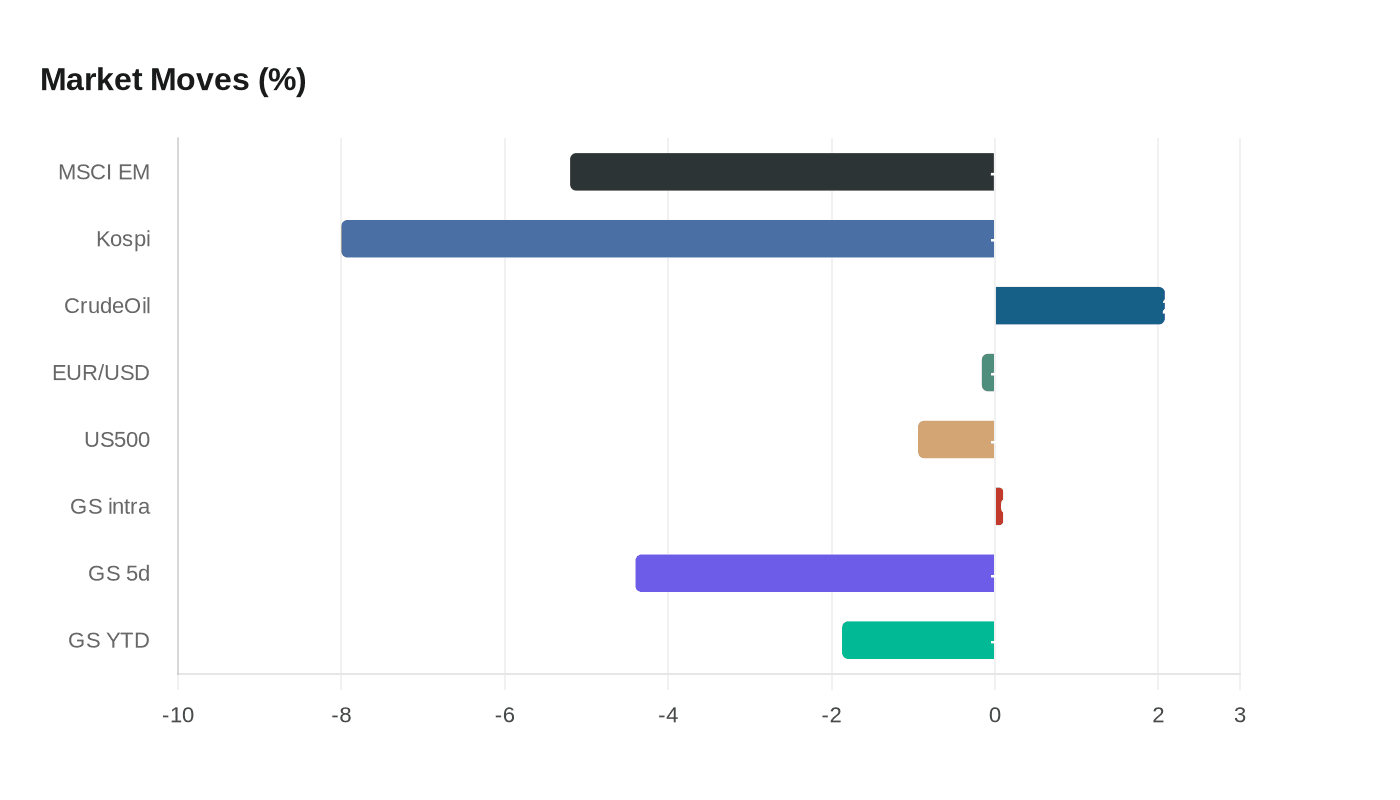
Solomon also offered a broader macro read, saying there is a "reasonable probability that the US economy runs a little bit hot this year" and that the "US economy is in good shape" with "a confluence of strong macro tailwinds that make [the] growth trajectory quite compelling." Goldman Sachs shares were trading near 862.58 USD in a snapshot shown during the coverage, up about 0.10% intraday with a five-day decline near 4.40% and a year-to-date change of roughly -1.87%.
Reports place Solomon’s summit remarks in Sydney on Wednesday; local datelines showed March 4 while some feeds carried publish timestamps in other time zones, reflecting the cross-border timing of the event and real-time market reaction.
Know something we missed? Have a correction or additional information?
Submit a Tip