Goldman Sachs Code of Business Conduct outlines employee obligations, lacks AI references
Goldman’s Code requires all employees to affirm they have reviewed it and warns violations can lead to termination and legal penalties; the public excerpts make no explicit reference to artificial intelligence.
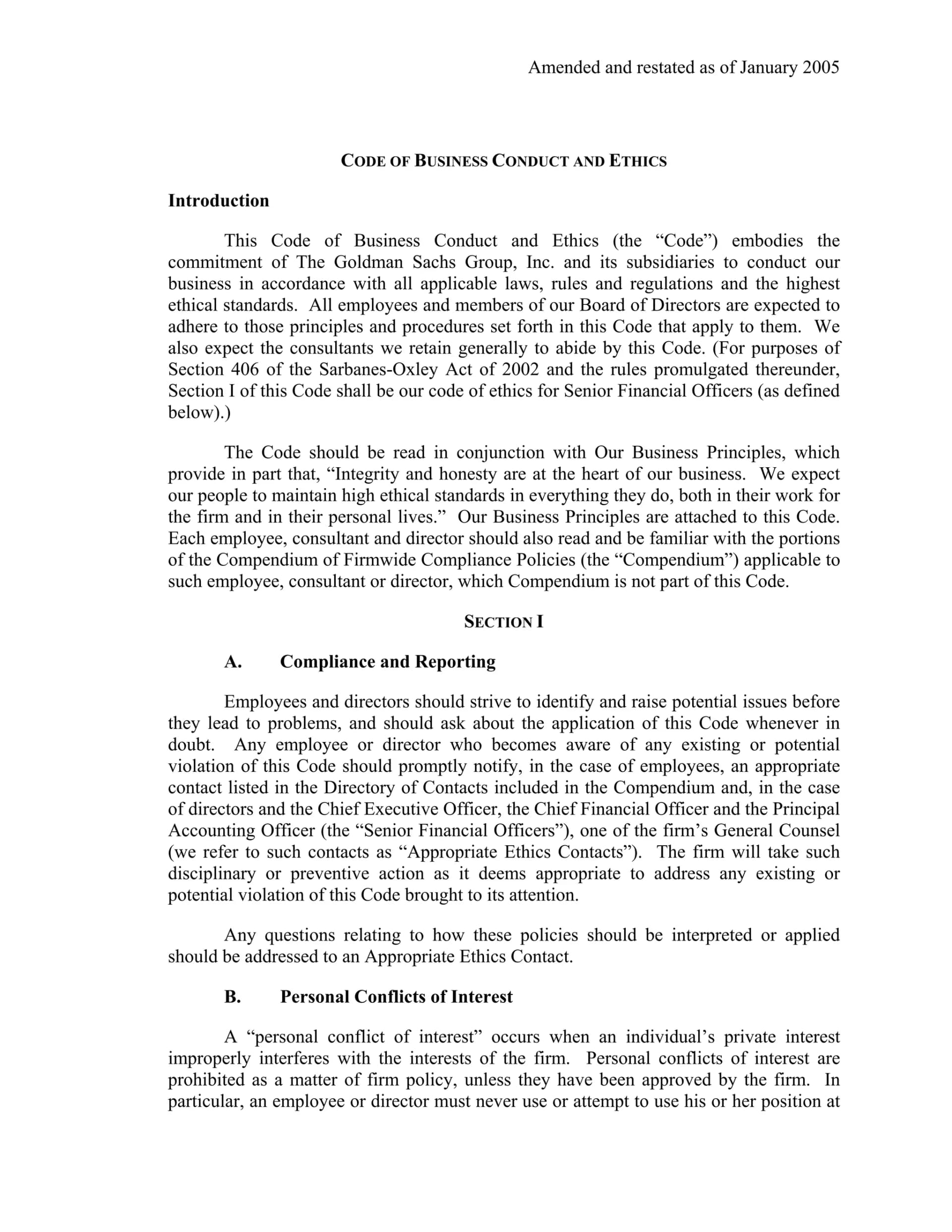
Goldman Sachs’ Code of Business Conduct and Ethics is presented as the firm’s “central public statement of employee responsibilities, policies and escalation routes” and requires “All of our employees [to] affirm that they have reviewed this Code and will comply with it,” while warning that the firm will take “any disciplinary or preventative action deemed necessary and appropriate…up to and including termination of employment.” The excerpts reviewed list market conduct risks and escalation routes but contain no explicit reference to artificial intelligence, machine‑learning, algorithmic trading, model risk, or data governance.
The Code excerpts draw directly on the firm’s Business Principles and core values to “provide actionable guidance that empowers all Goldman Sachs people to embody these values on behalf of the firm and our clients, and to treat each other with honesty and integrity.” The firm also points employees to a Principal Policies page that “provides access to the firm’s principal and most frequently viewed policies,” intended to help staff “act with integrity and ensure they are adhering to the firm’s policies as they fulfill their duties and responsibilities.”

Market conduct topics are enumerated in the excerpts. The Code lists market conduct risks including “conduct and supervision, confidentiality and communication, market manipulation, collusion, conflicts of interest, and inappropriate sales practices,” and instructs employees that “If you develop any concerns regarding potential market conduct risks, you must escalate per the firm’s issue escalation policy guidelines.” The Board of Directors and management are described as “determined to provide effective oversight and accountability to uphold these values.”
The BDC (Code for Covered Persons) excerpt defines conflicts of interest and fair dealing in specific terms: “A ‘conflict of interest’ occurs when a Covered Person’s private interest interferes with the interests of, or his or her service to, the Company,” with the example that a conflict exists “if a Covered Person, or a member of his or her family, receives improper personal benefits as a result of his or her position with the Company.” The fair dealing section forbids “manipulation; concealment; abuse of privileged information; misrepresentation of material facts; or any other unfair‑dealing practice.”
Outside commentary cited in the excerpts describes governance and integrity programs. An Ivypanda excerpt states, “The firm therefore uses the Business Integrity Program to support its workers and members of the public,” and adds that “Integrity issues are monitored and reported by the Network Incorporation. This third party company is contracted to support Goldman Sachs’ ethics agenda.” The same commentary highlights the firm’s CSR work, including the 10,000 Small Business Initiative program.
For contrast, Evergreen Fibreboard Berhad’s published Code of Conduct & Ethics is registered as Company No. 217120‑W and “Incorporated in Malaysia under the Companies Act, 2016.” Evergreen’s excerpt explicitly covers who is in scope — “all Employees and Directors … including full‑time or permanent employees, part‑time employees, employees on probation, trainees and interns, employees on secondment and personnel on fixed‑term contracts” — and sets out harassment, drug and alcohol, equal opportunity, and safety provisions, including “All complaints or grievances will be investigated and appropriate action will be taken to stop such conduct and prevent future occurrences.”
Notable gaps in the Goldman excerpts remain: the supplied text does not include a Code publication date or version, does not describe the mechanics or frequency of the employee affirmation, and provides no metrics on reports, investigations, or disciplinary outcomes. Crucially for staff tracking emerging‑technology risk, the excerpts contain no explicit language on artificial intelligence or related controls; verifying whether the full, current Code or any principal policies address AI will require obtaining the complete Code and the firm’s principal policy list.
Know something we missed? Have a correction or additional information?
Submit a Tip