Google adds new search history setting for images, audio and video
Google will start saving Lens images, Search Live recordings and audio searches in a new history setting, while giving users separate off switches and auto-delete controls.

Google is adding a new layer of memory to Search, one that reaches beyond text queries and into the images, audio and video people use while searching. The company said it will save those materials under a new Search Services History setting, a change that puts everyday AI-assisted search behavior on a much deeper retention footing.
The new system covers activity across Google Search, Maps, Shopping, Flights, Hotels, Translate and News. It also adds a separate Save media control that can capture images, files, audio and video from Google Lens, Search Live, Translate speaking practice and voice searches. Google said the rollout will be gradual over the next few months.
The privacy stakes are straightforward: what used to be a simple search trail can now become a richer record of how people search, speak, point their cameras and interact with AI tools. Google said saved history can be used to tailor experiences, let users revisit prior searches and personalize recommendations and ads, depending on account settings. It also said the saved media can help “develop and improve” services and technologies, including AI models and safety measures.
Google is splitting what had been handled by Web & App Activity and Search Personalization into two separate controls, Search Services History and Personalized Recommendations. The company said the new settings will follow users’ most recent choices in the older controls: if those were on, the new settings will stay on; if those were off, the new settings will also be off. Users can switch Search Services History off, delete activity manually, set auto-delete or download their data through Google Takeout.
The change comes as Google pushes harder into multimodal search. Search Live, which Google describes as a back-and-forth voice conversation with AI-generated responses, also lets users use a camera to show Search what they see. That makes saved images, recordings and audio prompts more consequential than older search logs, because the data reflects real-world context, spoken questions and visual input, not just typed keywords.
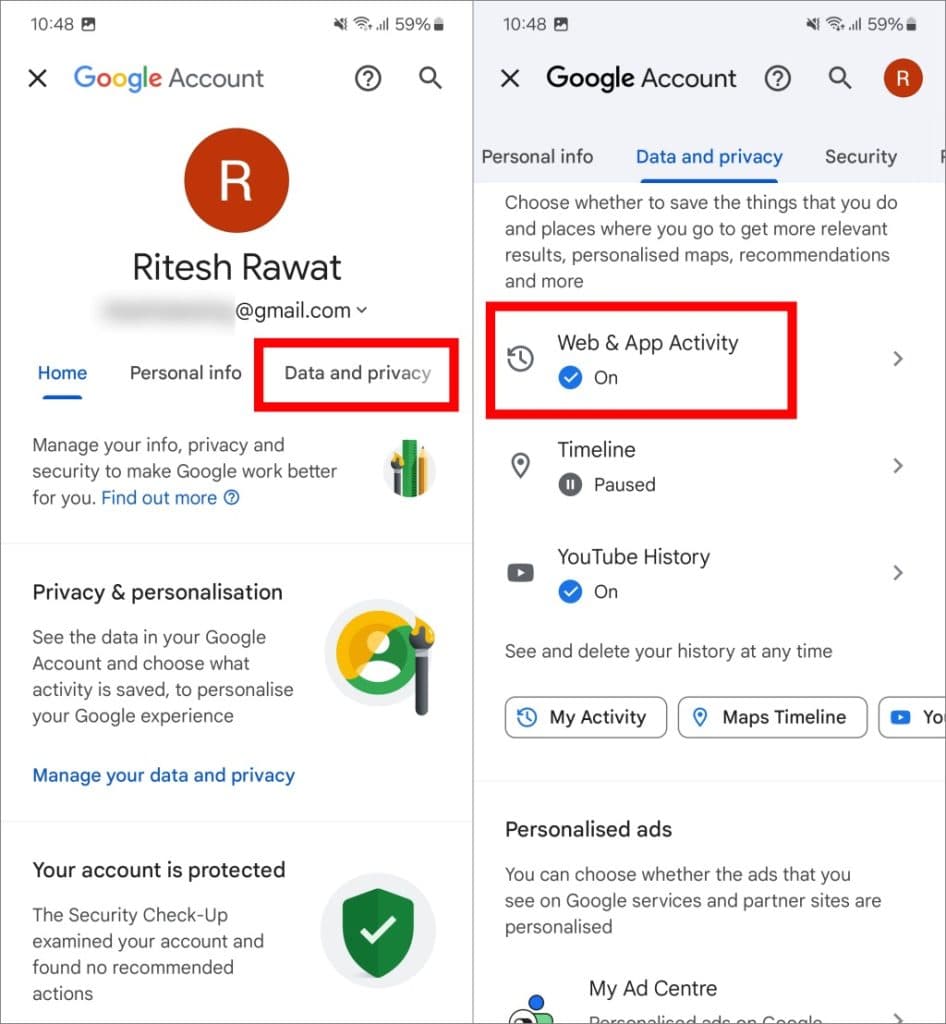
Google said Search Services History is available only when users are signed into a Google Account. It also said the setting does not cover services that save history under other controls, including Chrome, Gemini Apps, Google Assistant and YouTube. For users, the new system means more control in name, but also a clearer reminder that AI search now generates a far more intimate record of daily life.
This article was produced by Prism’s automated news system from verified source data, official records, and press releases, then run through automated quality and moderation checks before publishing. The system is built and supervised by the people who set the standards it runs under. Read our full AI policy.
Did this article answer your question?


