Google explores Samsung deal for future AI chip production
Google is weighing Samsung for a future TPU part built on 2-nanometer tools, a move that could loosen its dependence on TSMC as AI chip demand strains supply.
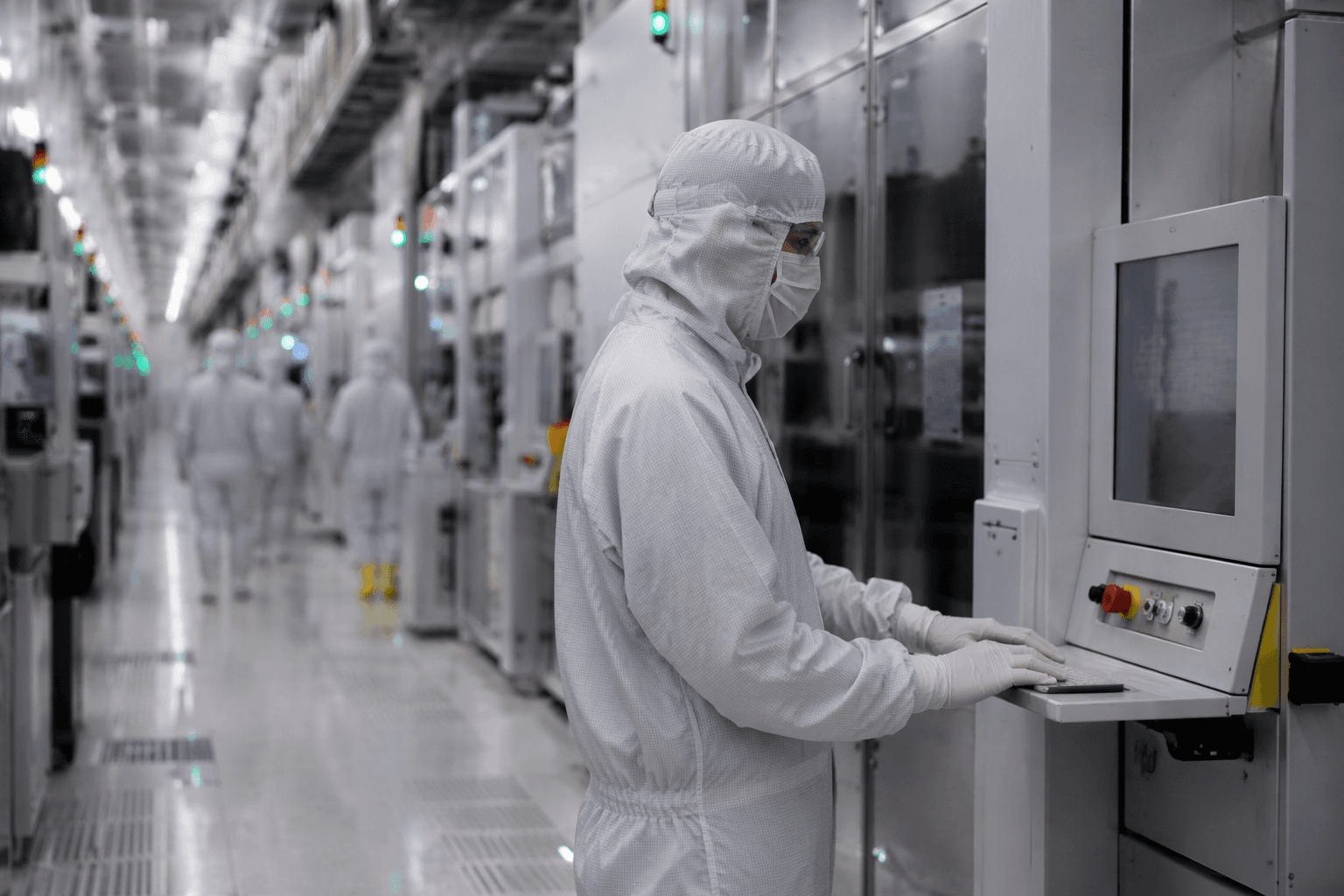
Google’s search for a Samsung role in its next generation AI chip points to a bigger contest over who controls the supply chain behind artificial intelligence. The company was exploring a deal to have Samsung Electronics make part of a chip codenamed Icefish, while Taiwan Semiconductor Manufacturing Co. would still handle the main computing portion of the tensor processing unit. If the plan advances, it would give Google another production lane at a moment when advanced chip capacity is one of the most valuable bargaining chips in the AI race.
Under the arrangement described in the report, Samsung would make a component that connects the compute die to memory using its 2-nanometer process technology. That is not an immediate shift. Mass production could begin as early as 2028, which makes the move a medium-term hedge rather than a quick fix. Even so, the signal is clear: Google is looking for ways to reduce reliance on TSMC, which has been under heavy pressure as demand for AI accelerators spreads across the industry.
The push also highlights how hard Google is working to build leverage against Nvidia, Amazon, and Microsoft in the race for AI infrastructure. Alphabet has increasingly leaned on its own Tensor Processing Units as an alternative to Nvidia’s graphics processors, and it has said those chips are becoming a growth driver for cloud revenue. On its April 29 first-quarter earnings call, the company said it would begin delivering TPU hardware to a select group of customers in their own data centers and would recognize only a small portion of that revenue later in 2026, with most of it expected in 2027.
Google has spent the spring underscoring how quickly that business is scaling. At Cloud Next 2026, it said nearly 75% of Google Cloud customers were using its AI products, 330 customers had processed more than a trillion tokens each over the prior 12 months, and its first-party models were handling more than 16 billion tokens per minute through direct API use. Google also introduced TPU 8i and TPU 8t and said just over half of its overall machine learning compute investment in 2026 would go to Cloud.
The Samsung talks fit into a broader scramble to lock down manufacturing capacity. Alphabet proposed an $80 billion equity capital raise on June 1, then upsized it to $84.75 billion on June 3, to fund AI infrastructure and compute. Samsung, meanwhile, has been trying to expand its contract chip business, including a $16.5 billion Tesla foundry deal tied to its Taylor, Texas facility, a contract Elon Musk publicly confirmed in July 2025. Google has also been weighing Intel as a backup manufacturer, a sign that the advanced chip supply chain remains in flux as the AI boom pushes every major player to secure more power, more capacity and more control.
This article was produced by Prism’s automated news system from verified source data, official records, and press releases, then run through automated quality and moderation checks before publishing. The system is built and supervised by the people who set the standards it runs under. Read our full AI policy.
Know something we missed? Have a correction or additional information?
Submit a Tip