Got Wood? LLC Publishes Comprehensive Spalted Hard Maple Guide for Turners
Got Wood? LLC published a thorough Spalted Hard Maple guide by Brad Leigher on March 3, 2026, detailing spalting science, turning tips, finishing options, and commercial specs turners need.

Brad Leigher at Got Wood? LLC pulled together a focused, practical wood‑species guide for turners — “Spalted Hard Maple” — published Tuesday, 3 March 2026, that pairs craft‑level guidance with clear shopping cues. The guide frames spalted hard maple as a turner’s specialty blank: visually dramatic, variable in density, and usable when handled with a few predictable precautions.
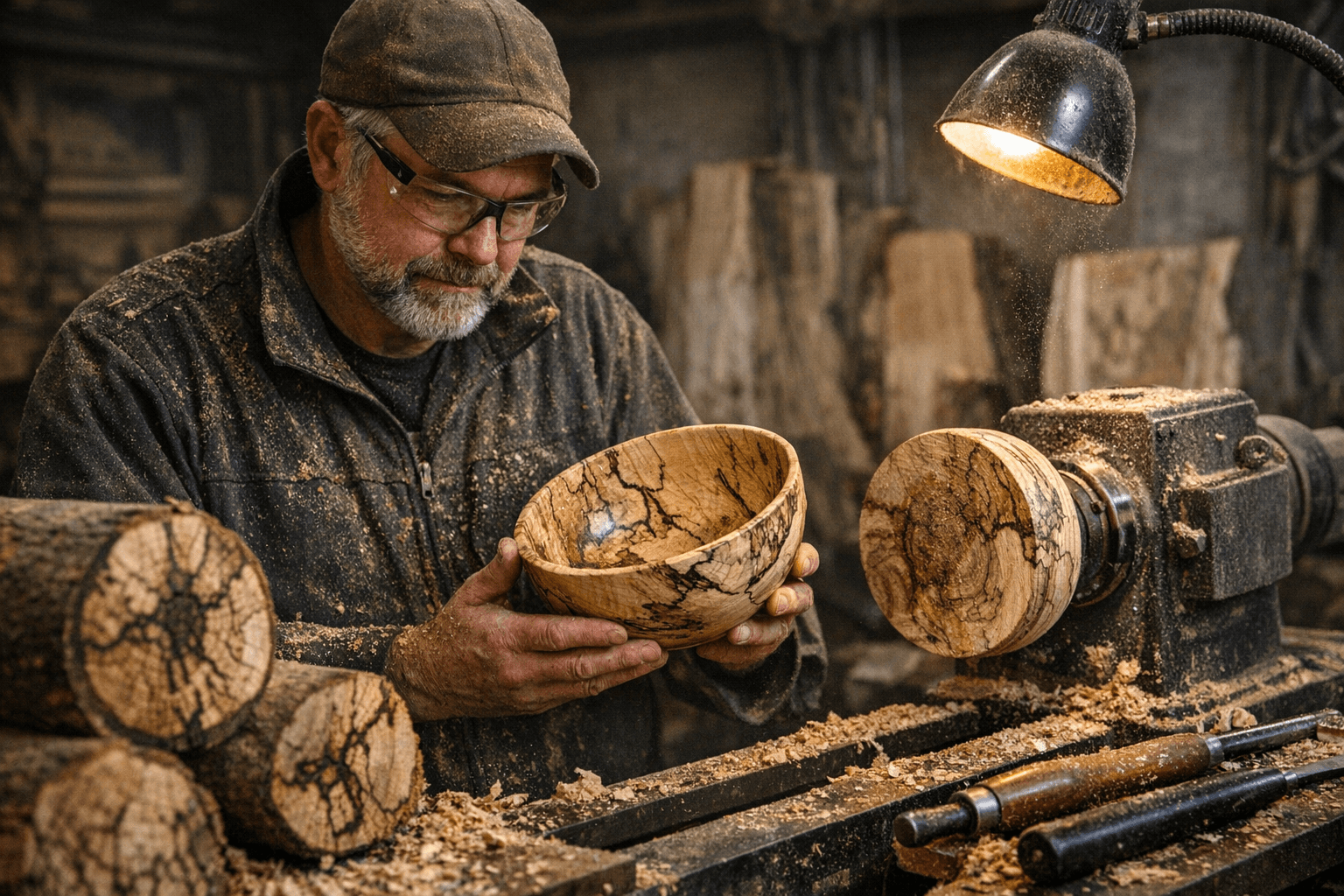
What is spalted hard maple? Got Wood? defines spalting plainly: “Spalting is a natural coloration process caused by fungi in partially decaying wood.” Their post explains that Spalted Hard Maple is most commonly Hard Maple (Acer saccharum) that has developed “distinctive dark lines and color variations through a natural spalting process,” producing the familiar “bold black zone lines and contrasting patterns” that draw turners to the lathe. The guide stresses that spalting primarily affects appearance — though it “may slightly soften certain areas” depending on the level of spalting.
Appearance, grain, and texture Got Wood? describes the species as typically showing a “light base color with dramatic dark lines,” making each blank one‑of‑a‑kind. BellForest’s product page complements this with the wider market description: spalted maple shows “light cream to pale brown tones with dark, intricate lines and patterns” while the grain is “typically straight with a fine texture.” Got Wood? emphasizes that these visual elements are the species’ selling point: “Each blank is completely unique, making it ideal for artistic projects.”
Turning performance and workshop approach Got Wood? is direct about shop realities: “Spalted Hard Maple turns very well but requires attention to varying density.” That is the headline lesson for bowl and vessel turning — expect firm, hard maple structure in lightly spalted areas and softer, sometimes punky zones where spalting is heavy. The guide balances caution and enthusiasm by stating that “Properly dried spalted maple is stable and suitable for turning,” while BellForest notes that spalting “often softens the wood, necessitating stabilization for durability.” Together these points outline a predictable workflow: evaluate the blank, plan cuts to avoid thin, heavily spalted zones, and be ready to stabilize or repair localized soft areas.
- Inspect blanks under good light and tap suspected soft zones; mark any punky areas before mounting.
- Use sharp tools and take light finishing cuts where spalting introduces density changes — Got Wood? calls out attention to “varying density.”
- Keep slow, controlled cuts when hollowing thin walls to avoid tear‑out at zone lines.
- Have CA glue on hand for “spot application” as Got Wood? lists CA glue among finishing/stabilization options.
Practical shop tips (short, actionable)
Finishing and stabilization options Got Wood? lists preferred finishes and treatments plainly: “Oil finishes”; “Lacquer or polyurethane”; and “CA glue (spot application).” The guide notes that “Clear finishes are typically preferred to showcase the natural spalting,” reflecting the priority of exposing those black zone lines and subtle color shifts. BellForest recommends stabilization when spalting has softened wood — stabilization can be done locally with CA or by vacuum/pressure impregnation for more fragile blanks. Got Wood?’s stance — that properly dried spalted maple is stable — highlights that not every spalting case requires heavy stabilization, but turners should make that call per blank.
Health and safety: dust and PPE BellForest’s product page bluntly warns: “HEALTH RISKS: Dust can affect lung function.” That’s a hard number to live by in the shop: plan effective dust collection and use a quality respirator when sanding, hollowing, or working heavily spalted areas that create fine, potentially reactive dust. Got Wood?’s guide reinforces the need to treat spalted blanks with standard safety practices because of the variable density and occasional friable material.
- Avg dry weight: 45 lbs/ft3 (720 kg/m3)
- Janka hardness: 1450 lbf (6450 N)
- Specific gravity: 0.72
Technical specs and material metrics (BellForest listings)
For turners who work from technical data, BellForest’s spalted maple page provides numeric values worth noting:
BellForest also lists Latin names on the product page as “ACER SACCHARUM, ACER RUBRUM,” and notes origin as “NORTH AMERICA.” These figures give a sense of the base hardness and density turners can expect before spalting lowers localized integrity.
Availability, shopping cues, and social proof Got Wood? connects the guide to inventory: their Instagram post from March 7, 2024 reads, “Lots of spalted hard maple available on the website all individually photographed.” That post earned 62 likes and 4 comments, a small but telling piece of social proof that Got Wood? has marketed spalted blanks for at least two years before this guide. On the broader market, BellForest offers both “Spalted Maple Hand‑Pick” boards and stocked “Spalted Maple Wood Blanks,” encourages customers to “View all customer photos,” and runs a site UX with size/dried/price/quantity tables and a phone number for custom orders: (877) 770‑9663. Got Wood? places its guide in a store blog context — the site structure includes Company, Assistance, Media Resources, Social Media, and Store location — signaling that the guide is tied directly to retail inventory and product photography.
How to choose the right spalted blank Got Wood? frames spalted hard maple as “ideal for artistic projects” because “each blank is completely unique.” Use that uniqueness to match blanks to project goals: choose lightly spalted, firmer blanks for thin‑walled bowls or functional pieces; select heavily figured, stabilized boards for display bowls, guitar tops, and pens where figure outweighs structural concerns. BellForest lists common applications — bowls, guitar tops, pens, furniture accents — and notes the wood is “relatively easy to work with sharp tools,” reinforcing that the species is versatile across project types.
Why this guide matters now Got Wood?’s guide, authored by Brad Leigher and published March 3, 2026, packages scientific explanation, turning guidance, finishing options, and shopping context into a single reference tailored to turners. That consolidation matters: spalted maple sits at the intersection of art and craft, and this guide makes explicit the decisions every turner faces — assess stability, choose clear finishes to show spalting, and treat dust seriously.
If you’ve been curious about adding dramatic, domestically sourced figure to your turning projects, Got Wood? gives you the language, the practical cautions, and the shopping breadcrumbs — plus BellForest’s numeric specs — to choose blanks with confidence. This is a species that rewards careful selection and sharp tools; when you pair those with the guide’s clear finish and stabilization options, the results can be both durable and visually arresting.
Know something we missed? Have a correction or additional information?
Submit a Tip