Government Training and Rs 22 Crore Cluster Create Jharkhand Freshwater Pearl Hub
Hazaribagh has been named Jharkhand’s first pearl production cluster with a Rs 22 crore PMMSY plan, joining Ranchi and Seraikela‑Kharsawan where over 800 freshwater pearl producers have been trained.
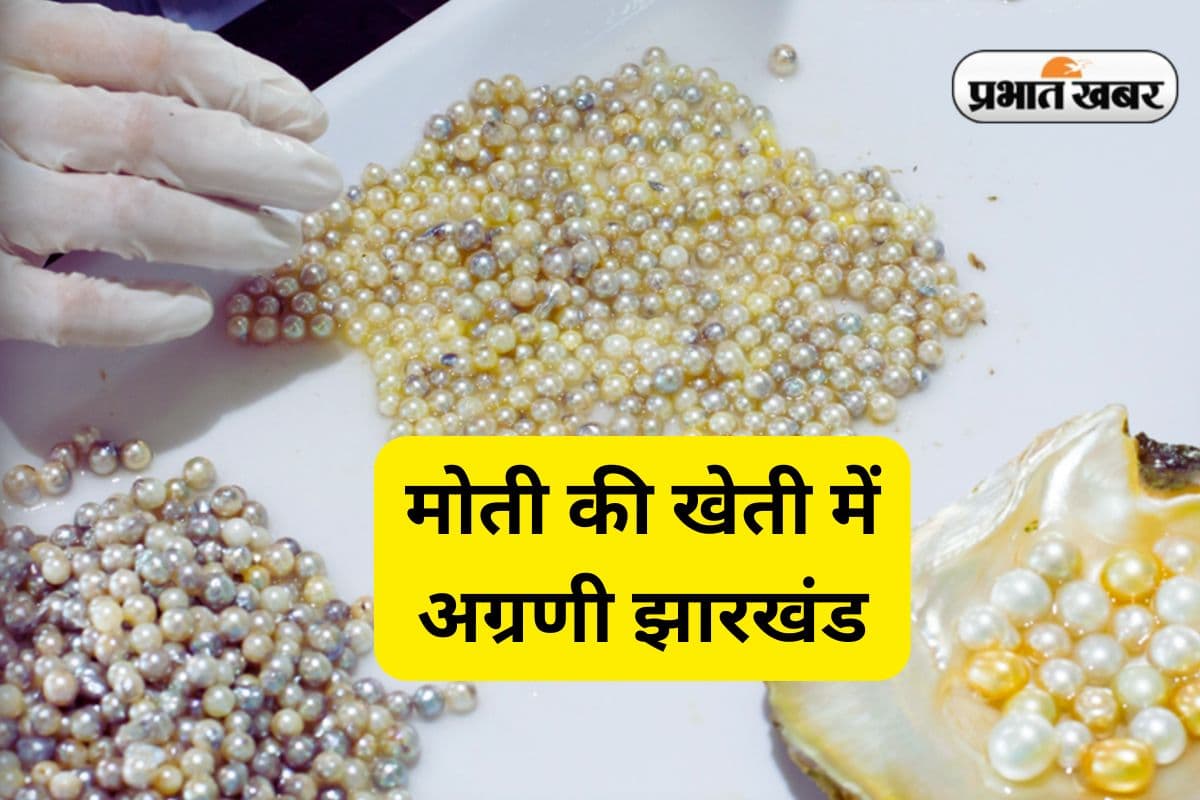
Government investment and targeted training have turned a rural aquaculture into a nascent gems industry in Jharkhand: Hazaribagh was declared the state’s first pearl production cluster with an assigned Rs 22 crore under the Pradhan Mantri Matsya Sampada Yojana (PMMSY), while Ranchi, Hazaribagh and Seraikela‑Kharsawan together account for more than 800 freshwater pearl producers who have been trained or financed.
Training and technical outreach form the backbone of the initiative. The Purty Agrotech Training Centre in Ranchi has trained over 132 farmers in cutting‑edge techniques such as pearl grafting, and ICAR institutes have contributed at scale — ICAR‑CIFA has trained in excess of 1,500 farmers in freshwater pearl farming while ICAR‑CMFRI ran 400 participants through marine pearl cultivation programs. At the central scheme level, PMMSY approvals include 2,307 bivalve cultivation units with a total allocation of Rs 461 lakh, a separate funding line that sits alongside the Rs 22 crore Hazaribagh cluster commitment.
On the ground the Hazaribagh cluster is not merely a funding line. It has been described as “a hub for training, technical assistance, availability of oyster species and market linkages,” and the PMMSY notification has, in local reporting, “brought national recognition to the state” and bolstered farmer confidence. That operational footprint — seed supply, grafting instruction and connections to buyers — is precisely what the state and implementing agencies are using to push the cottage industry toward greater scale and formal value chains.
Economic claims circulating on social media give a sense of why the project has momentum. A LinkedIn post promoting the effort put the cost to raise one mussel at ₹35–50 and suggested a cultured pearl can fetch up to ₹1,000, framing pearl farming as a potential “10X” return and declaring, “Pearl farming is not just about beauty—it's about building wealth from water.” Local reporting has emphasized practical outcomes: pond‑based operations that can be started close to home, a business model accessible to rural youth and women, and women’s collectives and Self Help Groups adopting pearl farming for economic empowerment.
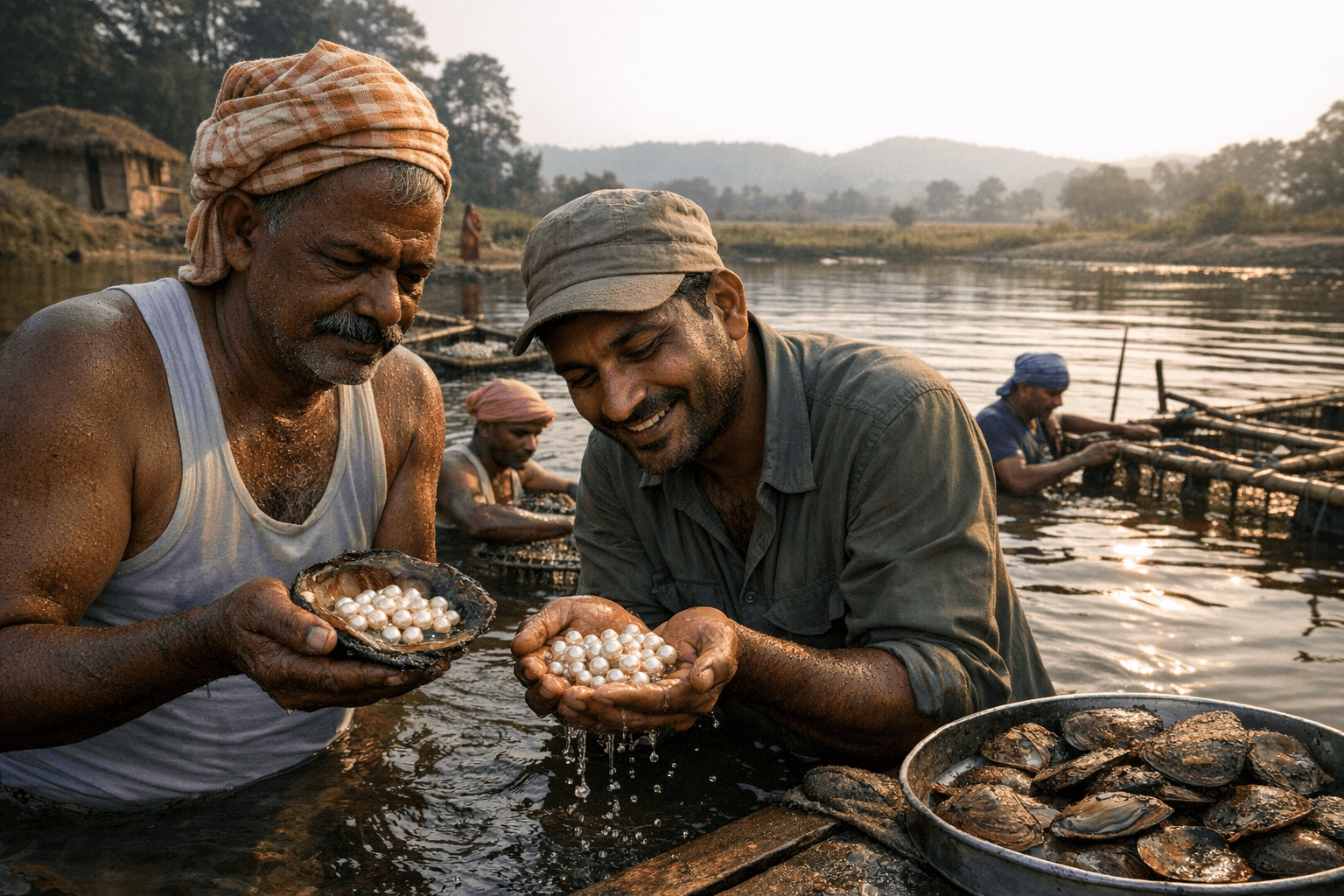
The state is already shifting its rhetoric from raw production to downstream value addition. ETVBharat coverage notes a deliberate move to connect farmers with processing, designing and marketing so producers receive better prices rather than selling only raw pearls. Nationally, efforts such as ranching 1.65 crore marine pearl oyster seeds in Tamil Nadu and the issuance of SOPs for cluster development aim to broaden India’s presence in cultured pearls and link clusters like Hazaribagh into a larger market strategy.
Jharkhand’s experiment combines Rs 22 crore cluster funding, institutional training from Purty Agrotech and ICAR, and a cohort of more than 800 trained producers — a concrete recipe that, if sustained, could transform freshwater pearls from an agrarian sideline into a locally managed jewelry supply chain.
Know something we missed? Have a correction or additional information?
Submit a Tip%3Amax_bytes(150000)%3Astrip_icc()%3Afocal(599x0%3A601x2)%2Fkristen-bell-SAG-2025-arrivals-4d3249c4bd08475d869c813b3644af7f.jpg&w=1920&q=75)