Government's £1m Boost Could See Birds Reintroduced as Early as Next Year
A Forestry England feasibility study identifying eight recovery zones triggered Emma Reynolds' approval of £1m to bring golden eagles back to England for the first time since the Victorian era.
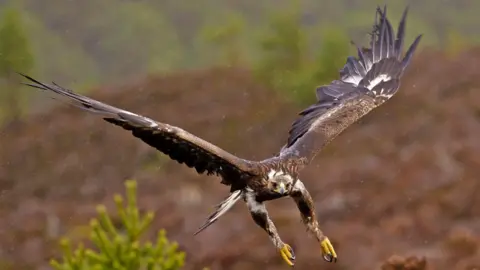
Golden eagles could return to English skies as early as 2027 after Environment Secretary Emma Reynolds approved £1 million in government funding to develop a reintroduction programme, backed by a new Forestry England feasibility study that confirms England can once again sustain the birds.
The Forestry England study identified eight potential recovery zones, mostly in the north of England, as the most suitable areas for the species. The programme could see juveniles aged six to eight weeks old released as early as next year. Forestry England's research also found that Scottish birds, tracked by satellite, could be seen across northern England within ten years, though it will take longer for breeding golden eagles to become established in England.
Reynolds said: "This government is committed to protecting and restoring our most threatened native wildlife, and that includes bringing back iconic species like the golden eagle. Backed by £1 million of government funding, we will work alongside partners and communities to make the golden eagle a feature of English landscapes once again."
The species was once widespread across England but was virtually wiped out by sheep farmers and gamekeepers during the Victorian era, who viewed the birds as a threat to lambs and game birds. That persecution was compounded by 20th-century pesticide use, which affected the birds' fertility. Only a handful of pairs have been seen in England in the last 150 years, with the last eagle dying in the Lake District in 2016.
The Scottish precedent underpins the programme's ambition. The South of Scotland Golden Eagle Project, which began officially in 2018, moved birds from the Highlands to the south of the country and helped numbers climb from just three or four pairs to more than 50, the highest in more than three centuries. The English programme will be delivered in partnership with Restoring Upland Nature, the charity project that drove that Scottish recovery.
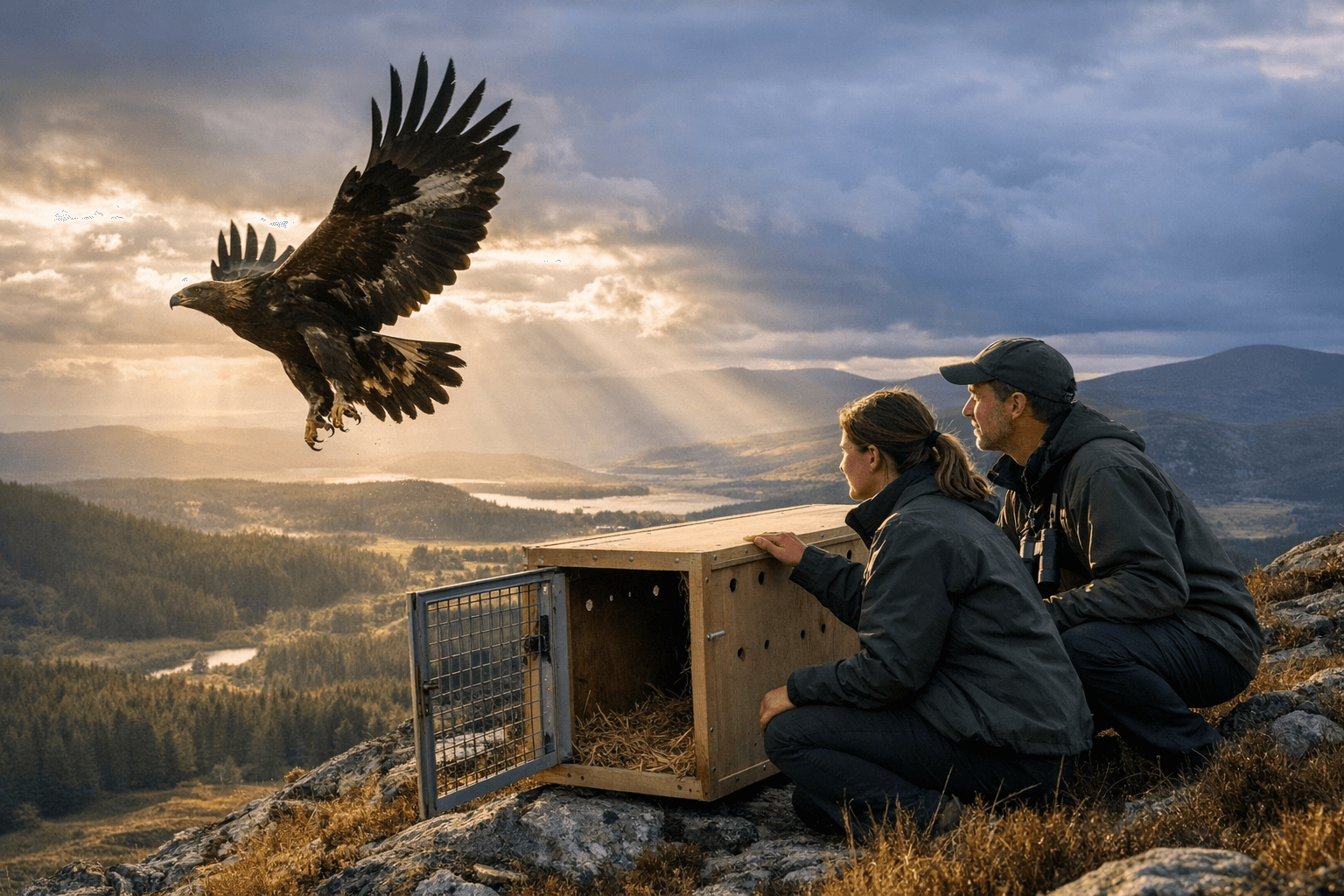
Forestry England chief executive Mike Seddon said: "The detailed findings of our feasibility study will guide us with our partners, Restoring Upland Nature, to take the next steps to explore the recovery of golden eagles in northern England. This funding means we can build on the good work we have begun, taking the time to build support and engage with local communities, landowners and land managers and conservation organisations."
That community engagement will be critical. The National Farmers Union has raised concerns about the impact of golden eagles south of the border, particularly on livestock and game birds. The RSPB's head of species and land management, Duncan Orr-Ewing, argued that prey availability would not be a barrier, noting the abundance of grouse, rabbits, hares, and other species across northern uplands.
Any reintroduction must adhere to international guidelines set by the France-based International Union for Conservation of Nature and would require licensing by Natural England, the government's conservation authority. The golden eagle move follows the government's decision last year to allow the legal reintroduction of beavers into the wild in England, and a record £60 million of funding announced to protect threatened native species. The government's statutory targets include halting the decline in species abundance by 2030 and reducing extinction risk by 2042 against 2022 baselines, and the golden eagle recovery is now formally part of that framework.
Sources:
Know something we missed? Have a correction or additional information?
Submit a Tip