Graham urges Trump to ignore advisers and consider strike on Iran
Sen. Lindsey Graham told President Trump to disregard cautioning advisers and weigh military strikes as two carriers and hundreds of warplanes mass near Iran.

Sen. Lindsey Graham publicly urged President Donald Trump to ignore aides warning against military action and to consider bombing Iran as U.S. forces build up in the region. Graham framed the moment as an opportunity for “historic change” in Tehran and said he had “a lot of respect for President Trump” while stressing that “history will be very clear as to where I stood, for better or worse.”
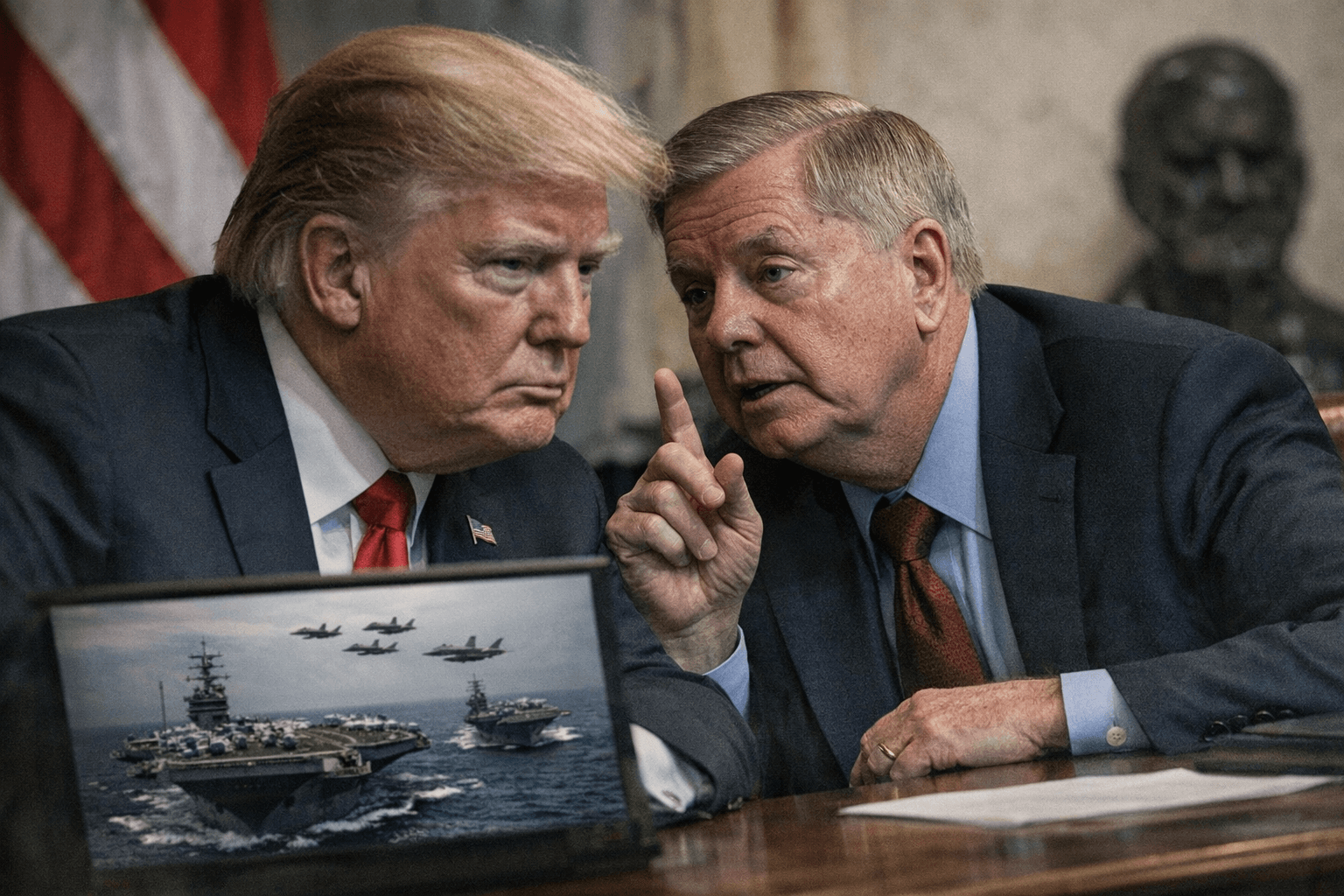
The warning comes as two aircraft carriers and “hundreds of warplanes” are preparing for what U.S. officials describe as a potential major operation near Iran. Graham, fresh from meetings with leaders in Israel, the United Arab Emirates and Saudi Arabia and from an Iranian opposition rally in Munich he said drew 250,000 people, told reporters that decision-making is compressed. “We’re into weeks, not months in terms of decisionmaking,” he said during a briefing in Tel Aviv, adding that the United States and Israel are aligned. “There is no light or gaps between the US and Israel on Iran,” he told the crowd.
Graham framed the choice as two competing lines: a diplomatic track and a military option. “I think President Trump is looking for which line can catch the biggest fish,” he said, describing a calculation that weighs leverage against the prospect of regime change. He also warned that those who counsel patience may be ignoring “the consequences of leaving evil unchecked.”
The administration remains divided. Senior advisers say the president has not settled on a course. “He hasn't decided to strike yet… He might never do it. He might wake up tomorrow and say, 'That's it,'” one aide warned, while another stressed the president is keeping all options open and could authorize an attack “at any moment.”
Tehran has signaled restraint and a promise of retaliation if attacked. Iran’s United Nations ambassador, Amir Saeid Iravani, told the UN that Tehran “will not initiate any war” but would respond “decisively and proportionately” if subjected to military aggression, and that foreign bases in the region could be considered legitimate targets if struck.
Congress is moving to constrain unilateral action. A bipartisan Senate resolution filed by Senators Tim Kaine and Rand Paul would prohibit the president from launching a military strike without congressional authorization, and parallel efforts are underway in the House to assert legislative checks.
The policy choice carries immediate market and security consequences. A strike or sustained hostilities would likely lift oil price risk premia, strain commercial shipping in the Gulf and Eastern Mediterranean, and reprice defense equities and contractors that supply aircraft and munitions. Domestically, administration officials worry the timing could undercut economic messaging ahead of midterm elections while forcing a recalibration of spending and force posture that could echo for years.
Graham’s push crystallizes a consequential decision point: whether the United States will seek to translate a kinetic option into leverage or accept a costly campaign to change Iran’s trajectory. With carriers at sea and “weeks” cited as the window, the window for Congress, allies and markets to influence or price the outcome is rapidly closing.
This article was produced by Prism’s automated news system from verified source data, official records, and press releases, then run through automated quality and moderation checks before publishing. The system is built and supervised by the people who set the standards it runs under. Read our full AI policy.
Did this article answer your question?

