GRAIL submits final FDA PMA module for Galleri multi-cancer test
GRAIL filed the final module of a Premarket Approval application for Galleri, citing large U.S. and U.K. trial data; approval could reshape screening and reimbursement.

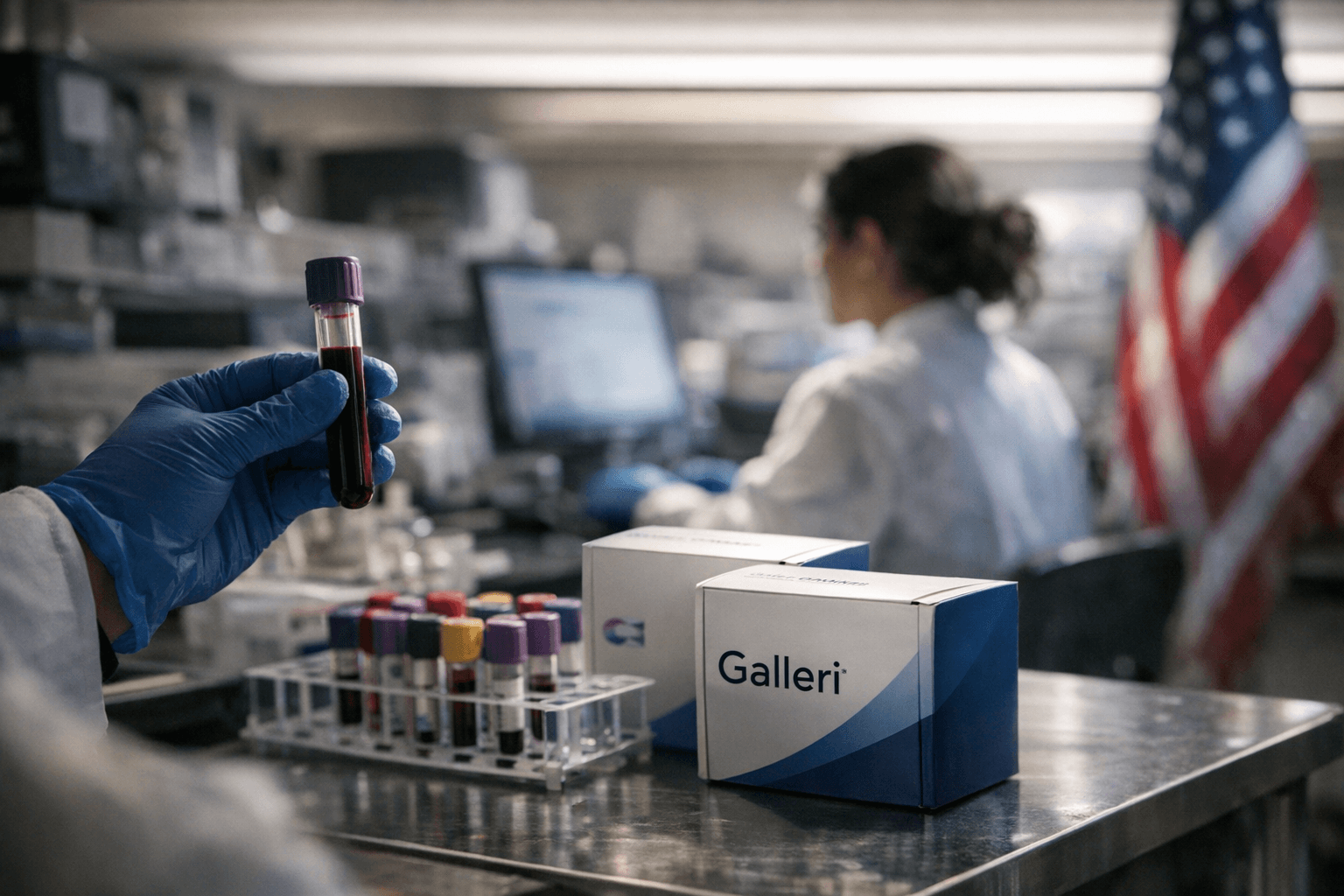
GRAIL, Inc. said it submitted the final module of a Premarket Approval application to the U.S. Food and Drug Administration for its Galleri multi-cancer early detection (MCED) blood test on Jan. 29, 2026, a step the company framed as pivotal for wider access to multi-cancer screening. The filing centers on performance and safety results from the U.S. PATHFINDER 2 interventional study and the prevalent screening round of the NHS‑Galleri randomized controlled trial, and is supported by a bridging analysis comparing earlier test versions to the PMA version.
GRAIL said the PMA package relies on PATHFINDER 2 data from 25,490 consented U.S. participants with one year of follow-up and on results from the first-year screening round of NHS‑Galleri. The company noted the submission includes a bridging analysis to align the versions of Galleri used in those studies with the updated test submitted for approval. GRAIL also pointed to its 2018 Breakthrough Device designation from the FDA for the technology.
The PATHFINDER 2 study has been described elsewhere as having an intended enrollment of roughly 35,000 individuals aged 50 and older; GRAIL’s filing uses a 25,490‑participant cohort with completed one-year follow-up for the performance and safety endpoints cited in the PMA. That distinction indicates the submission is based on a defined subset of the larger trial population rather than the entire planned enrollment.
Analysts and market commentators have underscored the regulatory stakes. Ainvest characterized the filing as a potential inflection point for MCED adoption, saying regulatory approval would be critical to unlocking reimbursement and broader uptake. In reporting on PATHFINDER 2 results, Ainvest cited a greater-than sevenfold increase in cancer detection when Galleri was added to standard screenings, 92 percent accuracy in locating tumors, a 61.6 percent positive predictive value and a 0.4 percent false positive rate. Those specific performance figures were presented by Ainvest; the company press materials provided in the filing excerpts did not reproduce those numeric metrics verbatim.
GRAIL executives framed the submission in stark public health terms. “Cancer is now the leading killer of adults over 50 years old in the U.S., and most deadly cancers are often discovered too late, when they are difficult to treat and typically have worse outcomes,” Josh Ofman, MD, MSHS, president at GRAIL, said in the company release. “There is nothing acceptable about the status quo in cancer screening. Adding Galleri to standard-of-care single cancer screening tests has the potential to dramatically improve the performance of the nation’s current screening program and expand opportunities for earlier treatment and improved outcomes. Galleri has been rigorously studied in case-controlled and interventional studies. This FDA submission marks a critical step toward making Galleri available to more people and advancing early detection to provide a significant public health …”
Company social media reflected internal celebration of the milestone. On LinkedIn, Linda Peters posted, “I am incredibly proud to share that GRAIL has officially submitted our Premarket Approval (PMA) application to the FDA for the Galleri® multi-cancer early detection test. This is a monumental milestone in our mission to change the face of cancer screening. I want to share a huge thank you to my incredible colleagues for their tireless dedication, collaboration, and brilliance. It is an honor to work alongside a team so committed to life‑saving innovation. Our mission continues! 🚀 #GRAIL #Galleri #MCED #MedTech #Biotech #EarlyCancerDetection #Milestone”
Ainvest also highlighted company finances, noting a reported $904 million cash runway, 35 percent test-volume growth in 2025 and ongoing pre‑profit status tied to a $13.7 million Q3 gross loss. Analysts cited a potential mid‑2026 FDA decision date as a market catalyst, but GRAIL’s release did not specify an FDA timeline. Independent confirmation of the detailed study metrics from primary study reports and an FDA review timetable will determine how quickly payers and health systems move to integrate MCED testing into routine screening.
This article was produced by Prism’s automated news system from verified source data, official records, and press releases, then run through automated quality and moderation checks before publishing. The system is built and supervised by the people who set the standards it runs under. Read our full AI policy.
Know something we missed? Have a correction or additional information?
Submit a Tip