Grand Traverse County approves out-of-county inmate boarding to ease overcrowding
Grand Traverse County commissioners voted March 4 to authorize "boarder housing agreements" to send roughly 50 inmates to Benzie, Clare and Leelanau jails to relieve overcrowding.
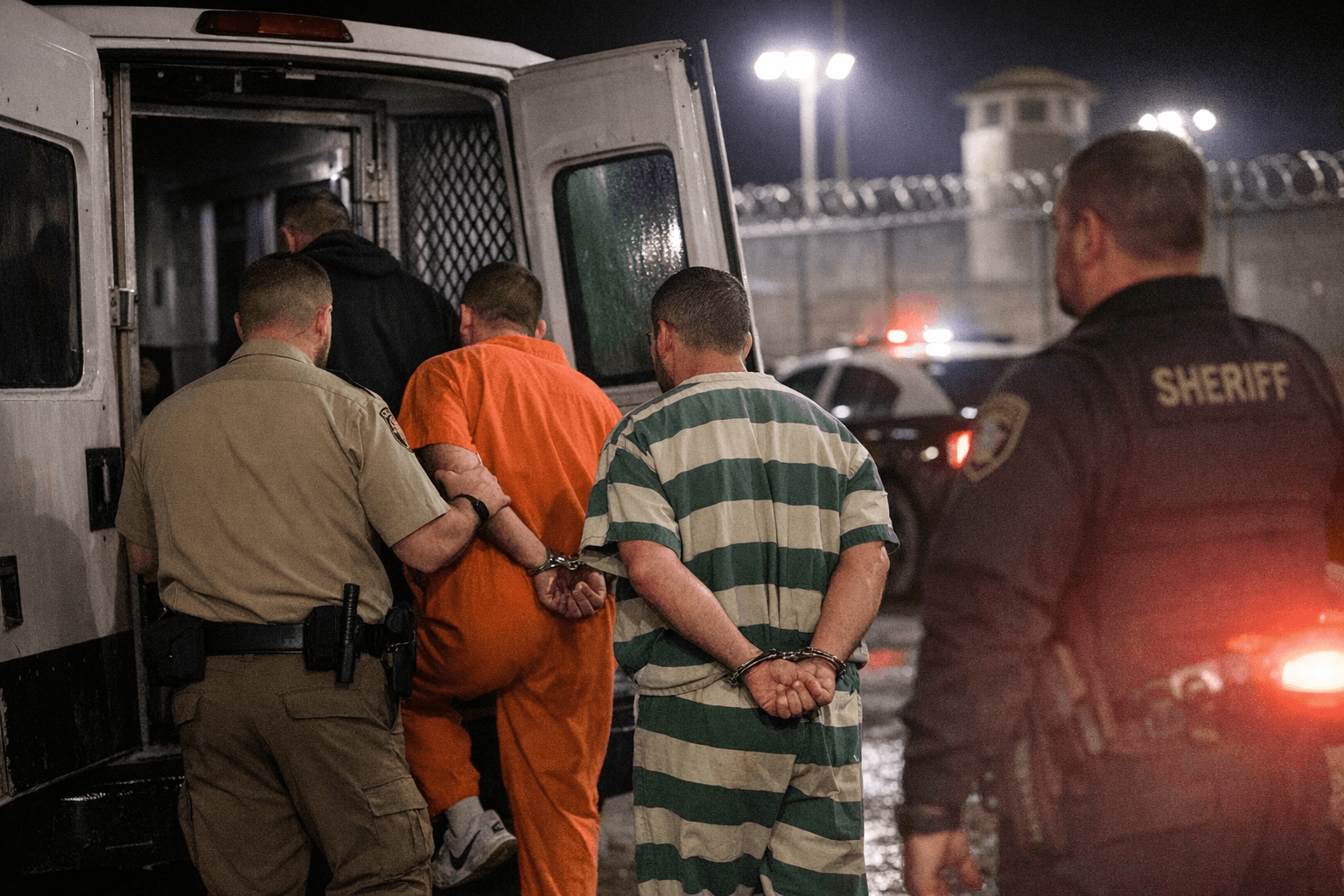
Grand Traverse County commissioners voted March 4 to approve "boarder housing agreements" that permit sending approximately 50 local inmates to Benzie, Clare and Leelanau county jails as officials confront sustained overcrowding and facility problems. The board authorized the Board Chair or the County Administrator to execute the documents needed to implement the 2026 agreements.
Jail Administrator Jimmy Argyle asked the board for the authorization, saying boarding inmates is an "ongoing operational necessity driven by housing and staffing constraints." Operational control of transfers and placements will remain with jail sergeants and the population coordinator, who will make day-to-day housing decisions and coordinate transports and medical arrangements.
County officials and internal communications portray the jail's capacity and use with differing numbers. The main facility has been described as having a rated capacity of 168 beds and as operating "most effectively with a population of approximately 140 to 145 inmates." County communications also state, "Grand Traverse County currently has about 193 beds in our jail," while prior county records show an average daily population of about 151 inmates. The new boarding agreements are expected to allow movement of up to about 50 inmates across the three partner counties to address those gaps.
The county's move follows a history of maintenance and staffing problems that have reduced usable housing. Administrators report a roof leak that shut down a housing unit, an inoperable maximum-security door, a broken cell window and a flooded area caused by another window. Low staffing in the recent past forced the closure of the "600-unit housing section" for several months, officials said while requesting the boarding authority.
Cost and contract history complicate the short-term fix. Commissioners previously approved boarding contracts in March 2025 that set a cost of $35 per inmate per day plus transport and medical expenses; one county official, Andrews, called those boarding contracts a "Band-Aid" solution. The 2026 agreements do not yet have publicly disclosed per-diem terms in county materials, and county leaders say they are trying to manage population and facility needs before considering any millage to fund new construction.
Longer-term planning continues alongside the temporary transfers. Commissioners recently voted to proceed with planning for a new jail and discussed a criminal justice complex that could house the sheriff's office, Traverse City Police, state police and the prosecutor's office. Toni Stanfield, co-founder of Before, During and After Incarceration, urged moving beyond traditional jails, saying, "If jail is the only place society is willing to send these individuals who are sick, then we must rethink what a jail should be," and "We must build something different, and I'm talking about a justice and rehabilitation center." The county has also engaged a consultant referred to as "David" to reanalyze recommendations from five years ago; that consultant will be on site over the next three months preparing a report for judges, the sheriff and the prosecutor.
About a year ago the county created a Jail Diversion Discharge Planning Specialist position held by Sara Bush to prevent unnecessary jailings and support reentry; the sheriff's office has described that job as a success and hopes to expand the program as part of broader population management efforts.
Outstanding public records and confirmations remain critical: the full 2026 boarding agreements and per-diem terms, the specific host facilities in Benzie, Clare and Leelanau, clarification of the 168 versus 193 bed counts and the meaning of the "600-unit housing section" closure, repair logs for the roof and security door, and the formal vote record and contract signatures by the Board Chair or County Administrator. County leaders characterize the new agreements as a short-term operational response while consultants and elected officials evaluate long-term construction and financing options.
Sources:
Know something we missed? Have a correction or additional information?
Submit a Tip