Greg Abel Leads Berkshire Into Post-Buffett Era at Omaha Meeting
Greg Abel used Berkshire’s biggest stage to argue that discipline can survive Buffett’s exit, even as a record $397 billion cash pile raises the stakes.
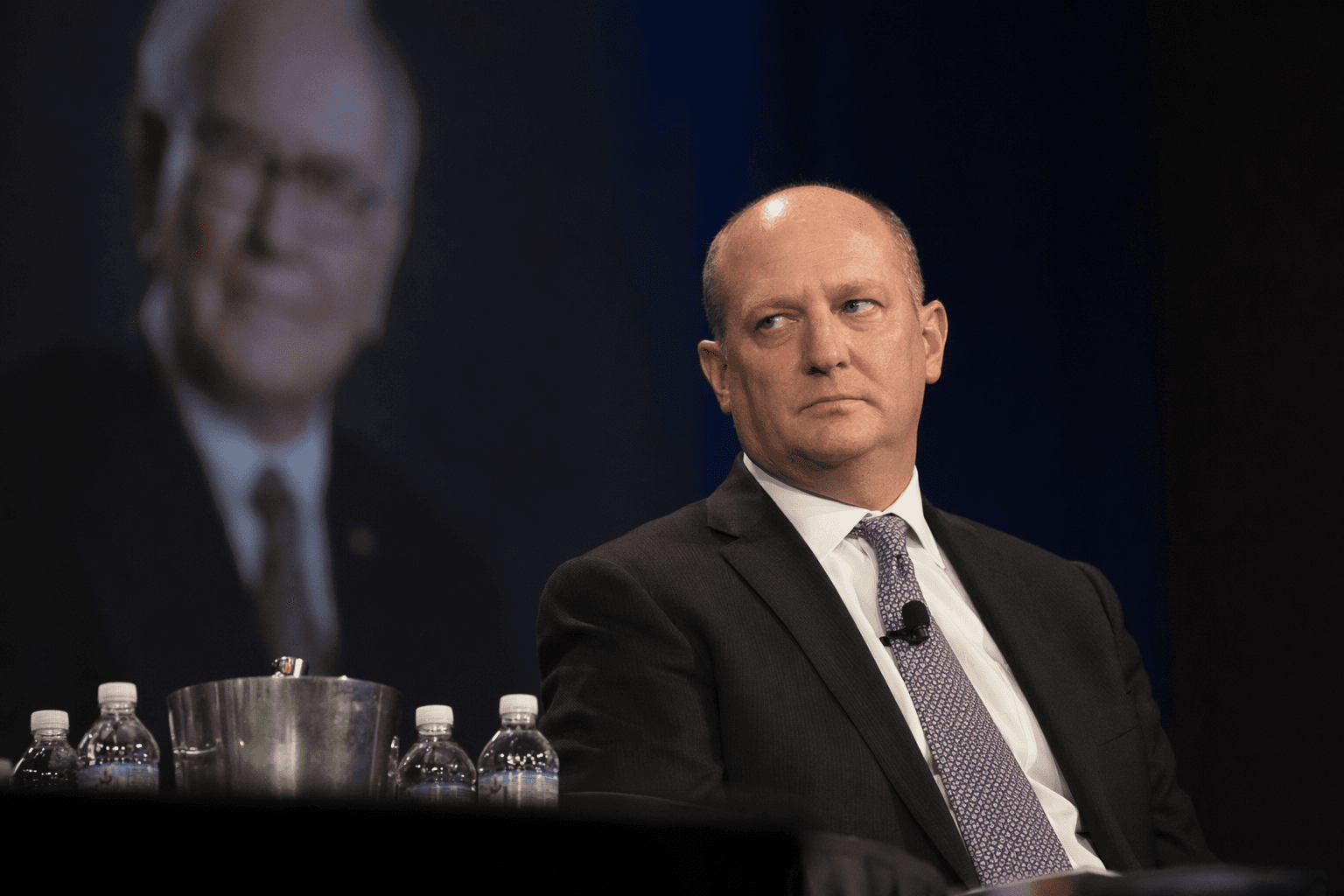
Greg Abel walked into Omaha’s annual meeting with a hard task: convince Berkshire Hathaway shareholders that the company’s culture, capital discipline and patient style can survive Warren Buffett’s handoff. It was Abel’s first annual meeting as chief executive, and Buffett, now chairman, sat in the front row, a visible reminder that the founder remains present even after stepping aside as CEO on January 1, 2026.
The symbolism mattered because Berkshire is entering the post-Buffett era with unusual financial strength and unusual expectations. The company said its first-quarter 2026 operating profit rose, while cash climbed to a record about $397 billion. Net earnings for the quarter were about $10.1 billion. That combination leaves Abel with more flexibility than most incoming chief executives would ever inherit, but also more pressure to explain why Berkshire is holding so much capital and when, or whether, it will be put to work.
Buffett sharpened the backdrop by telling CNBC that the investing environment is not ideal and that parts of the market have taken on a “gambling” mentality. That warning reinforced the case for Berkshire’s traditional caution, but it also underscored the challenge for Abel: he must sound like Buffett without sounding dependent on him. Abel’s message to shareholders has been patience, a signal that Berkshire is not rushing to force deployment of the cash pile simply to prove action.

The annual gathering itself showed how much Berkshire’s culture has expanded beyond the days when about 20 people attended the company’s early meetings. Recent meetings have drawn tens of thousands of shareholders, including roughly 40,000 in 2025, turning the Omaha event into a referendum on Berkshire’s future as much as a shareholder ritual. Berkshire’s 2025 annual report had already pointed to May 2, 2026, as the next owners’ day, making Saturday’s meeting a long-telegraphed moment in the transition.
For Abel, continuity is the message in the room, from Buffett’s front-row presence to Berkshire’s long-standing preference for restraint over spectacle. The shift comes in the burden of proof. Investors no longer have to ask whether Buffett will eventually leave; they have to decide whether Berkshire’s discipline can still command confidence when he is no longer the one on stage.
This article was produced by Prism’s automated news system from verified source data, official records, and press releases, then run through automated quality and moderation checks before publishing. The system is built and supervised by the people who set the standards it runs under. Read our full AI policy.
Did this article answer your question?

