Guardian patrols China’s iconic 1,000-year-old Guest-Greeting Pine
At 5,500 feet, Hu Xiaosong patrolled the Guest-Greeting Pine, worrying that harsher weather could outpace a millennium of care.
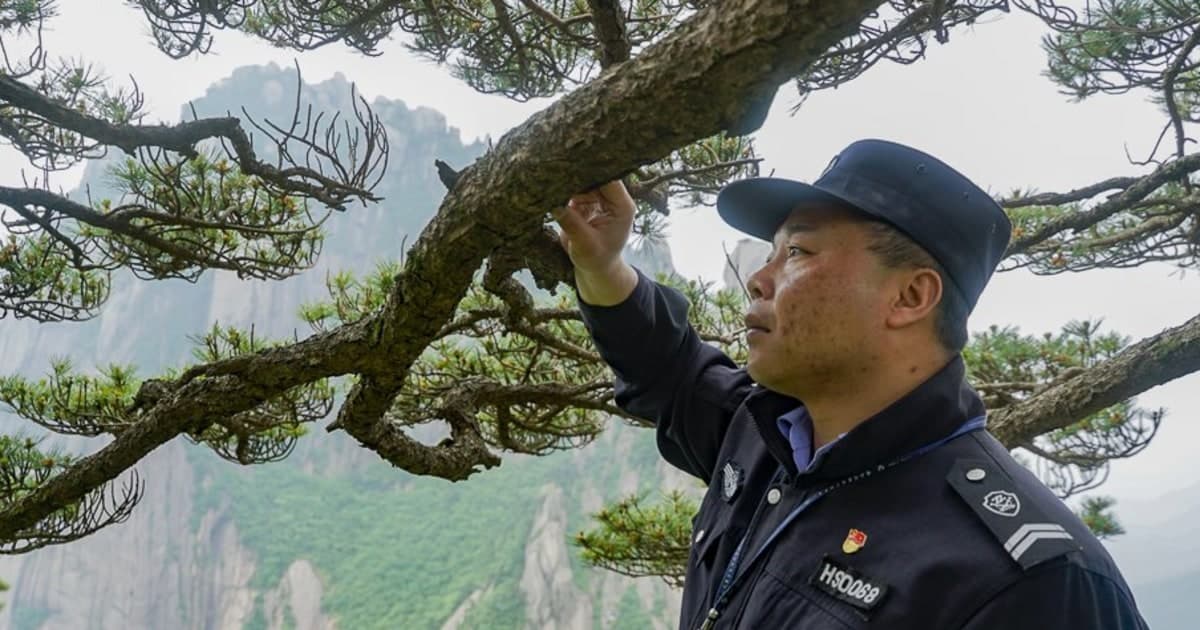
Hu Xiaosong climbed to Yuping Peak as midday heat built over Huangshan Mountain, continuing the routine patrol that has made him the lone face of protection for China’s Guest-Greeting Pine. From more than 5,500 feet above Huangshan city in Anhui province, he watched over the 1,000-year-old tree as if it were family, guarding a living symbol of Chinese hospitality at a moment when changing weather patterns are making that duty harder to sustain.
The pine, also called Yingkesong, stands among the most recognizable natural landmarks in China. Some accounts place its age between 800 and 1,000 years, but all agree that it has outlasted dynasties, storms and generations of visitors. Its setting on Huangshan Mountain adds to its weight as heritage: the site is recognized by the United Nations Educational, Scientific and Cultural Organization as a World Cultural and Natural Heritage site, a World Geopark and a World Biosphere Reserve.
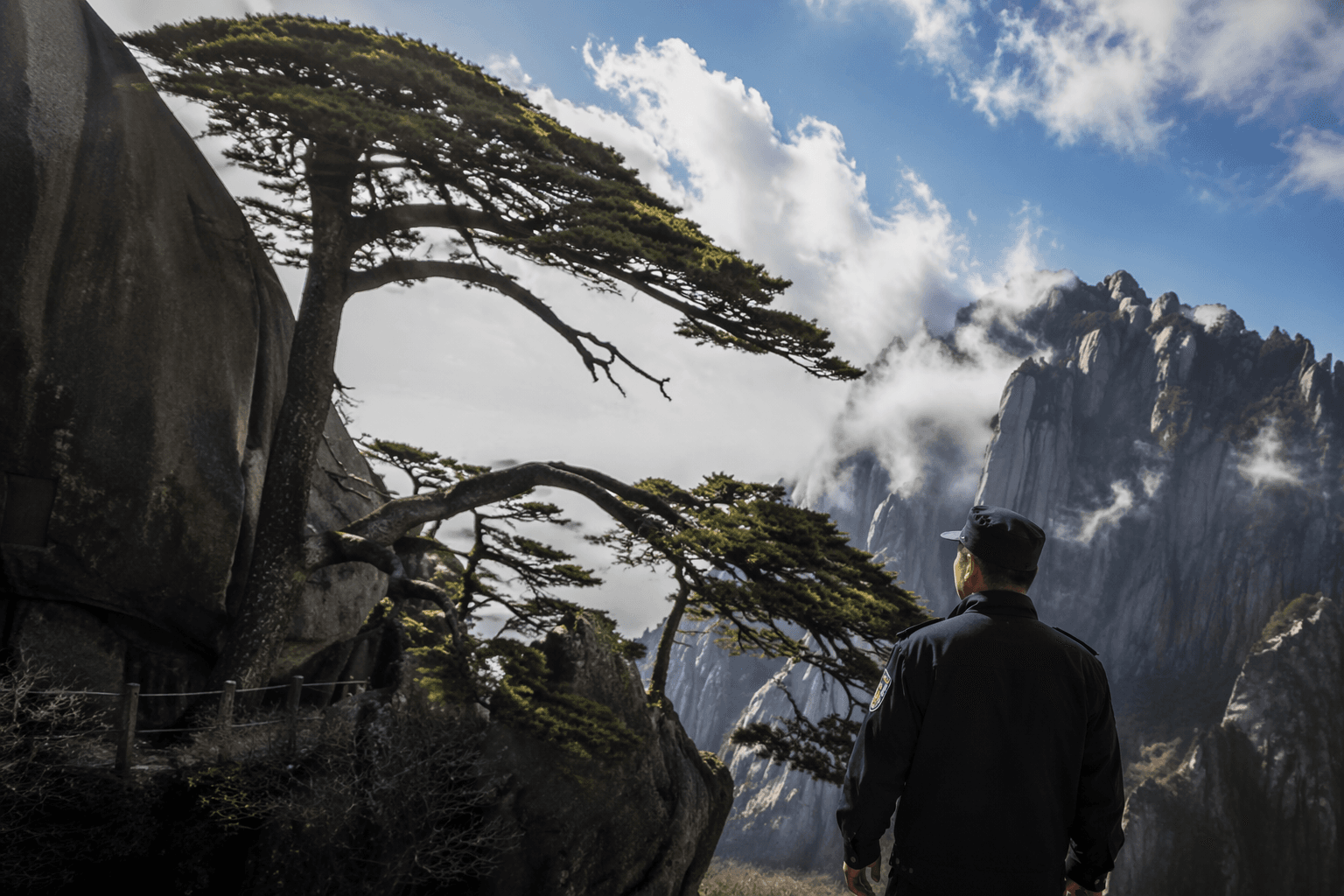
Hu became the tree’s 19th guardian in 2010, four years after he began working in the scenic area as a fireguard. Born in 1980 and an army veteran, he had joined a protection system created in 1981 after authorities decided the pine needed a dedicated human presence. Since then, he has reportedly spent more than 300 days a year on the mountain for 12 consecutive years, checking the tree repeatedly and recording its condition in detail.
That monitoring has grown more urgent as extreme weather becomes less predictable. Hu increases inspections when conditions turn harsh, reflecting a broader shift in how ancient-tree conservation is being practiced in China. The challenge is no longer only routine pruning, pest control or fire prevention. It is the stress of hotter days, stronger winds and other climate-driven disruptions that can weaken a tree already measured in centuries rather than seasons.
The protection system around the Guest-Greeting Pine now extends beyond one guardian. Hu meticulously keeps a daily journal, while other staff track the pine through a network of close observation, including a support pole, live surveillance footage and needle-length measurements. For Huangshan, preserving the tree means preserving a piece of collective identity, one that now depends on whether human stewardship can keep pace with a changing climate.
This article was produced by Prism’s automated news system from verified source data, official records, and press releases, then run through automated quality and moderation checks before publishing. The system is built and supervised by the people who set the standards it runs under. Read our full AI policy.
Know something we missed? Have a correction or additional information?
Submit a Tip