Guide for Dollar General employees: Filing NLRB charges and protections
If you believe your NLRA rights were violated at work, the NLRB outlines how to file charges, what protections exist, and key deadlines that matter to store employees.
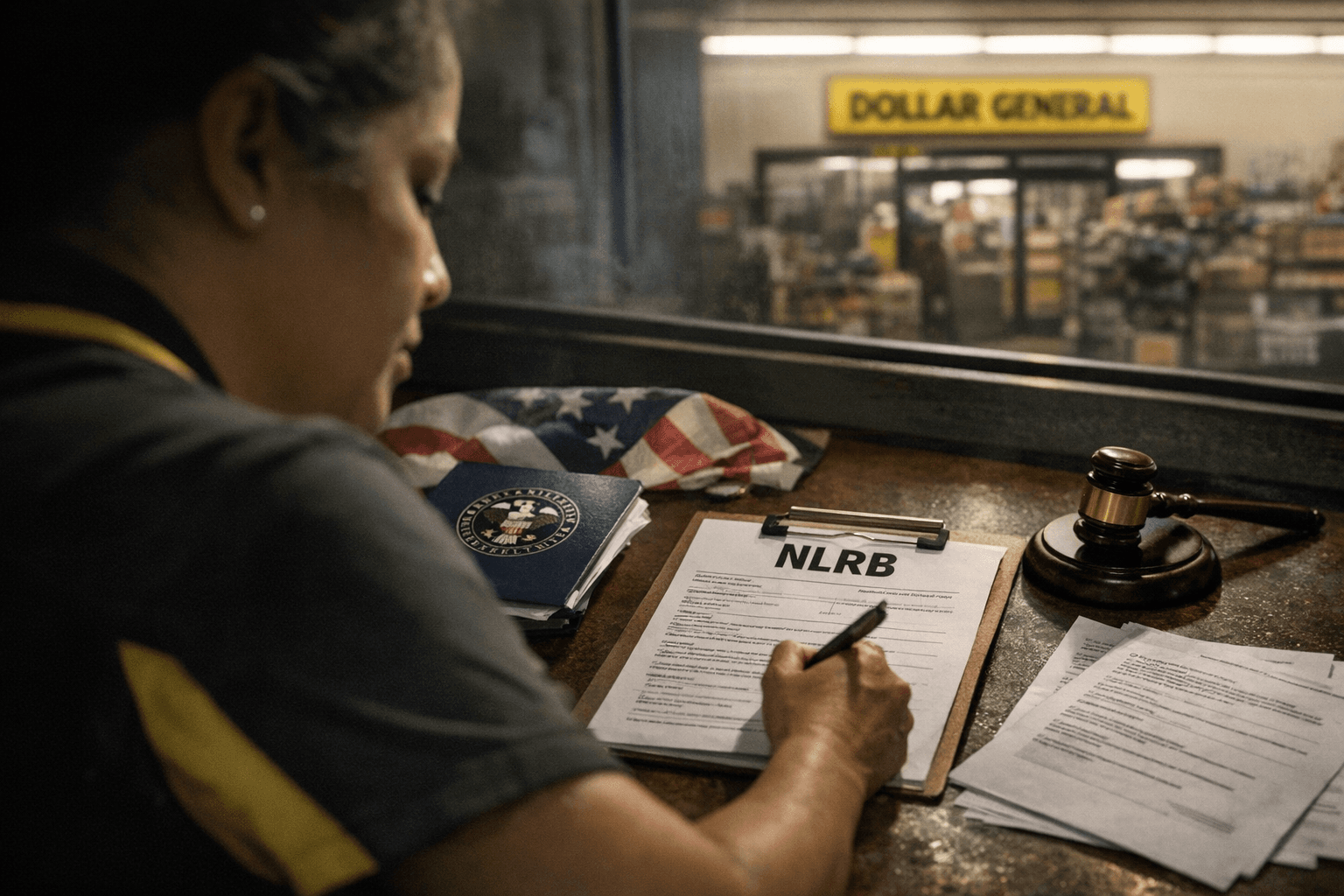
If you work at Dollar General and suspect unlawful discipline, threats related to organizing, or retaliation, you can contact the National Labor Relations Board to file an unfair labor practice charge. The NLRB allows workers to begin the process in person at a field office, by mail, by telephone, or electronically, and it cannot investigate allegations unless a charge is filed.
A confidential inquiry is available: "You will be able to speak with an NLRB agent and ask about possible violations without your employer, union, or anyone else being told about your inquiry." You do not need a lawyer and filing is free. "Workers do not need a lawyer to file a complaint." Once a charge is filed, a copy will be provided to the employer or union that is the subject of the charge, and the Board will decide whether to open an investigation.
The NLRB and outreach materials stress that employers may not retaliate by cutting hours or wages, disciplining or firing employees, or otherwise punishing them for trying to form or join a union. Immigrant workers have the same NLRA protections regardless of immigration status, including protection against threats to call immigration authorities. NLRB staff will not ask about immigration status to prove NLRA violations, and the Board has interpreters available for non-English speakers. Charges must be filed with an NLRB Field Office within six months of the potential violation, so act promptly if you believe your rights were violated.
For stores considering union representation, a petition for an election must show support of at least 30 percent of employees in an appropriate unit. "An appropriate unit is a group of workers who are logically placed together and share common employment interests for purposes of union representation." After a petition is filed, the NLRB works with the parties to set the voting group and the date, time, and place for the election, and to arrange foreign-language notices and ballots when needed.
Recent court commentary summarized by legal analysts reinforces that employer speech during a campaign is protected under Section 8(c) so long as the speech "contains no threat of reprisal or force or promise of benefit." The same commentary reiterates that "any person" may file a charge and that "[a] charge is merely the means whereby action on the part of the Board is instituted and is not a formal pleading filed by a party to the proceeding." That means coworkers, advocates, or others can initiate a charge even if they are not the directly aggrieved party.
Practical contact options listed in NLRB materials include toll free lines 866-667-6572 and 1-844-762-6572, and a national office address at 1015 Half Street SE, Washington, D.C. 20570. If you are facing scheduling cuts, discipline, or threats from managers over organizing or complaints about working conditions, reach out to the NLRB promptly, ask for a confidential conversation with an agent, and remember the six-month filing window. For Dollar General employees, that prompt step can protect shifts, pay, and future work while the Board evaluates the claim.
Know something we missed? Have a correction or additional information?
Submit a Tip