Guide to Launching a Local Slamball League: Facilities, Safety, Staffing, Insurance
Learn the essentials for launching a local Slamball league, facilities, safety gear, staffing, insurance, and community growth in one practical guide.
1. Facilities & court
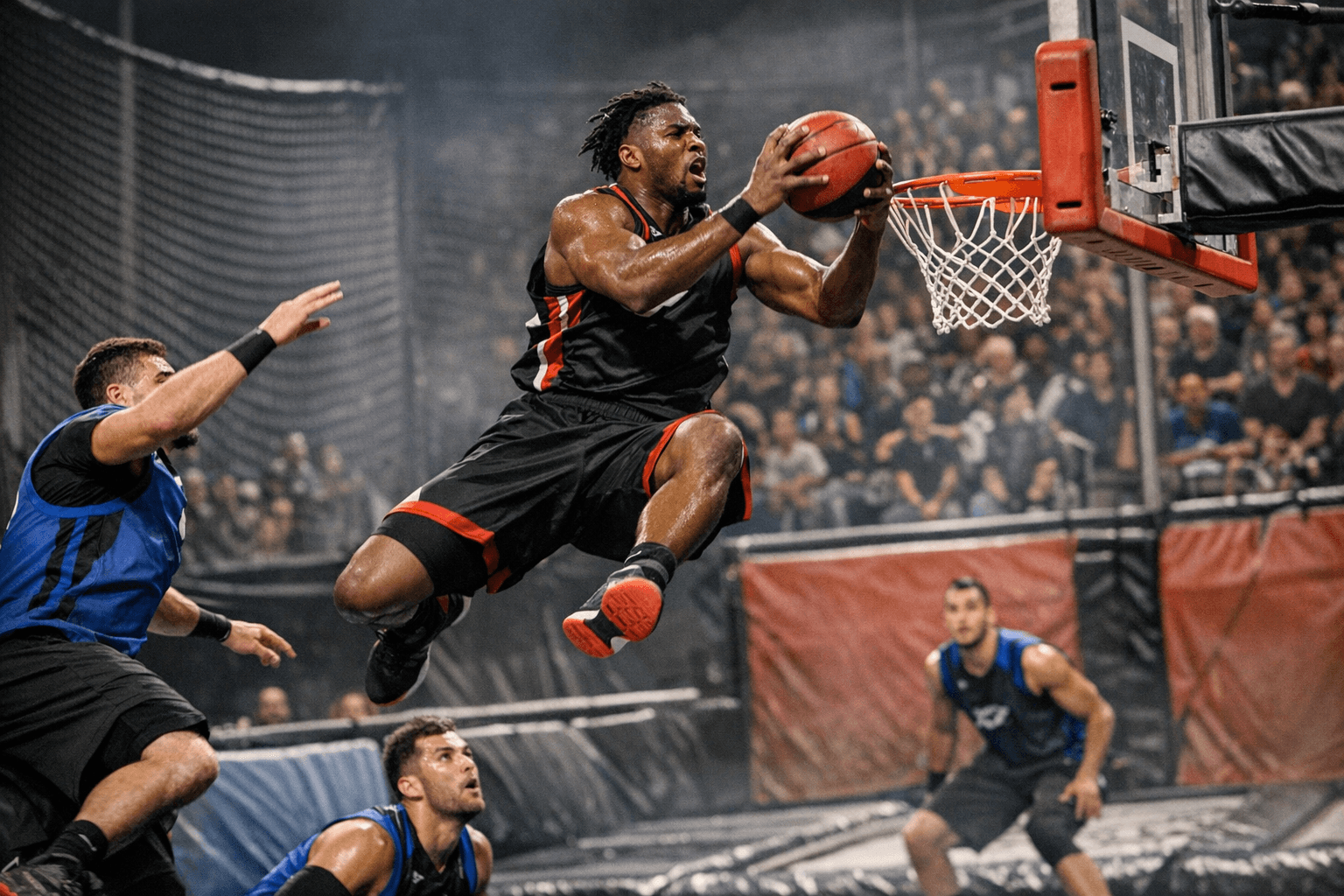
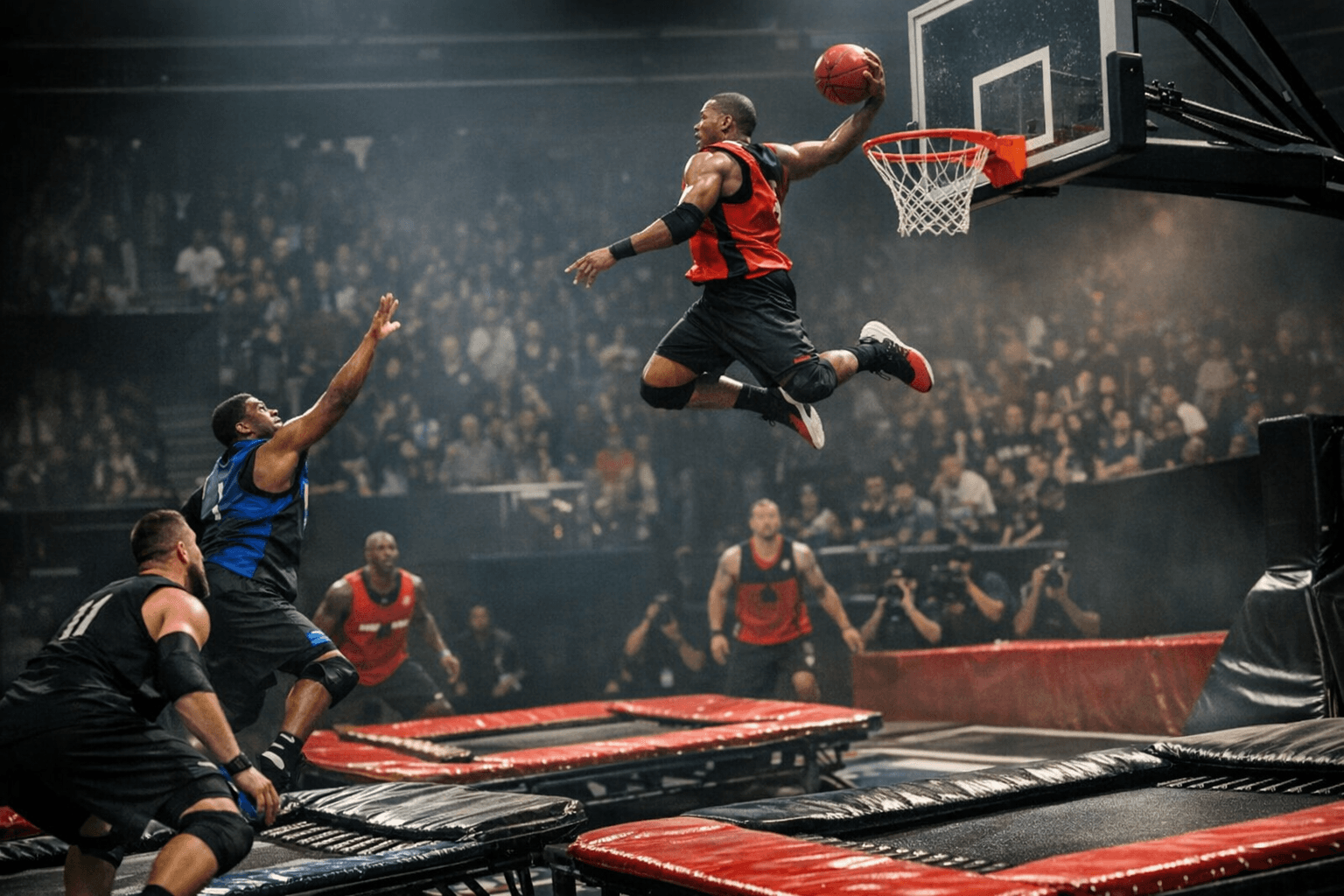
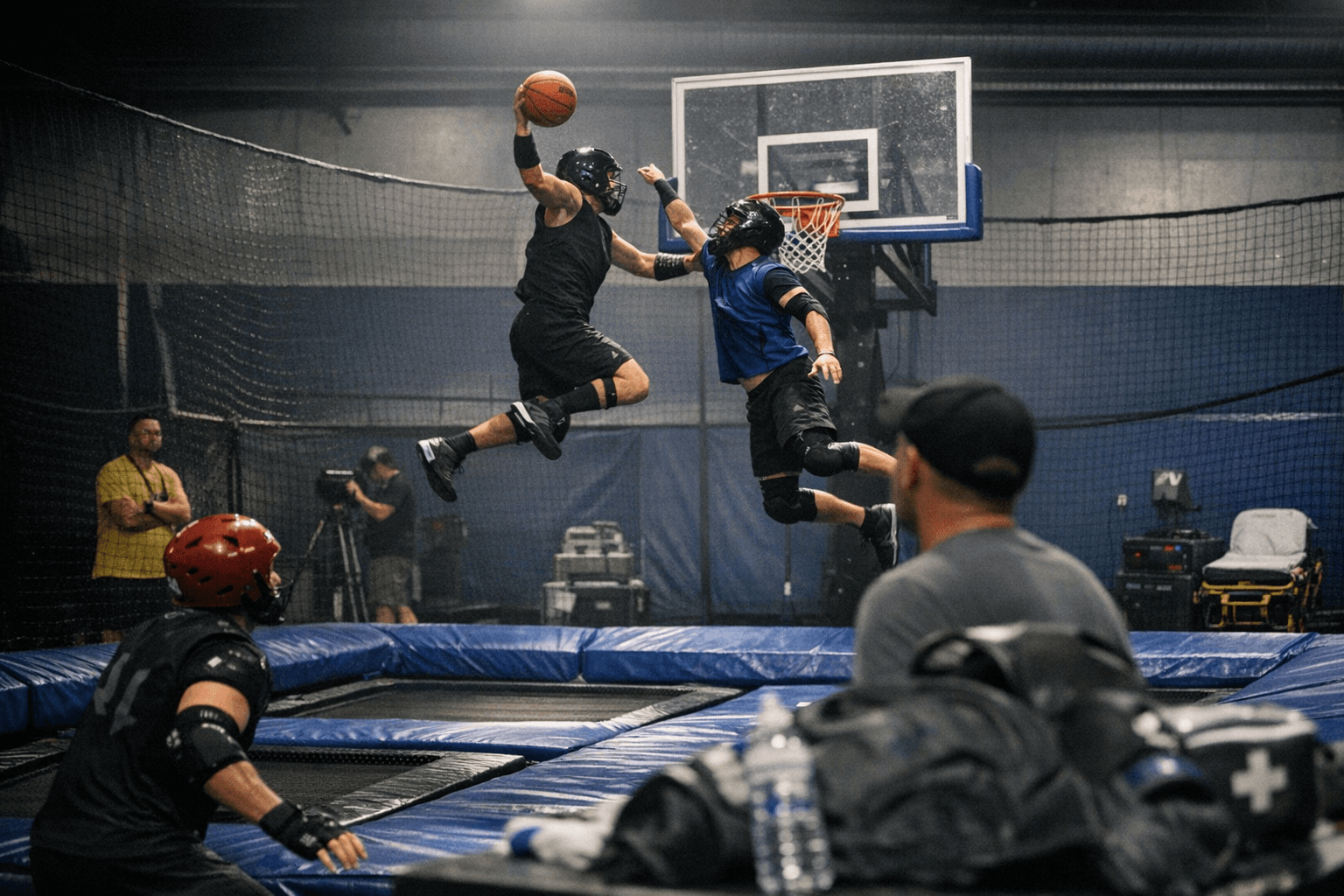
A Slamball court is a compact, high-flying arena built around competition-grade trampoline beds in the inbounds areas; plan a footprint smaller than a standard basketball court with at least 30+ ft of clear ceiling height to preserve playability and safety for aerial play. Walls around the court must be padded to league standards and configured to allow emergency egress and clear spectator separation; sightlines and safe run-off areas are essential to prevent collisions between fans and athletes. Factor in space for warm-up trampolines, a foam pit or landing zone for practice, locker rooms, and a medical area, these support player prep and event operations. Work with venue owners early to confirm power, rigging points for scoreboards and cameras, and load-in logistics for trampoline installation and periodic maintenance.
2. Equipment & safety
Trampolines must be competition-grade, sized and rated for multiple athletes; partner with certified vendors for installation, anchoring and routine inspections, and keep documented maintenance logs that include spring-tension checks and equipment testing schedules. Helmets are mandatory in modern Slamball relaunches, supply certified helmets for all athletes and promote mouthguards and optional padded shorts to reduce soft-tissue injury; helmet fit and retention checks should be part of pregame routines. Foam pits or dedicated landing zones are invaluable for high-risk aerial drills and progressive skill development; while not required during competitive matches, they accelerate safe progression and reduce rehearsal injuries. Implement strict equipment inspection and testing standards, including pre-event checklists and a named equipment safety officer whose sign-off is required before any live scrimmage.
3. Rules, officiating & player-safety protocols
Adopt a recognized Slamball rulebook as your baseline, court dimensions, scoring values and penalty structures must be standardized to protect integrity and make officiating consistent across teams. Customize local rules only after a formal risk assessment, and ensure referees are trained in contact-specific enforcement to prevent escalation; clear officiating reduces ambiguous outcomes and keeps play within predictable safety margins. Build concussion and injury protocols into every event: baseline testing, sideline screening tools, documented return-to-play guidelines, and designation of an independent medical authority to make in-game injury decisions. Structure practice progression so athletes move from ground fundamentals to trampoline-only drills, then to controlled game-like scrimmages and finally full-contact scrimmages; this phased approach reduces acute injuries and improves on-court decision-making, which in turn shapes game outcomes and consistent player performances.
4. Staffing & coaching development
Hire coaches with backgrounds in gymnastics, trampoline coaching or contact-sport conditioning, these backgrounds translate directly into safer aerial mechanics, timing and wall play. Require or offer certifications in trampoline safety, contact absorption techniques and concussion recognition; complement coaching hires with athletic trainers and medical staff present at games or immediately on-call, and formalize communication channels for injury care and RTP decisions. Design conditioning programs emphasizing plyometrics, eccentric strength, hip and core stability, and landing mechanics; a typical weekly plan includes 2–3 plyometric sessions, 2 strength sessions and on-court skill work that develops alley-oop chemistry and finishing under contact. Your coaching curriculum should drill trampoline timing, wall play, controlled rebound-to-lob sequences and multi-athlete finishing under contact, these elements create team dynamics where trust, timing and role clarity determine game outcomes and player performance consistency.
5. Insurance, league operations & growth
Purchase liability insurance that explicitly covers contact and trampoline activities; consult carriers experienced with extreme-sport or trampoline-park coverage to avoid exclusions that could void claims. Consider forming a league insurance pool to lower per-team premiums and standardize coverage limits, and maintain clear waivers and participant agreements that comply with local law. From an operational standpoint, start with weekend exhibition games to test logistics and fan appetite, then expand to a seasonal schedule as you lock in sponsors and broadcast plans; livestreaming early events can attract sponsors and create measurable viewership data for commercial partners. Build community pipelines through youth outreach with local gymnastics and trampoline clubs, run beginner clinics and “try Slamball” days with scaled-contact rules to grow participation and develop future talent.
- Secure a venue with ≥30 ft ceiling clearance, padded walls and safe spectator egress.
- Purchase and install certified trampoline beds through a vetted vendor and keep inspection logs.
- Provide certified helmets, mouthguards and optional protective padding; enforce helmet use.
- Hire certified coaches and an athletic trainer; define roles for in-game medical authority.
- Obtain liability coverage tailored for trampoline and contact sports; explore league pooling.
- Adopt a standard rulebook, concussion protocols, and phased practice progression.
- Launch with exhibitions, use livestreams to attract sponsors, and partner with local clubs for youth development.
Practical checklist and game-readiness tips
Closing practical wisdom Treat safety as your league’s competitive advantage: consistent inspections, certified coaching and strict progression protocols not only reduce liability but also produce cleaner game outcomes, higher-performing athletes and a fan product that sponsors will trust. Start small, prioritize equipment and medical staffing, and let disciplined coaching build team dynamics, the rest follows as audiences tune in for the high-flying, hard-hitting spectacle only Slamball can deliver.
Know something we missed? Have a correction or additional information?
Submit a Tip