Guilford County faces urgent foster care shortage, needs parents
Guilford County has the state's largest foster caseload and agencies are recruiting foster parents; residents can start licensing steps to help local children.
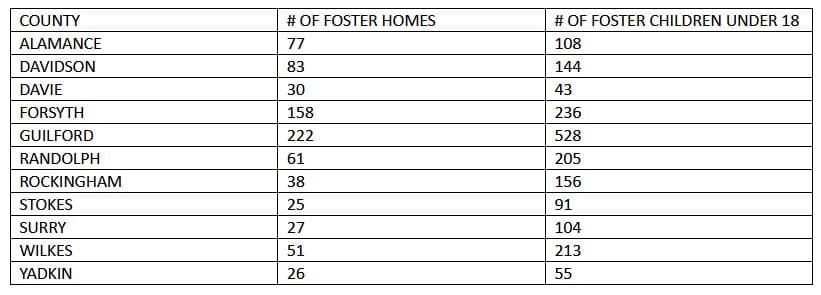
Guilford County is facing an acute shortfall in foster-home capacity, with Children's Home Society of North Carolina reporting on Jan. 15 that the county now has 721 children in foster care — the largest tally of any North Carolina county. That caseload has accelerated placements and pressured local child welfare systems, creating an urgent need for more licensed foster families.
The licensing pathway is clear and meant to balance speed with safety. Prospective foster parents in Guilford County begin by submitting an inquiry and attending a virtual information session. Applicants then complete an online application, pay $20 per adult for required background checks, participate in interviews, and finish 30 hours of in-person foster-parent training. Agencies generally say licensing takes about four to six months, though high demand has led to some placements occurring sooner than the full licensing timeline.
Support systems exist to help foster families handle the costs and logistics of care. Children in foster care are eligible for Medicaid, and Guilford County Department of Social Services offers vouchers for child care and after-school care. There are also potential college tuition supports available for eligible youth as they age out of care. Those supports reduce out-of-pocket expenses for foster households and aim to stabilize placements, but they do not eliminate the need for more homes.
The county's situation has institutional and policy implications. Sustained high caseloads stretch Department of Social Services staffing, make timely casework and foster-parent supports harder to provide, and increase reliance on short-term placements. That in turn affects courts, school systems, and local nonprofits that work with children in care. At the state level, funding formulas, recruitment programs, and training resources determine how quickly counties can expand capacity; local officials and state lawmakers will need to weigh whether current investments match the growing demand.

For residents, the shortage is a civic issue as much as a social-service one. Becoming a licensed foster parent provides a direct way to help children in Guilford County, and other forms of civic engagement — volunteering with child welfare agencies, advocating for funding at county commission meetings, or supporting kinship caregivers — can strengthen the local safety net. Those considering fostering should expect the outlined steps and plan for the training and time commitment required.
This shortfall will shape county services through 2026 and beyond. For Guilford County residents, the immediate takeaway is practical: the system needs more homes now, and the pathway to help is straightforward. If local officials adjust recruitment or resources, residents should track those changes at public meetings and through Guilford County DSS and local child welfare organizations and consider whether to volunteer, foster, or press for policy responses that expand safe, stable placements for children.
Sources:
Know something we missed? Have a correction or additional information?
Submit a Tip