Gulf states rush to rearm as Iran war reshapes security strategy
The Gulf is rebuilding its defenses and trade assumptions after Iranian strikes exposed how thin deterrence had become. Washington’s reassurance campaign has not erased the region’s distrust.

Since 19 March, the United States has approved more than US$41 billion in emergency arms sales to Gulf states, with about half tied to Patriot interceptors.
Iranian missiles and drones have done more than damage infrastructure. They have forced Gulf governments to reassess the core bargain that long underpinned their security: rely on the United States for deterrence, keep trade moving through narrow maritime chokepoints, and sell the region as a stable place for capital.
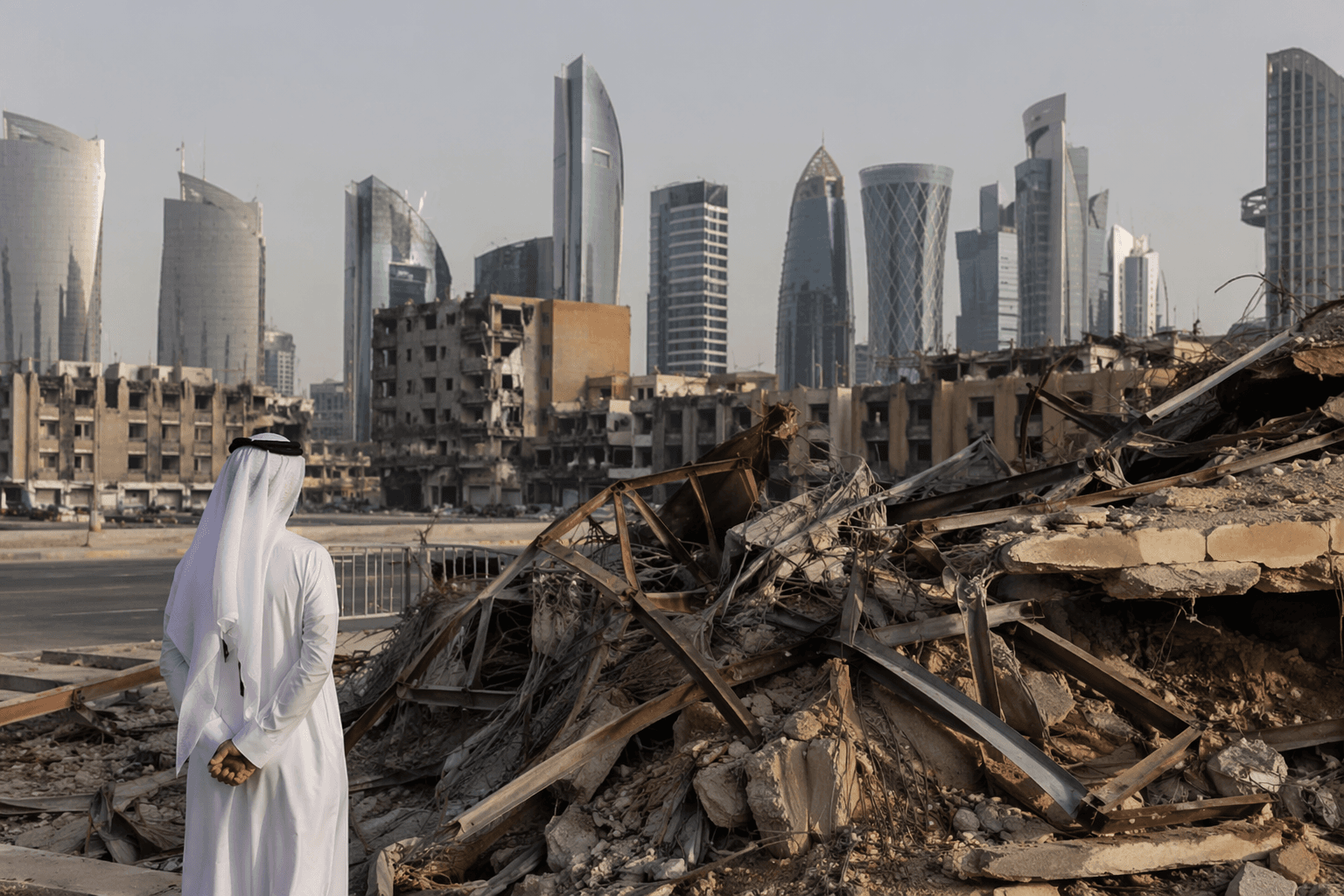
That model now looks brittle. Across the six Gulf Cooperation Council states, leaders are rushing to refill depleted magazines, harden air defenses and rethink whether old assumptions about protection, commerce and alliances still hold under fire.
Defense planning has shifted from deterrence by presence to deterrence by layers
The clearest change is in air and missile defense. Gulf governments are racing to replenish interceptor missiles, interceptor drones, point-defense systems, radar and surface-to-air missiles after Iranian attacks exposed gaps in coverage and consumed stockpiles.
That spending spree reflects a practical problem, not just a political one. Iran’s missile and drone campaign hit all six GCC members, and local air defenses were activated with U.S. and allied support.
The next phase is already taking shape in procurement talks. Gulf states are looking beyond one supplier and are approaching South Korea, Ukraine, the United Kingdom and the United States for near-term acquisitions.
The war exposed the limits of the old U.S. deterrence model
For decades, Gulf security thinking rested on a simple premise: a large American military footprint would discourage attack. The war shattered that assumption. Visible U.S. presence does not automatically translate into credible protection, especially when adversaries are willing to absorb risk and strike across the entire Gulf.
The attack pattern reinforced that lesson. All six GCC members came under Iranian missile and drone fire and all six activated national air defense capabilities. AGSI’s Gulf Security Strategies After the Iran War assessment puts the total at 1,372 missile and 4,415 drone attacks from Iran over roughly six weeks. That level of pressure tested command coordination, warning systems and the political expectation that outside powers would absorb the first shock.
The strategic answer is not full decoupling from Washington. It is hedging. Gulf governments are weighing more integrated air-defense architecture, more shared procurement and more local production so that future crises do not depend on a single external pipeline.
Shipping routes and investment flows are now part of the security debate
The war also hit the Gulf where it is most exposed economically: in its role as a transit hub. The Strait of Hormuz remains the region’s most sensitive maritime choke point, and security fears around it have already disrupted tanker traffic and shipping confidence. Even where flows have recovered temporarily, the larger risk has not gone away. Any renewed closure or harassment could hit oil and liquefied natural gas exports, while also pushing up insurance, freight and financing costs across the region.
The Gulf’s growth model depends on trust. The conflict damaged the perception of Saudi Arabia and the UAE as safe havens for capital and business, raising the possibility that investors will demand a higher risk premium. In practical terms, that means defense shocks now spill directly into balance sheets, project financing and the cost of borrowing for governments and state-linked firms.
The war also sharpened the link between maritime security and economic resilience. Trade route security, not just battlefield air defense, has become central to Gulf planning.
Diplomacy has turned into damage control
Washington has moved quickly to reassure skeptical allies. Marco Rubio traveled to the United Arab Emirates, Kuwait and Bahrain to sell a preliminary Iran accord directly to Gulf capitals and then met regional leaders to insist the United States would not undermine their security. Gulf governments may welcome diplomacy with Iran, but they are deeply wary of any deal that constrains Tehran on paper while leaving them exposed in practice.
In 2019, the attack on Saudi Aramco’s Abqaiq and Khurais facilities temporarily cut 5.7 million barrels per day of Saudi oil production, a reminder that critical infrastructure can be disrupted even when the broader region appears calm. The security deterioration stretches from that 2019 strike to the June 2025 missile barrage on Qatar and then to the February 2026 attacks across all GCC states and Jordan. Each episode widened the gap between formal deterrence and actual vulnerability.
The political effect is visible across the Gulf. Leaders are publicly projecting unity and strength, but privately they are adapting to a world in which security has to be bought, shared and layered rather than assumed.
This article was produced by Prism’s automated news system from verified source data, official records, and press releases, then run through automated quality and moderation checks before publishing. The system is built and supervised by the people who set the standards it runs under. Read our full AI policy.
Know something we missed? Have a correction or additional information?
Submit a Tip