Haiti hospitals evacuate patients as MSF suspends Cité Soleil care
Patients were moved out of Cité Soleil hospitals as MSF halted care, a stark sign that armed clashes can shut down one of Port-au-Prince’s last lifelines.

Hospitals in Cité Soleil evacuated patients and Médecins Sans Frontières suspended its activities there after fighting between armed groups worsened over the weekend, ending a stretch of clashes that had already lasted about two weeks. The shutdown showed how quickly insecurity in Port-au-Prince can cut off basic civilian services, turning violence into an immediate medical emergency for one of the capital’s most fragile neighborhoods.
Cité Soleil has long been among the most dangerous and deprived parts of the city, but the latest escalation carried a sharper blow because it displaced care itself. MSF had previously described its Cité Soleil emergency hospital as one of the only functioning medical structures in the commune when other services closed because of insecurity. Once patients were evacuated, residents lost access not only to emergency treatment but also to trauma care, maternal care and urgent referrals in a place where alternatives are already scarce.
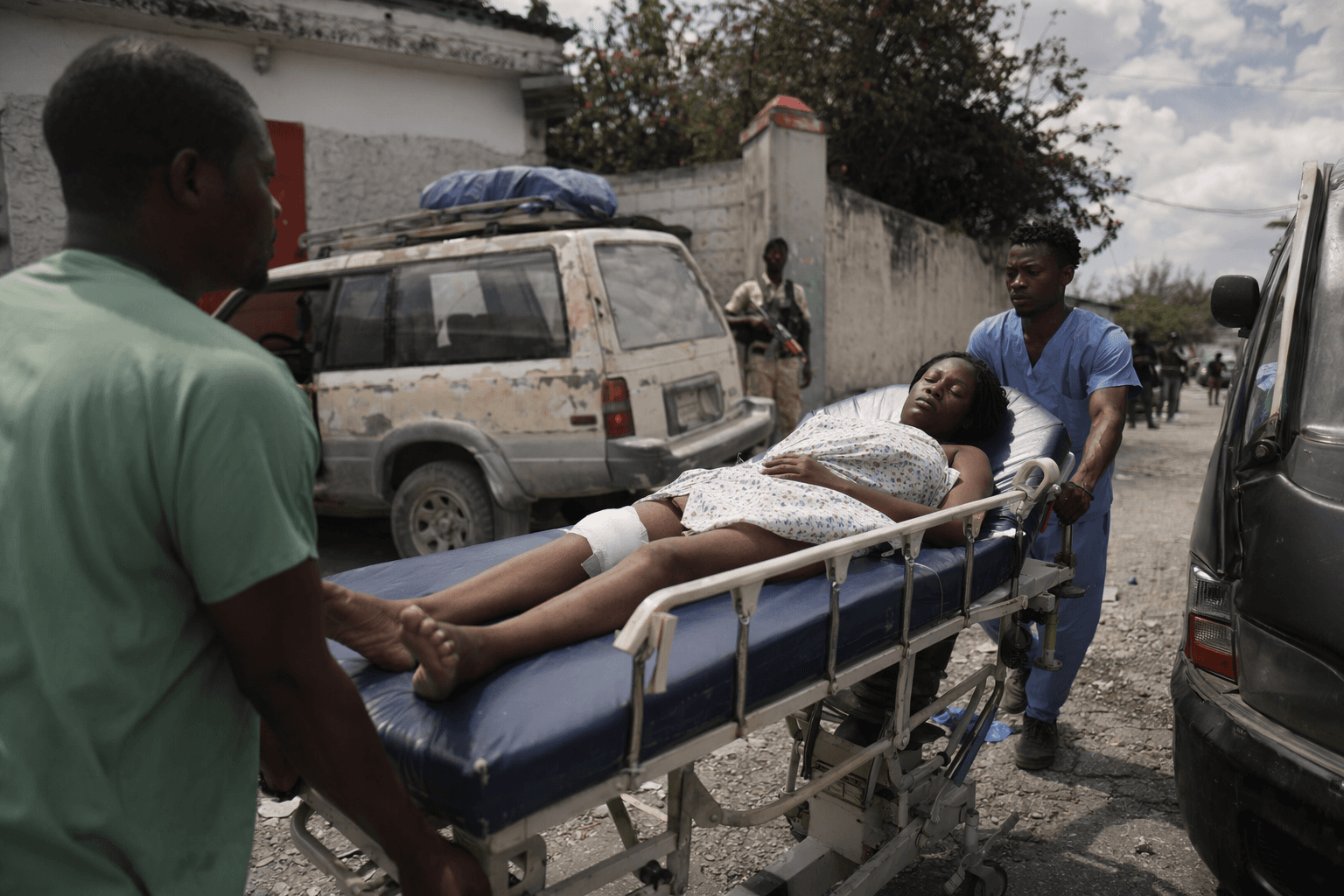
The episode fit a much wider breakdown in Haiti’s humanitarian landscape. The United Nations Office for the Coordination of Humanitarian Affairs has said 6.4 million people, more than half of Haiti’s population, will require emergency humanitarian assistance in 2026. UN humanitarian planners have also said violence-related internal displacement has doubled compared with the same period a year earlier, a sign that armed groups are continuing to uproot families faster than aid and state institutions can respond.
The scale of armed control in and around the capital explains why health facilities are so vulnerable. UNICEF has estimated that armed groups control 90% of metropolitan Port-au-Prince, leaving large parts of the city effectively outside state authority. The International Organization for Migration has also tracked new displacement after armed clashes in Cité Soleil and Croix-des-Bouquets in April 2026, underscoring how violence keeps moving across neighborhoods and forcing civilians to flee again and again.
Health risks are worsening alongside the security collapse. OCHA has said cholera cases rose sharply in 2025 after declining in 2024, deepening the danger for communities without reliable water and sanitation. In that environment, each hospital closure does more than interrupt treatment: it narrows the last path to care for people trapped between armed groups, failing infrastructure and a state still unable to restore safe access across the capital.
This article was produced by Prism’s automated news system from verified source data, official records, and press releases, then run through automated quality and moderation checks before publishing. The system is built and supervised by the people who set the standards it runs under. Read our full AI policy.
Did this article answer your question?


