Hamptons Tennis Gear and Care: Practical Guide for Coastal Play
As play resumes on Hamptons courts, coastal conditions, sun, sand, salt air and wide seasonal swings, demand specific gear choices and maintenance routines. This primer explains racket selection, stringing, footwear, apparel, storage and court-care steps that will extend equipment life and keep you on court through the seasons.

Players, club members and private court owners in the Hamptons face unique challenges that affect performance and the longevity of equipment. Mid-plus racket head sizes (98–104 sq in) give recreational players a balanced mix of power and control, while performance players often prefer 93–100 sq in frames. Stiffer frames add power but transfer more shock; those with arm issues should consider slightly more flexible frames or vibration-damping handles. Demo programs at local shops and pro shops near Hamptons clubs make it practical to test rackets on-court before buying.
Strings and tension are especially important for outdoor courts. Durable multifilament strings or polyester hybrids are common for coastal play because abrasion is higher; pure polyester lasts longest but feels harsher, and hybrids strike a balance between comfort and durability. Higher tension increases control at the expense of power and comfort; recreational players typically stick to mid-range tensions while tournament players tune tension to ball type and season. Sand abrades strings and salt air speeds metal corrosion, so rinse frames after beachside play and avoid storing racquets in humid, salty air without ventilation.
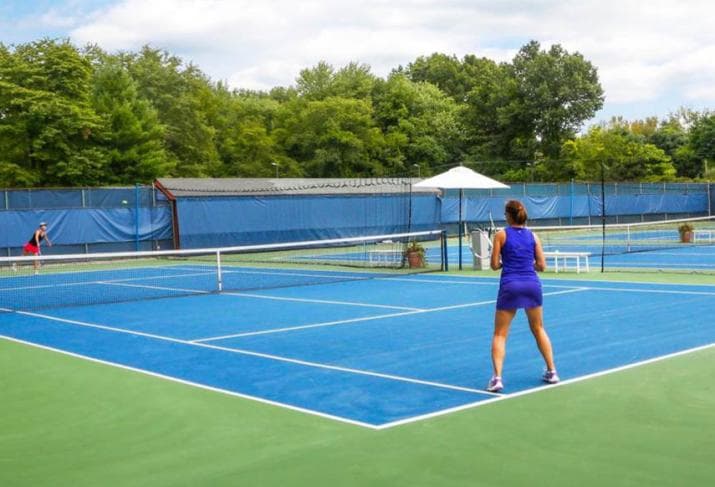
Footwear should match the surface you play most. Har-Tru courts call for herringbone treads that allow sliding and quick release of clay and dust, while hard courts need durable outsoles and strong lateral support. Replace shoes when midsole cushioning drops, typically after 40–70 hours of play depending on weight and surface, to reduce injury risk.
Dress for the coast: lightweight, moisture-wicking fabrics for summer, UV-rated shirts, hats and sunglasses for sun protection, and windbreakers for breezy salt conditions. In winter, layer a moisture-wicking base, a fleece mid layer and a windproof outer shell; gloves help baseline players preserve grip on chilly mornings.
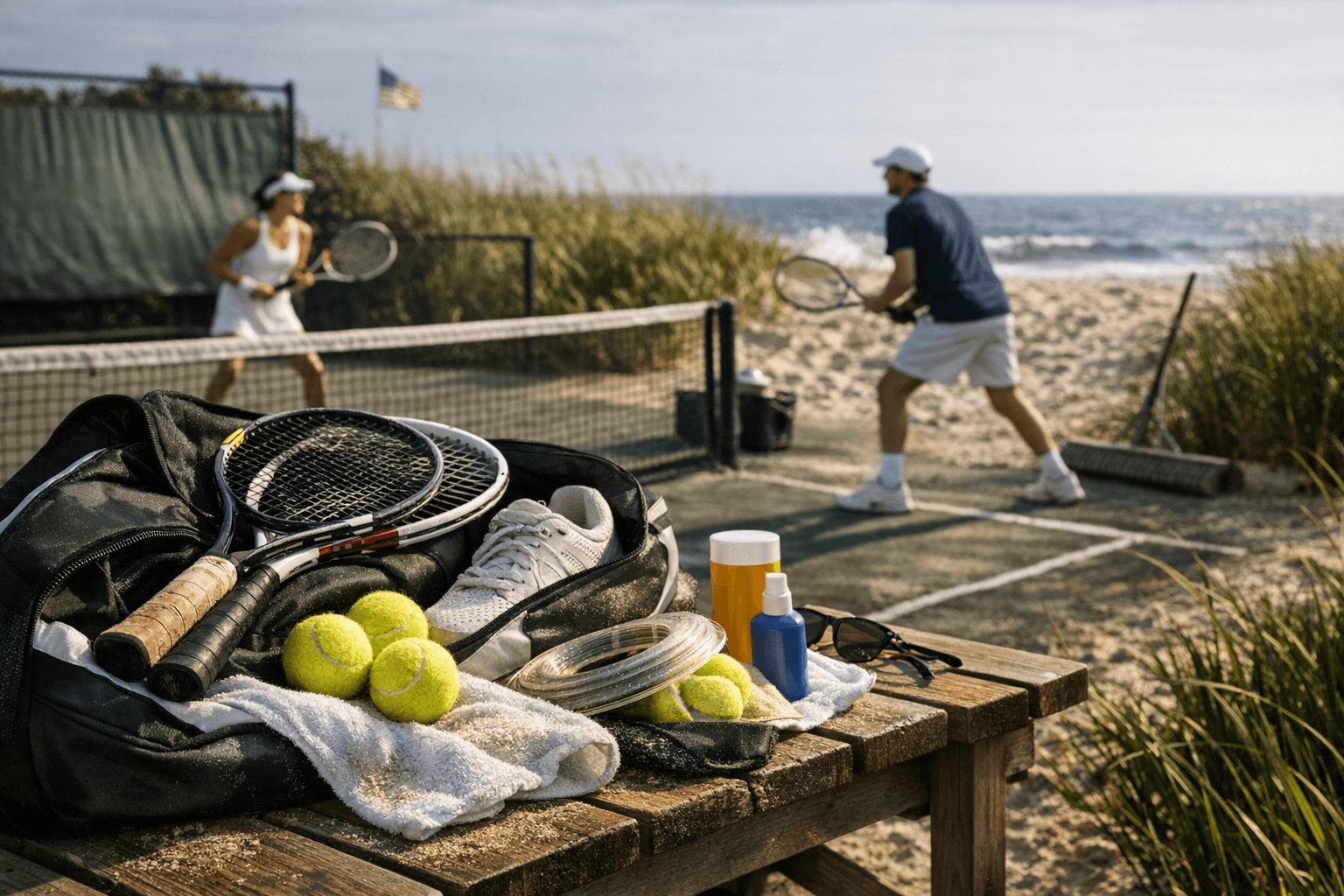
Daily racquet care is straightforward: wipe grips and frames, tap out sand before bagging, and never leave rackets in hot cars. Replace grips or overgrips regularly; worn grips contribute to wrist and elbow problems. Recreational players generally restring 3–4 times per year, while competitors restring monthly or by tournament block. Dry metal components thoroughly and store rackets in ventilated bags to prevent corrosion.
Private court owners should sweep or blow leaves and sand to prevent surface degradation, clear snow from Har-Tru gently to avoid compaction, and inspect drainage and lines before spring reopening. Maintain an on-call relationship with a trusted court contractor for seasonal maintenance and repairs.
Shop locally for same-day stringing and staff who can speak to stringing machines and tension consistency; digital machines tend to be more consistent. For weekend travel to the Hamptons, bring two rackets, extra overgrips, a small brush for sand, sunscreen, a hat and appropriate footwear. Common troubleshooting reminders include checking grommets and bumper guards if strings fray near the grommet, matching shoes to different surfaces, and consulting your court builder for Har-Tru winterization. These practical steps will keep you playing more and repairing less in the coastal environment.
Know something we missed? Have a correction or additional information?
Submit a Tip