Hamptons' varied courts, coastal winds and sand demand adaptable play
The Hamptons' mix of Har‑Tru, hard courts, coastal wind and beach sand forces players to adapt gear, tactics and court maintenance for reliable play.
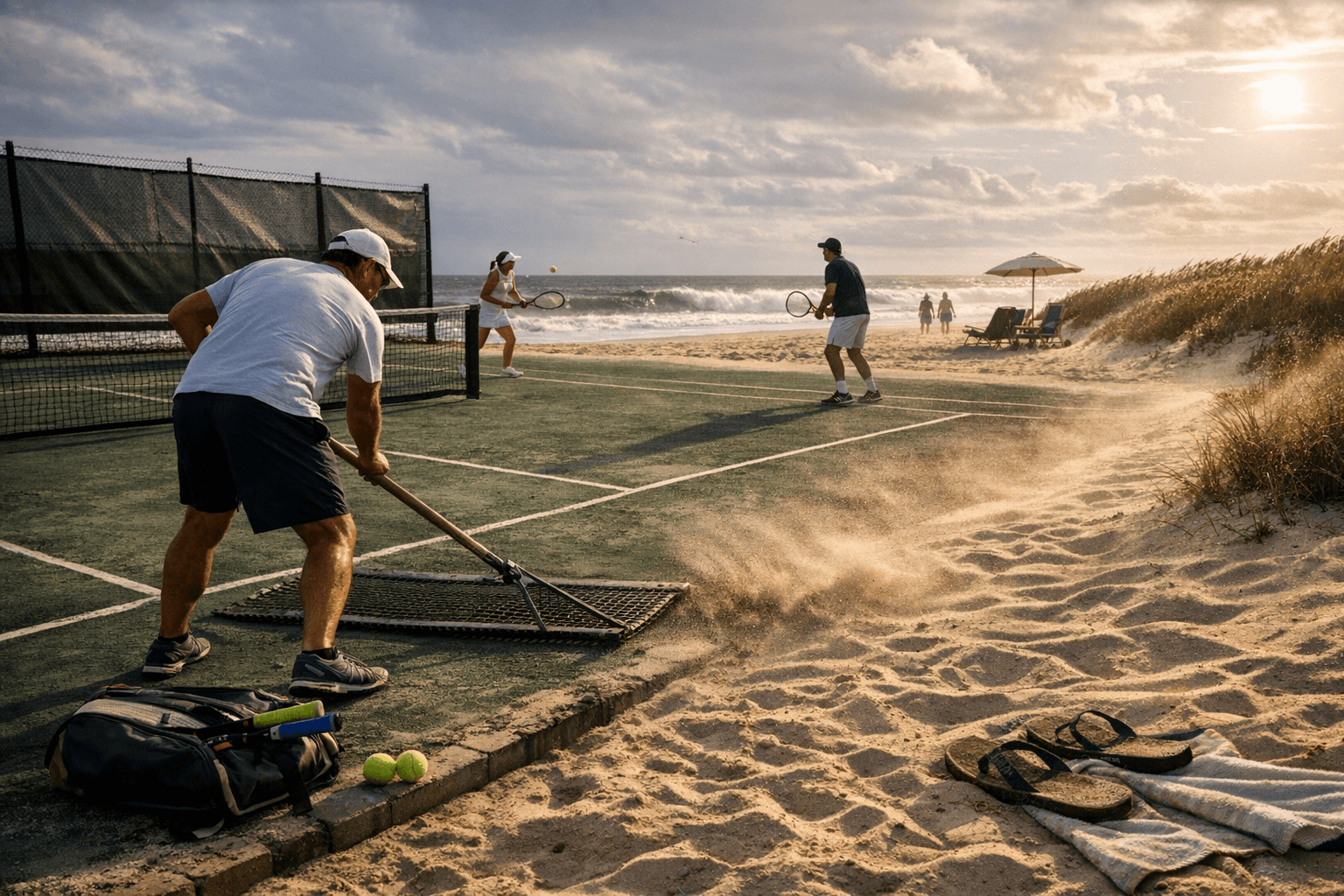
The Hamptons' courts demand nimble tennis. Players face a patchwork of Har‑Tru/green clay, hard courts, seasonal outdoor Har‑Tru and some private clay that each change how the ball bounces and how points are won. Add coastal gusts and occasional sand blowing onto seaside courts, plus large temperature swings across seasons, and the local game becomes a lesson in adaptation.
Har‑Tru and green clay slow the court and create higher, more forgiving bounces that reward topspin and sliding footwork. Hard courts produce a truer, faster bounce and favor flatter drives and quick offensive patterns. Seasonal Har‑Tru outdoors can vary in speed and footing depending on recent maintenance and weather, while private clay courts often play more consistently but are less accessible during peak summer demand. Coastal wind alters trajectory, turning easy serves and approach shots into tricky exchanges, while sand on courts reduces traction and accelerates wear on shoes and strings.
Practical adjustments start with equipment. Choose shoes with good lateral support for hard courts and a softer sole with grip for Har‑Tru. Bring a spare pair if you move between surfaces during a weekend. Opt for balls designed for the surface you plan to use; heavier-duty balls resist wind drift better and last longer on abrasive sand-prone courts. Examine string tension before key matches - strings can feel tighter in cold, loose in heat - and consider a slightly lower tension for more control when temperatures climb.
Preparation and scheduling help mitigate environmental swings. Warm up longer on cooler days to get strings and muscles responsive. On windy days, emphasize higher-margin tactics: add more topspin, aim deeper to keep balls in play, and shorten points with aggressive returns when the wind is at your back. Inspect court lines and surface conditions before play; sweep sand from the baseline and service boxes and adjust footwear if the surface is gritty.
Community clubs and private courts can reduce surprises by coordinating maintenance windows. If you host a match near the dunes, plan extra time for brushing and water application to settle dust. Coaches and league organizers should factor surface and wind variables into court assignments and handicaps so matches are fair and safe.
For Hamptons players, adaptability is the true home-court advantage. Expect to tweak gear, temper tactics and arrive early to assess courts. Those who tailor practice to Har‑Tru slides, hard-court pace and coastal wind will find more consistent results and fewer mid-match surprises as the season unfolds.
Know something we missed? Have a correction or additional information?
Submit a Tip