Harris County Parks and Trails Plan Prioritizes Connectivity, Equity, Flood Resilience
A county master plan now guides parks, trails and open‑space investments to boost neighborhood connectivity, equitable access and flood‑resilient green infrastructure.
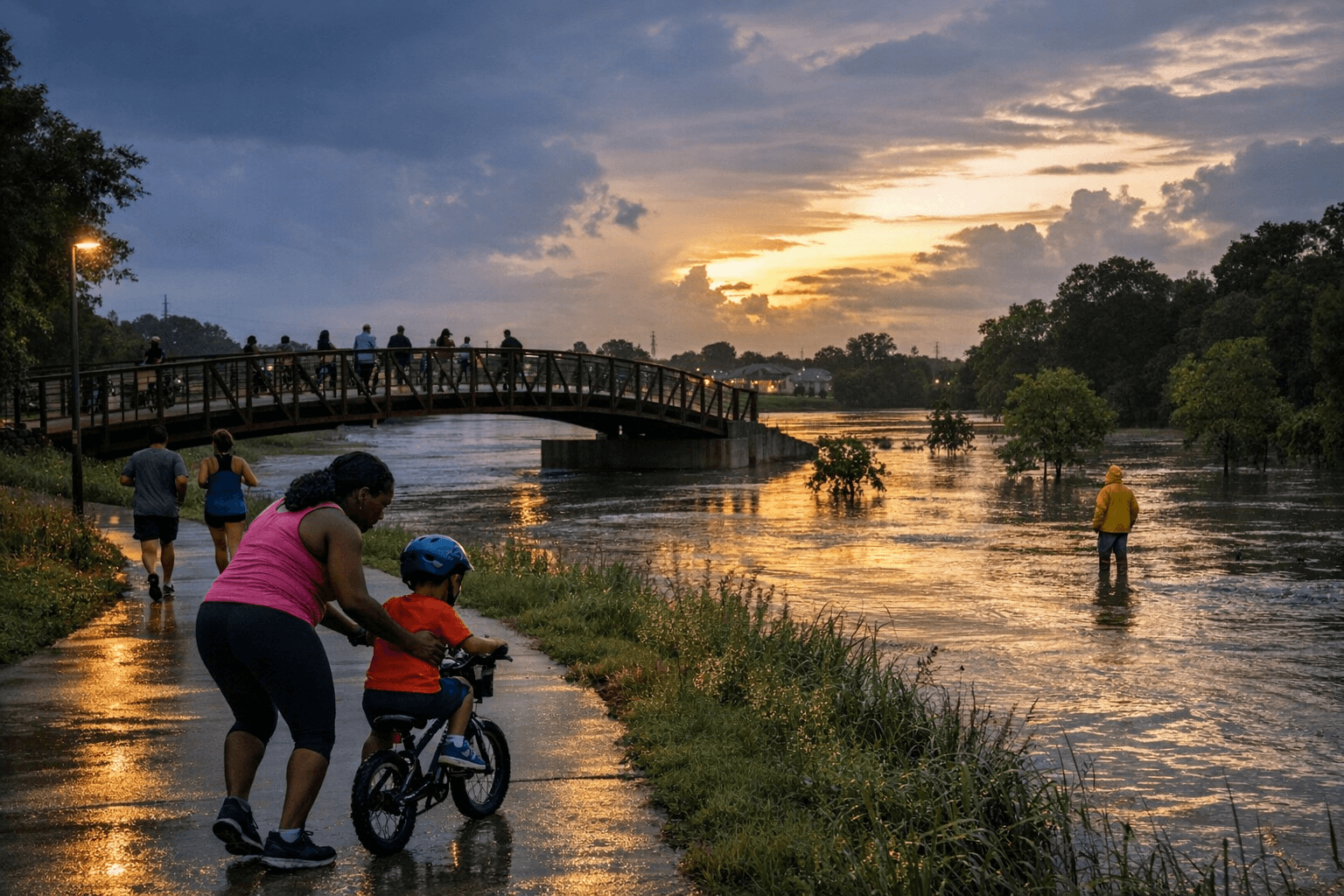
A long-range blueprint is steering how Harris County develops parks, trails and open space, prioritizing multi-use connections between neighborhoods, improved access in fast-growing suburban areas, and park designs that withstand flooding. County leaders intend the plan to expand recreational access, support active transportation and protect green infrastructure that assists drainage and biodiversity.
The master plan emphasizes building linked trail corridors and multi-use paths that connect residential areas, schools and transit nodes. Alongside connectivity, the plan allocates space for amenities such as playgrounds, courts and boardwalks, and calls for ADA upgrades so facilities serve a wider range of residents. Officials expect the broad goals to be realized through a sequence of smaller, prioritized projects - trail links, picnic areas and targeted accessibility improvements - timed to available funding and community needs.
Flood resilience is a central consideration. Park designs incorporate features that accommodate periodic inundation while preserving recreational use and ecological function. Preserving and investing in green infrastructure within parks aims to reduce stormwater runoff, enhance local drainage capacity and support biodiversity in urban and suburban corridors where growth has increased impervious surfaces.
Implementation is phased and relies on a mix of funding sources. The plan calls for leveraging intergovernmental and public-private partnerships to advance projects that might not fit within a single budget cycle. That approach is intended to stretch public dollars and attract private investment for amenities and longer trail segments, while allowing precinct and county staff to sequence work around maintenance capacity and grant timelines.
Local officials typically translate the master plan into precinct-level projects that respond to neighborhood priorities. That local approach can produce incremental improvements such as new trail links that close gaps in existing networks or small park upgrades that improve accessibility. The county’s approach places responsibility for execution with precinct leadership and county parks staff, which makes coordination across jurisdictions a practical necessity if long continuous trails are to be completed.
For residents the plan matters in concrete ways: more walkable routes for commuting and recreation, safer options for biking, and parks that double as flood-mitigation assets. Equity is an explicit goal, with resources directed toward areas that currently lack access to nature and recreation.
The next steps will be funding and project selection at the precinct level. Residents who want to track outcomes should follow precinct project lists, budget hearings and partnership agreements to see how the plan’s broad goals translate into on-the-ground parks, trails and flood-resilient open space.
Know something we missed? Have a correction or additional information?
Submit a Tip