Harry and Meghan face backlash during privately funded Australia visit
Security costs and paid appearances have turned Harry and Meghan’s first Australia trip since 2018 into a test of Brand Sussex.
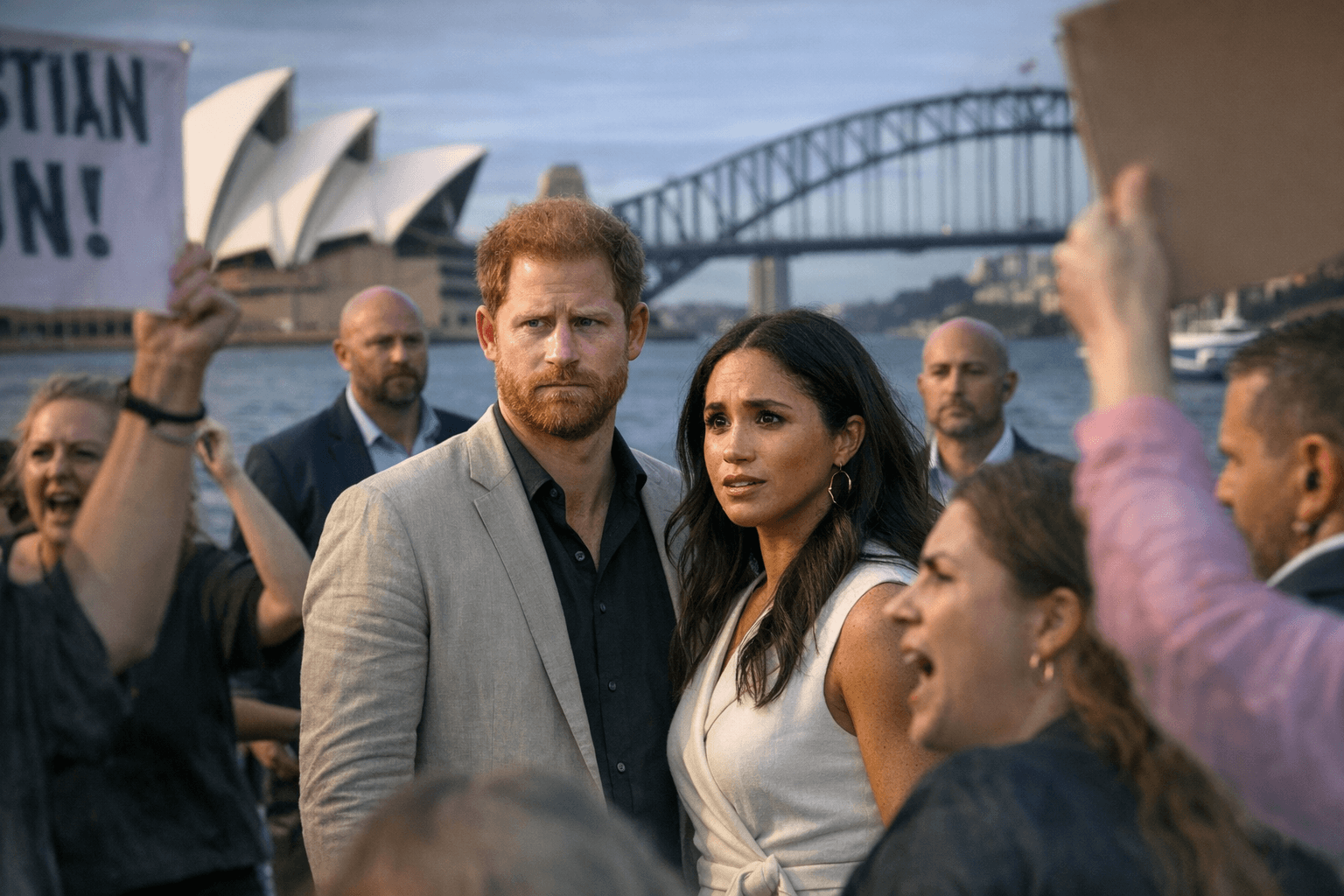
Harry and Meghan’s first stop in Melbourne was the Royal Children’s Hospital, but the loudest reaction to their four-day Australia visit centered on who should pay for the security and spectacle around two globally famous former royals.
The trip, which also includes Canberra and Sydney, is their first Australian visit since the official royal tour in 2018. The Sussexes said it is privately funded, and they flew from Los Angeles to Melbourne on a commercial Qantas business-class flight with Prince Archie, 6, and Princess Lilibet, 4, staying behind in California.
That financing detail has not quieted the backlash. Public criticism has focused on added security costs for police agencies, especially given that Harry and Meghan stepped back as senior royals in 2020 and said they wanted to become financially independent. Some Australians have gone further, portraying the visit as a commercial branding exercise rather than a public-service trip. One Australian paper described it as a “faux royal tour to shore up Brand Sussex,” a charge that cuts to the heart of the resentment: the couple still draws royal attention, but without the obligations that once came with it.
The Sussexes reject that framing. Their office said the program is rooted in long-standing areas of work and is meant to emphasize listening, learning and supporting communities rather than promotion. In Melbourne, the couple began at the Royal Children’s Hospital and spent about 10 minutes meeting families before moving on to a schedule that includes charities, private meetings, special projects and a ticketed conference.
That mix of charitable and commercial appearances is what makes the response harder to dismiss as simple tabloid noise. The criticism is not only about celebrity fatigue. It also reflects a broader Australian discomfort with public money, royal symbolism and the status of high-profile figures who are no longer working royals but still command security and media attention. For some, the trip revives republican instincts and old anti-monarchy sentiment; for others, it is a narrower complaint about celebrity branding dressed up as diplomacy.
The public mood appears mixed, not uniform. But the objections are specific: the cost of protection, the commercial elements of the itinerary and the suspicion that the couple can still borrow the aura of royalty while operating outside the institution. That tension, more than any single headline, is what now defines their reception in Australia.
This article was produced by Prism’s automated news system from verified source data, official records, and press releases, then run through automated quality and moderation checks before publishing. The system is built and supervised by the people who set the standards it runs under. Read our full AI policy.
Did this article answer your question?