Harvard faculty approve cap on top grades to curb inflation
Harvard faculty voted to cap A grades, betting that stricter grading will restore the value of elite transcripts as A’s now make up 66% of undergraduate marks.
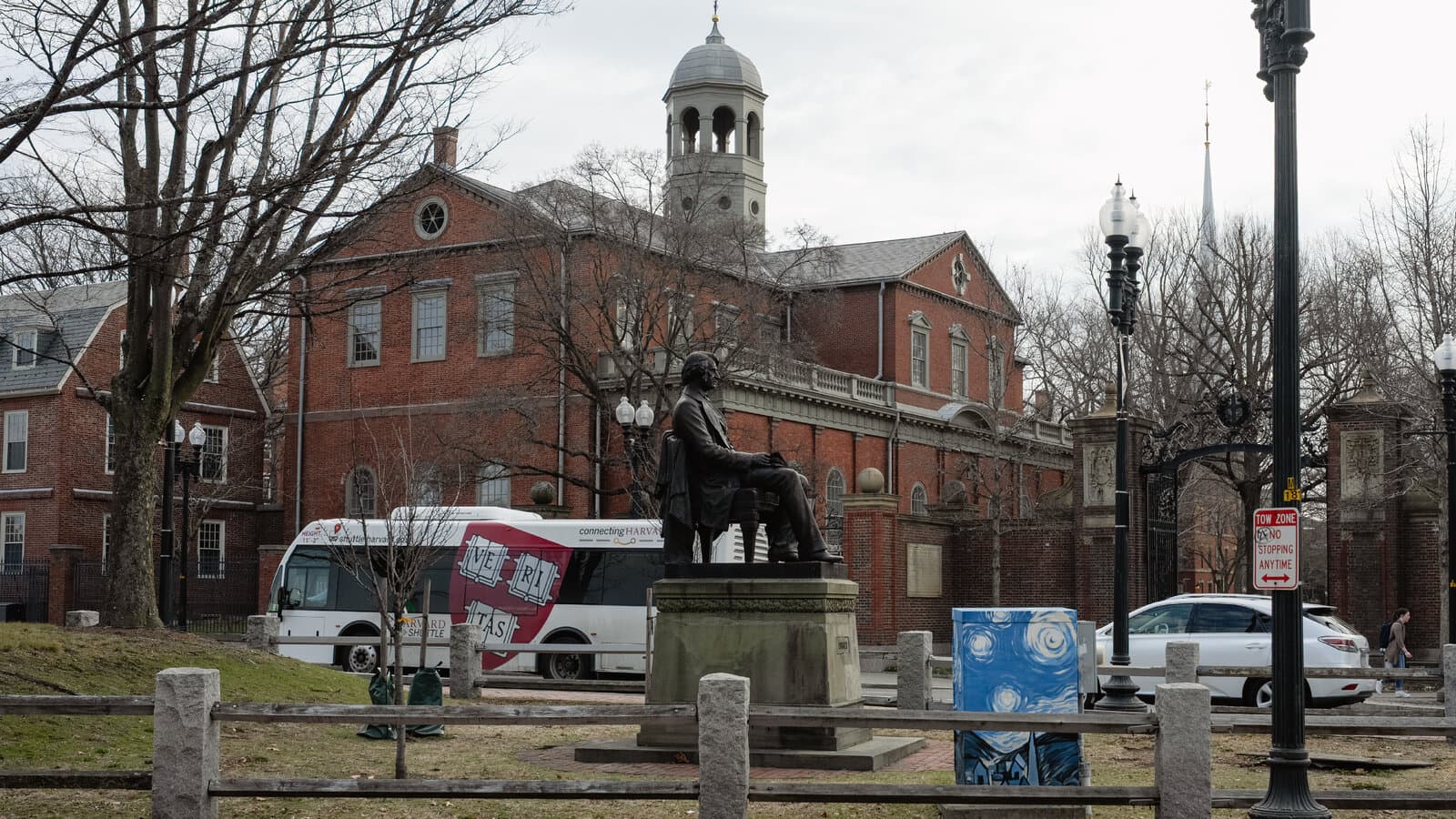
Harvard faculty took aim at one of the most powerful signals in elite higher education: the A grade. By a 458-to-201 vote, the Faculty of Arts and Sciences approved a cap that will limit flat A’s to 20 percent of enrollment plus four additional A’s in each class, starting in fall 2027.
The vote marked Harvard’s most aggressive move yet against grade inflation and reflected a blunt judgment about the college’s transcript economy. In 2024-25, 66 percent of Harvard undergraduates earned A’s and 84 percent earned either an A or A-minus. Two decades ago, A’s were about a quarter of all grades at the college; over 15 years, the median cumulative GPA at graduation rose from 3.56 to 3.83.
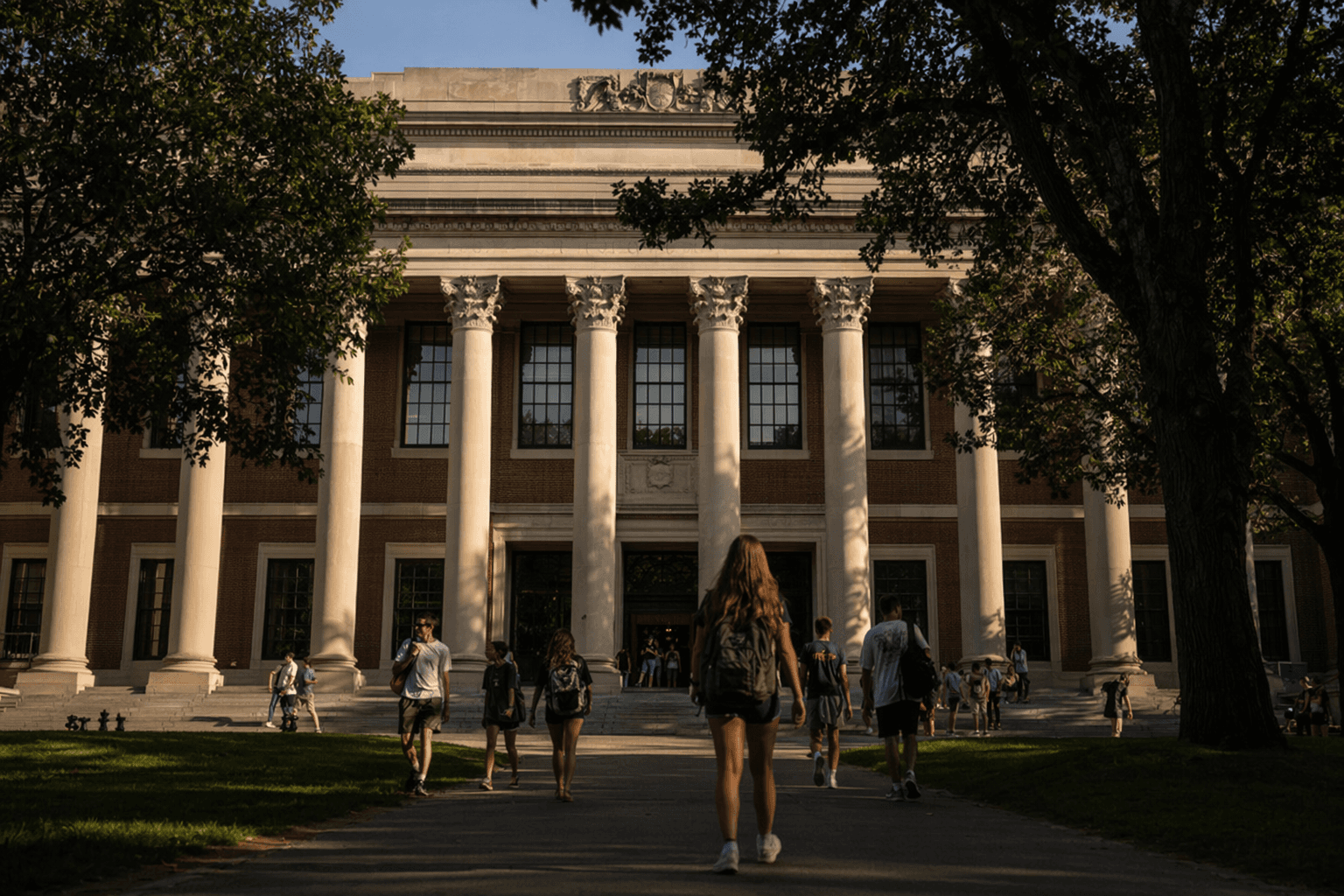
Supporters say that drift has weakened the meaning of distinction for employers, graduate schools and scholarship committees that rely on Harvard transcripts to separate exceptional work from merely solid work. Harvard says the goal is to push grading back toward 2010-era norms, when A’s accounted for about one-third of transcript marks, and to reduce pressure on professors to award easy A’s in order to keep course evaluations and enrollments stable. A-minuses will not be capped, preserving some flexibility for instructors in demanding seminars and large lectures alike.
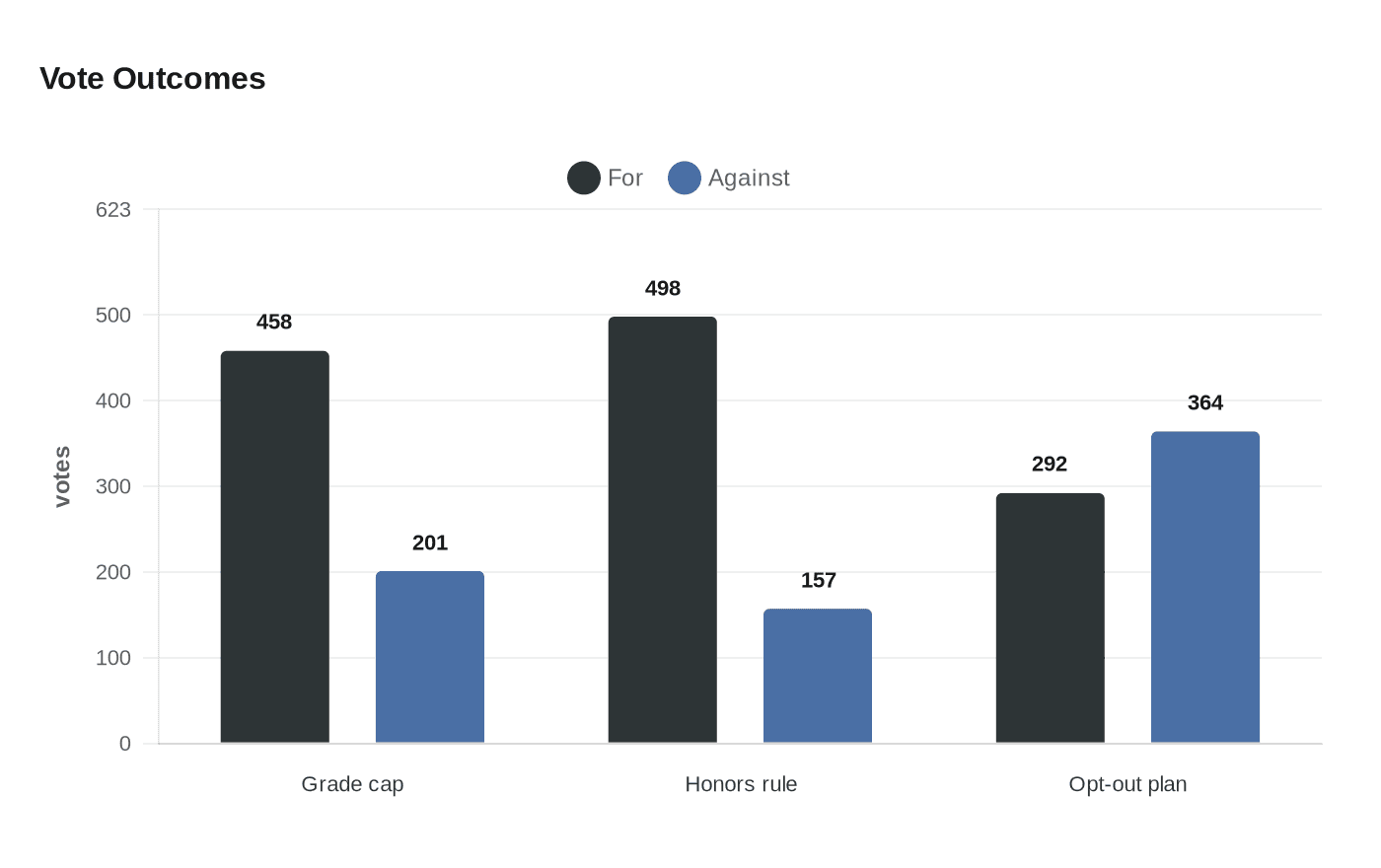
The policy was paired with another change: the college will use average percentile rank, rather than GPA, for internal honors and prizes. That measure passed 498 to 157. A third proposal, which would have let some courses opt out by switching to satisfactory/unsatisfactory grading, failed 292 to 364. Harvard also said the overhaul will be broadly advertised on transcripts with interpretive text, a sign that the university understands the change is as much about external trust as internal bookkeeping.
The politics of the vote were sharp. Nearly 85 percent of respondents to a February survey from the Harvard Undergraduate Association said they disapproved, underscoring the student resistance to tighter grading. Critics warned the cap could intensify competition, reward strategic course-shopping and discourage intellectual risk-taking. Those concerns matter most in departments where grading has long been used as a source of differentiation across widely varying course loads, writing expectations and lab demands.
Amanda Claybaugh, Harvard’s dean of undergraduate education, said in an October report that the current system was “damaging the academic culture of the College.” That warning, after five years of discussion and more than a year of work by the Undergraduate Education Policy Committee’s Subcommittee on Grading, helped drive faculty toward action. The result is a test of whether elite colleges can still make grades mean something, or whether scarcity itself has become the only way to restore their value.
Know something we missed? Have a correction or additional information?
Submit a Tip